
Table of Contents
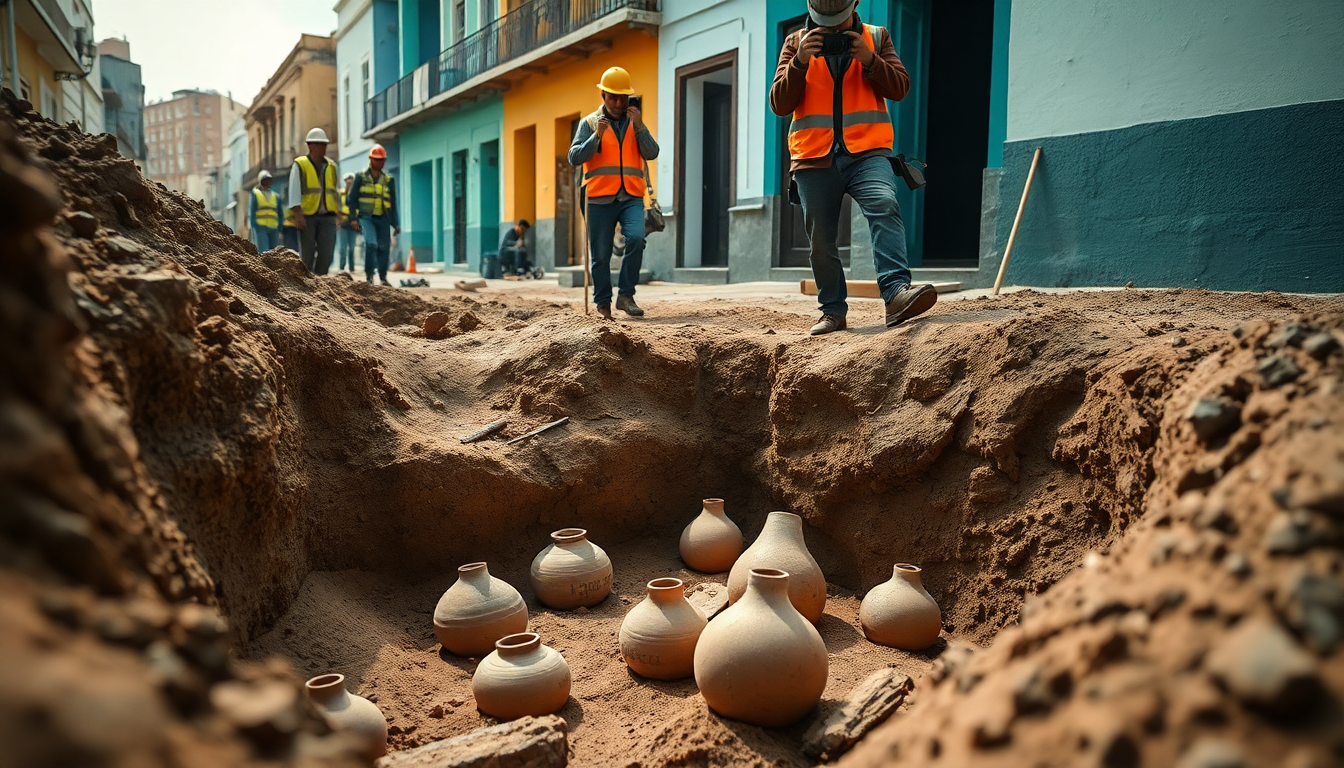
In a surprising twist, utility workers in Lima, Peru, recently stumbled upon two ancient pre-Incan tombs while digging trenches to expand the city’s underground gas networks. One tomb was empty, but the other held the remains of a person thought to be around 1,000 years old, along with four clay vessels and three artifacts crafted from pumpkin shells. This incredible discovery sheds light on the rich history that lies just beneath the vibrant streets of Lima.
The Archaeological Treasure Trove of Lima
This isn’t the first time that Cálidda, the natural gas distribution company in Lima, has uncovered archaeological treasures during its ongoing excavation projects. Over the last two decades, the company has documented more than 2,200 significant finds, which clearly illustrates that Lima is a city deeply rooted in history.
Archaeologist José Aliaga points out that the designs on the discovered vessels, with their striking black, white, and red colors, connect directly to the Chancay culture, which thrived between 1,000 and 1,470 years ago. He described how the remains were found in a sitting position, wrapped in a tattered bundle, with the legs drawn up—a common burial practice among ancient cultures. His team is currently focused on the delicate work of cleaning and preserving these historic remains.
Lima, home to about 10 million people, stands out among Latin American capitals. The city boasts over 400 archaeological sites, many dating back to the Inca era and even earlier. The Ministry of Culture has meticulously documented these sites, weaving a rich historical narrative that often comes to light during civil projects across the city.
Community Response and Historical Significance
As news of the discovery spread, many locals flocked to the excavation site, eager to capture the moment on their smartphones. Flor Prieto, who was out enjoying a walk with her 7-year-old daughter, expressed her amazement at the finds. “I always thought these were paths where no one had lived,” she shared. “But now I know that people older than the Incas have lived there…it feels so exciting.” This excitement reflects the thrill that each archaeological revelation brings to Lima’s residents, reminding them of the layered history that lies just beneath their feet.
Pieter Van Dalen, dean of the College of Archaeologists of Peru, emphasized that such discoveries are not uncommon along the Peruvian coast, especially in Lima, where tombs and mummified remains frequently surface. He added that these ongoing excavations do more than just unearth artifacts; they unveil the rich cultural practices and traditions of ancient civilizations that once flourished in this region.
A Commitment to Exploration and Preservation
The ongoing excavations in Lima serve as a crucial reminder of the importance of preserving archaeological sites amid urban development. As the city continues to expand its infrastructure, finding the right balance between modernization and protecting its historical heritage becomes increasingly vital. Each discovery not only offers a glimpse into the past but also highlights the need for careful planning and respect for the archaeological significance of the land.
As Lima moves forward, collaboration between utility companies and archaeologists will be essential to ensure future discoveries are treated with the care and expertise they deserve. The recent finds, rich in historical context and tied to the Chancay culture, are just the latest chapter in Lima’s ongoing narrative—a story that continues to unfold as the city grows and evolves.