
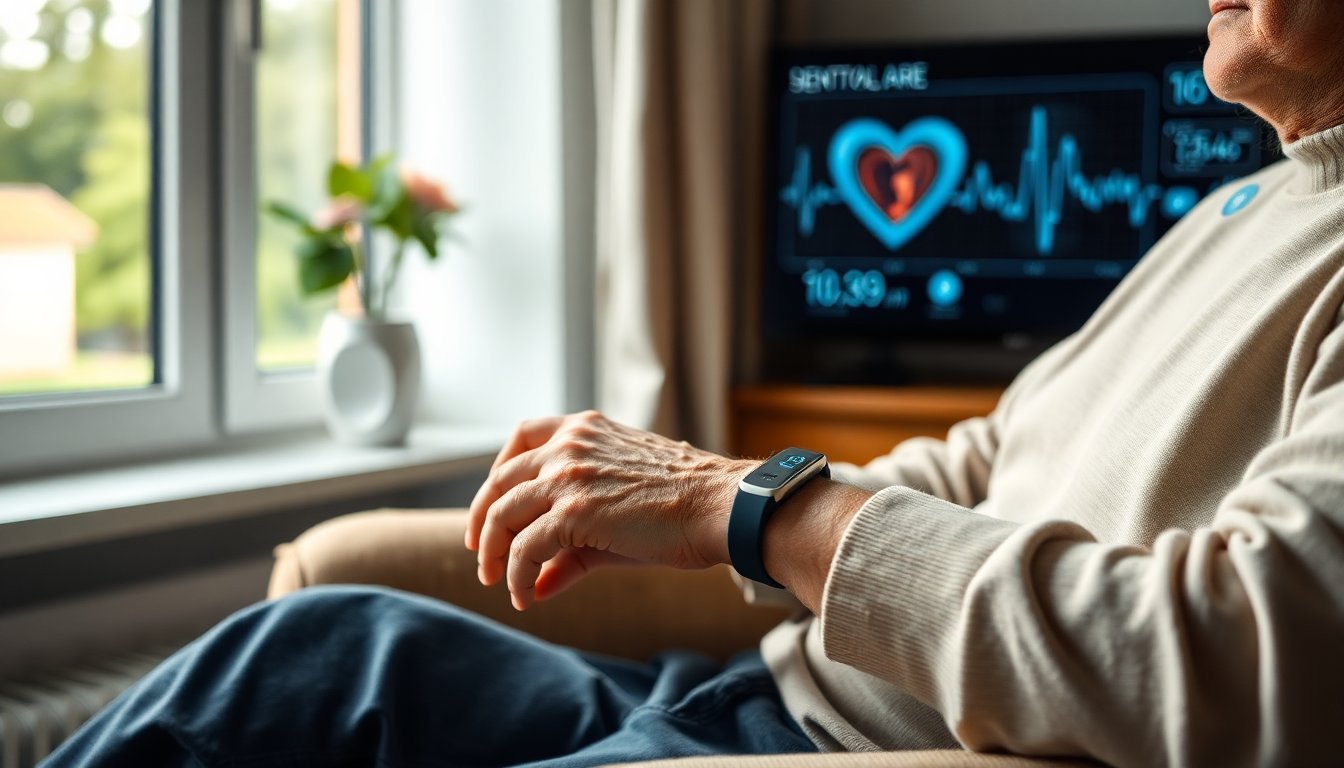
AI-powered remote monitoring is changing how we manage heart failure—making care more proactive, less disruptive, and better tailored to patients’ lives.
Why this matters
– The problem: Heart failure still drives high rates of illness, death and hospital readmissions worldwide. For patients, the typical pattern—frequent clinic visits, delayed recognition of deterioration and fragmented handoffs—erodes quality of life. For health systems, persistent hospitalizations and mounting costs remain major challenges despite guideline therapies.
– The opportunity: Continuous physiological monitoring, combined with machine learning, promises earlier detection of worsening heart failure so clinicians can act before a crisis forces hospital admission.
What the technology does
– Who benefits: people living with chronic heart failure, the cardiology teams who care for them, and health systems seeking to reduce avoidable admissions.
– How it works: Sensors from wearables, implanted devices and home monitoring tools feed streams of data (heart rate variability, activity, weight trends, thoracic impedance, pulmonary pressure, symptom reports). AI models synthesize these signals into risk scores or alerts that guide timely clinical responses.
What the evidence shows
– Early detection: Randomized trials and prospective cohorts demonstrate that multimodal sensor systems can flag subtle physiologic changes days to weeks before clinical decompensation. Implantable pulmonary artery pressure monitors (for example, the CHAMPION programme) have produced some of the strongest trial evidence, showing reductions in heart-failure hospitalizations in selected populations.
– Prediction and readmissions: Machine-learning models trained on registry and EHR data often outperform traditional risk scores for predicting 30-day readmission, especially when they include longitudinal sensor data and biomarkers.
– Patient engagement: Trials and real-world registries report better adherence and engagement when monitoring is passive (devices collect data automatically). Systems that require daily manual input generally suffer lower long-term use.
– Variable quality: Study designs, sensor mixes, algorithm training data and alert thresholds differ widely. Some evidence comes from multicenter randomized trials; other reports are single-center or observational. This heterogeneity complicates direct comparisons and pooling of results.
Practical considerations for implementation
– Clinical integration matters: Technology alone doesn’t change outcomes—defined clinical workflows that translate alerts into medication adjustments, nurse outreach or expedited clinic reviews are essential.
– Validation, transparency and equity: Regulators and guideline panels expect validated algorithms, transparent performance metrics, prospective testing across diverse populations and ongoing post-market surveillance.
– System effects and costs: Potential gains include fewer avoidable admissions and more efficient outpatient resource use. Realized value depends on device costs, false-alert burden, and whether care teams have the capacity to act on notifications.
– Risks to manage: Data privacy, alert fatigue, overmedicalization and opaque “black-box” models are genuine concerns. Systems should preserve clinician judgment, support shared decision-making and prioritize explainability and auditability.
Regulatory and real-world outlook
– Regulators: The FDA has cleared several remote monitoring tools; the EMA calls for robust clinical validation and continuous monitoring after rollout. Both agencies are adapting frameworks for continuous-learning systems, asking for transparent plans for post-market evidence.
– Ongoing research: Numerous trials and registries are refining biomarker weighting, reducing false positives and testing implementation strategies across settings. Future work will clarify which patients gain the most and how to deploy tools equitably.
Implications for patients and clinicians
– For patients: Continuous monitoring can provide reassurance, earlier therapeutic tweaks and potentially fewer disruptive hospital stays—improving symptom control and day-to-day wellbeing when paired with responsive care.
– For clinicians: These tools can prioritize patients at imminent risk and focus scarce outpatient resources, but only if alert workflows are practical, actionable and integrated into existing care patterns.
– For health systems: Scaling effective programs requires investment in interoperability, clinician training, reimbursement models that reward proactive care, and registries to track long-term outcomes and equity.
What’s next
– Expect tighter interoperability standards, new reimbursement pathways for proactive management, and a stronger emphasis on prospectively registered trials with pre-specified endpoints.
– Successful adoption will rest on a mix of rigorous randomized evidence, pragmatic real-world evaluation, transparent algorithms and thoughtfully designed clinical pathways that center patient benefit and clinician trust.
Key references and sources to consult
– CHAMPION trial publications on pulmonary artery pressure monitoring
– Randomized trials, meta-analyses and reviews in leading journals that evaluate device-based and algorithm-driven monitoring
– Guidance and statements from the FDA and EMA
– Systematic reviews and real-world registry analyses indexed on PubMed and ClinicalTrials.gov
If you’d like, I can: condense this into a one-page executive summary, tailor it for a patient-facing brochure, or produce a slide deck outline for clinical leadership. Which would be most helpful?