
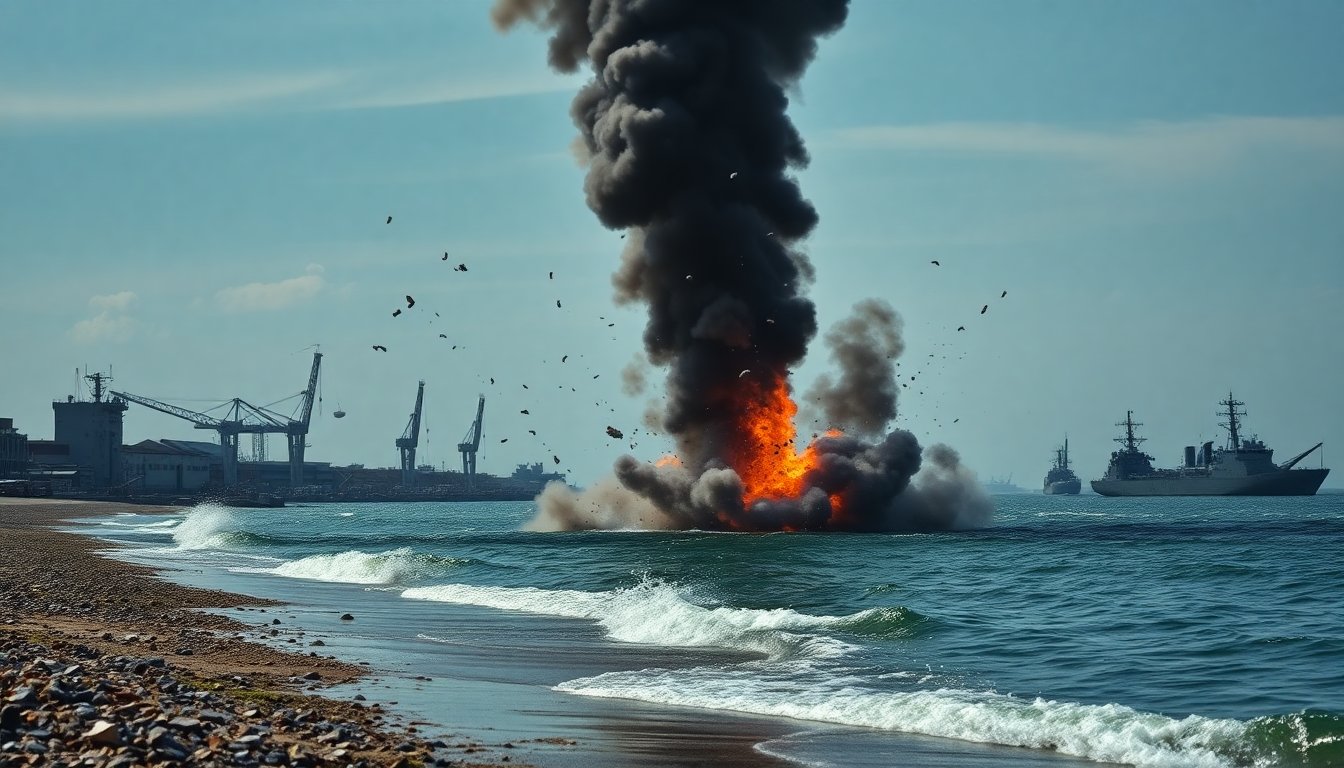
A sudden explosion rocked the shore near U.S. naval facilities in Bahrain after what officials described as an Iranian strike. Bystander video captured a sharp blast, a rising column of dark smoke and fragments scattering through the air; voices in the footage register alarm as debris streaks across the skyline.
The blast reportedly struck close to sites linked to the U.S. Fifth Fleet, though the full picture remains unclear. Authorities and analysts are still verifying what was hit, how extensive the damage is and whether there were any casualties. Military and diplomatic channels have shifted into high gear as governments weigh immediate responses and try to piece together what happened.
What the footage shows — and what it can’t
The raw video provides undeniable visual evidence of a powerful detonation and a quickly expanding smoke plume. But a single clip — often filmed from moving vehicles — distorts scale and distance, so it cannot by itself determine who fired, why the strike occurred or the precise target. Experts caution against jumping to conclusions without corroboration.
Investigators are assembling many information streams: local security reports, official naval statements, radar tracks, debris analysis and signals intelligence. Early accounts often conflict and leave holes, so cross-checking is essential before policymakers take irreversible steps. Even so, preliminary findings are already shaping behavior in the region, from military deployments to commercial precautions.
Immediate military and commercial moves
In the aftermath, regional forces intensified patrols and surveillance, tightening monitoring of maritime traffic and airspace. Coalition partners convened coordination calls and adjusted operational patterns to reduce exposure. Analysts are matching the video to sensor data and eyewitness accounts while searching for weapon signatures in radar and intercepts.
Several states shifted additional ships and aircraft into the northern Persian Gulf and bolstered air defenses around key facilities. Those moves aim to deter follow-on strikes and protect ports, choke points and high-value assets. At the same time, shipping companies and insurers are re-evaluating routes and premiums, and port authorities warn that precautionary measures may cause delays and raise freight costs in the near term.
Escalation risks and possible responses
Iran maintains inventories of ballistic missiles, cruise missiles and unmanned aerial systems capable of reaching targets across the Gulf. Former officials and regional analysts say any retaliation would likely be calibrated to perceived intent and the scale of damage. If Tehran or allied groups judged an attack to threaten vital interests, a response could expand beyond an initial target and potentially touch partner states or economic infrastructure such as oil facilities and shipping lanes.
Decision-makers face a difficult trade-off: bolster defenses, harden infrastructure, conduct targeted strikes or impose sanctions — but each option risks widening the conflict. Attribution and proportionality will be central considerations; governments will want robust evidence of responsibility before taking steps that could provoke further retaliation.
Diplomacy, signaling and the broader context
Even as militaries tighten security, diplomatic channels remain active. Back-channel talks and public negotiations are being used to reduce the risk of miscalculation and to clarify red lines and de-escalation mechanisms. In crises like this, perception can be as decisive as capability: measured signaling can contain an incident, while impulsive moves can inflame it.
Coordinated diplomatic pressure, clear communication among allies and independent attribution efforts all reduce the odds of a prolonged campaign. Military posture adjustments may buy time for dialogue, but they cannot replace negotiation. Any durable solution will need to address both security concerns and the humanitarian and economic fallout that follow such strikes.