
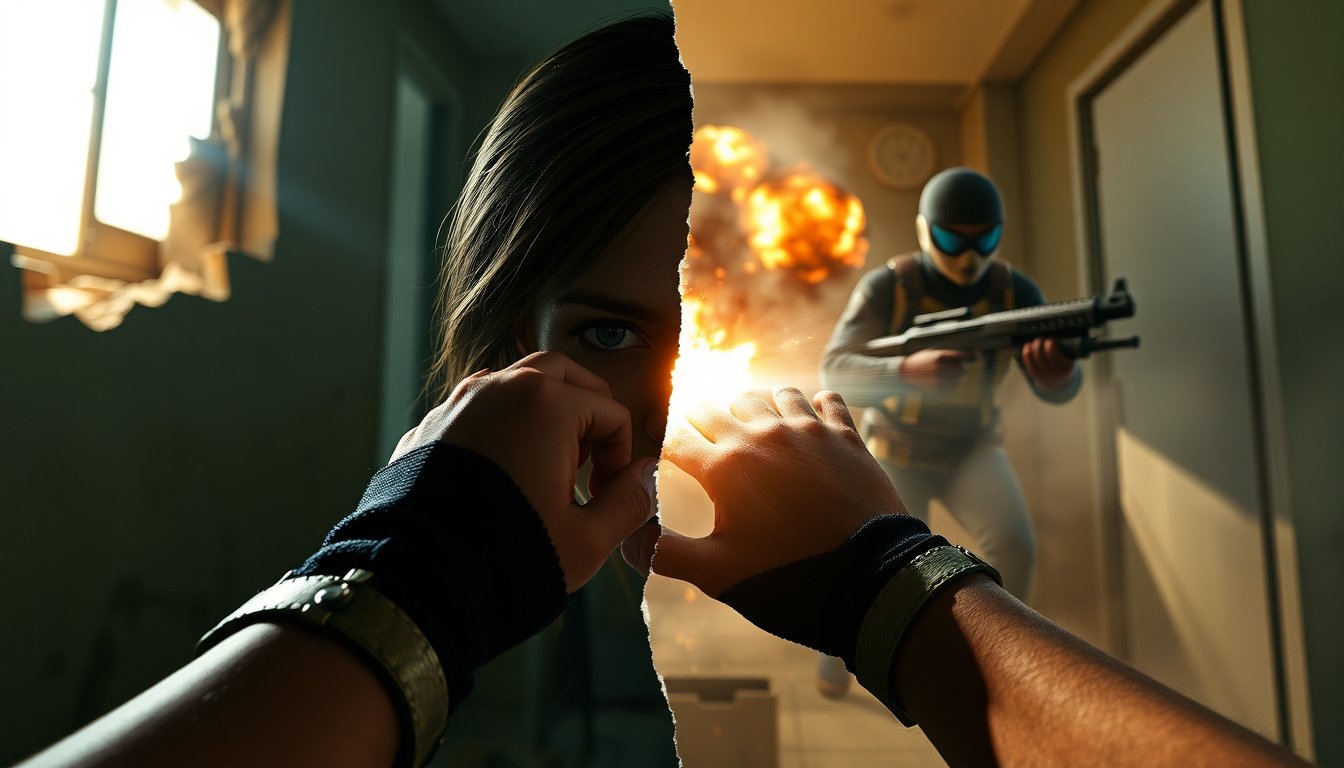
Resident Evil Requiem is a bold, sometimes messy experiment: it pairs tense, first-person survival with fast, third-person action. On its best days the contrast feels deliberate and cinematic; at other moments the two halves pull against each other, leaving the campaign unsteady after a strong opening.
What the game tries
– Two protagonists, two moods. Grace’s chapters narrow your field of vision and your resources, turning exploration, stealth and puzzles into the main game. Leon’s sections flip the script: wider sightlines, bigger arenas, flashy combos and a looser inventory that encourages improvisation.
– A single engine, two loops. The team built separate encounter trees, AI tuning and inventory rules for each perspective, then stitched them together with modular level templates and narrative triggers. This lets the title reuse assets while delivering different kinds of play.
The highs
– Production polish: visuals, animation blending and cinematic direction are consistently strong. On modern consoles and SSD-equipped PCs the game runs smoothly most of the time, with stable frame pacing through the core combat moments.
– Distinct identities: shifting viewpoints do more than change camera angles — they reinforce character and tone. Grace’s scarcity makes each choice meaningful; Leon’s momentum delivers satisfying feedback when you string combos together.
– Replay value: branching encounter flags, collectibles and divergent inventory systems give reason to come back and try different strategies.
The problems
– Pacing collapses late. The campaign’s first half builds dread and momentum; the second repeats mechanics and stretches objectives until the rhythm blunts. Transitions that once felt cathartic begin to read as filler.
– Balancing headaches: tuning two fundamentally different systems is hard. Players who prefer one style can find the other disruptive, and small changes to AI perception or item spawns can swing a sequence from tense to tedious.
– Occasional performance dips in the most asset-heavy scenes and a few inconsistently timed camera swaps that affect aiming and control feel.
How the two styles work
– Grace (first-person): tight corridors, limited slots, environmental puzzles that gate progress. The emphasis is on observation, stealth and choice — engage, evade or conserve. AI perception, lighting and audio cues are tuned to keep threats ambiguous and make discovery satisfying.
– Leon (third-person): larger arenas, stagger windows, environmental hazards and an expandable loadout. Combat rewards mobility, timing and creative use of terrain. It feels arcade-like compared with Grace’s methodical pace.
Design takeaways and practical uses
– Modular encounter templates are a smart way to deliver perceived variety without ballooning asset costs. They let developers tweak spawn density, loot curves and enemy behavior per mode, and make targeted post-launch patches faster to implement.
– Accessibility and tuning: toggles for resource abundance or enemy perception can preserve the intended contrast while accommodating different audiences.
– For creators and speedrunners, Leon’s spectacle is tailor-made for highlight reels; Grace’s design favors methodical players who enjoy exploration and puzzle solving.
Market context
– Requiem sits between survival-horror purism and action-oriented shooters. Its hybrid approach will attract players who like variety and creators who want shareable moments, but long-term reception depends on whether future updates fix mid- and late-game repetition.
– Publishers that commit to modular updates — adding branching encounters, enemy variants and expanded objectives — can materially extend the title’s lifecycle.
To match that promise across the whole campaign, the team should focus post-launch efforts on diversifying later encounters, smoothing pacing transitions and tightening a few performance hotspots. With a few well-targeted updates, the game’s innovative architecture can become the reason players keep returning. Release note: Resident Evil Requiem launches February 27, 2026.