
Table of Contents
The future of Venezuela’s oil industry remains uncertain, particularly amid shifting political dynamics influenced by the interests of the Trump administration. Venezuela possesses an impressive 303 billion barrels of crude oil reserves, the largest in the world. However, despite this potential, the country has faced significant challenges in maintaining its status as a petrostate. Historical factors, economic mismanagement, and external pressures have contributed to its classification as a failed petrostate.
The paradox of abundance
Venezuela’s oil wealth presents a complex dilemma. The country relies heavily on oil exports, primarily shipping crude to China. However, its production capabilities have sharply declined, generating approximately $4 billion in annual oil exports. In stark contrast, Saudi Arabia reports impressive figures of $181 billion. This disparity raises an essential question: how has a nation rich in resources experienced such profound economic turmoil?
A history of missteps
Understanding Venezuela’s current challenges requires examining its past, starting in 1922 with the discovery of oil, which triggered a booming industry and rapid growth. By the late 1920s, Venezuela was producing over 137 million barrels annually, making it the second-largest oil producer globally, following the United States. However, this economic expansion came with significant drawbacks, as other vital sectors were neglected, laying the groundwork for future crises.
The 1970s ushered in another oil boom, propelling Venezuela to the highest per capita income in Latin America. Nevertheless, the collapse of global oil prices in the 1980s led to an economic downturn, exacerbated by rampant inflation and considerable foreign debt acquired from investments in refineries abroad.
Chávez and the decline
The election of Hugo Chávez in 1998 marked a significant turning point for Venezuela. His administration initiated a systematic dismantling of the oil industry, leading to the dismissal of thousands of skilled workers. By the mid-2000s, oil prices reached a peak, only to crash again by 2014. This volatility, coupled with mismanagement and rampant corruption, has severely damaged Venezuela’s oil production capabilities.
External pressures and sanctions
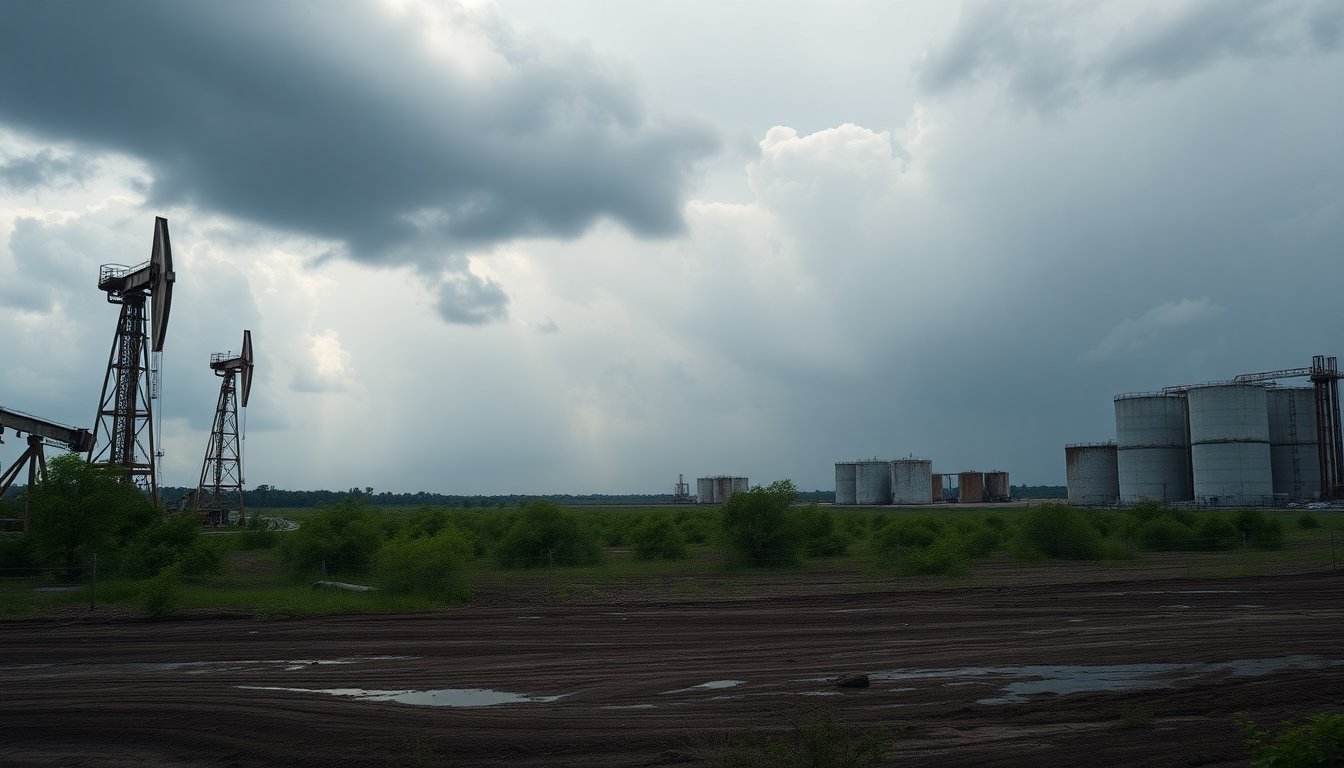
In recent years, U.S. sanctions targeting Venezuela’s oil exports have complicated the situation further. These sanctions have restricted the state-owned oil company PDVSA from accessing international markets. Consequently, the country faces overflowing storage tanks filled with crude oil that cannot be sold, exacerbating the nation’s economic difficulties.
The potential for U.S. oil companies in Venezuela
As the Trump administration moves forward, discussions have emerged regarding the possible return of U.S. oil companies to Venezuela. President Trump has indicated that these companies might invest billions to revitalize what he describes as a badly broken oil infrastructure. Such a partnership could lead to an increase in oil production, contingent upon necessary investments and a stabilized political environment.
Market data shows that U.S. refineries along the Gulf Coast are equipped to process Venezuela’s heavy crude. This capability could facilitate a significant increase in oil imports from Venezuela, potentially offering a mutually beneficial arrangement that would help the U.S. reduce its reliance on more expensive crude from Canada.
Looking towards a diversified future
The path forward for Venezuela is filled with challenges. The global transition to renewable energy sources presents a significant hurdle for the country’s oil-dependent economy. As nations increasingly adopt cleaner energy solutions, Venezuela must seek ways to diversify its economy to achieve stability.
Venezuela has initiated efforts in this direction, becoming a participant in the Paris Agreement, a binding treaty supported by nearly 200 countries. However, given the extent of its economic and political crisis, achieving economic diversification will be a complex task. Revitalizing the oil sector may be essential for fostering the development of other industries.
Despite the Trump administration’s interest in Venezuela’s oil sector, significant challenges persist. The country’s prospects as an oil powerhouse depend on its ability to overcome historical obstacles, manage external pressures, and prioritize economic diversification.