
Table of Contents
As winter approaches in Canada, road construction faces significant challenges due to the harsh cold. Dr. Haithem Soliman, an associate professor at the University of Saskatchewan, is leading a research project aimed at developing effective methods for constructing roads that can endure frigid temperatures. The objective is to extend the construction season and enhance the quality of roadways in Saskatoon.
Traditional asphalt, the primary material used in road construction, must be applied at elevated temperatures for optimal performance. However, cold weather complicates this process, leading to brittle surfaces that are more susceptible to damage. This research initiative seeks to address these challenges directly and uncover innovative solutions.
Understanding the challenges of cold-weather road construction
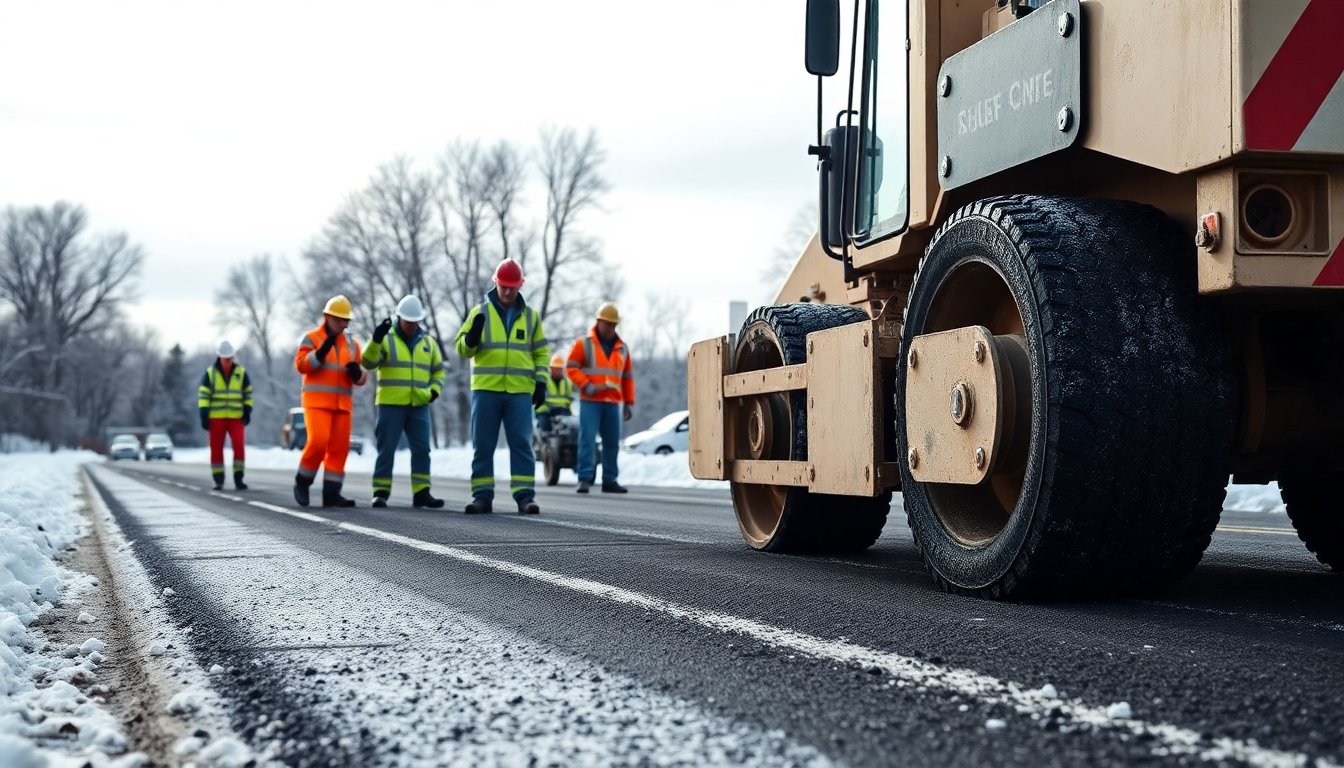
For asphalt to achieve the desired durability and density, it must be sufficiently heated before application. When temperatures drop, asphalt can cool too quickly, creating air voids that may fill with water. This water then freezes, expanding and causing cracks, akin to how a sealed bottle of water bursts when frozen. This phenomenon contributes to pothole formation and surface damage, which poses significant concerns for municipalities.
The impact of Canadian winters
In Canada, particularly Saskatchewan, the construction season is often restricted to a few months of warmer weather. Matthew Hiltz, asset preservation manager for the City of Saskatoon, explains that construction projects frequently extend into the fall, creating a race against time as winter approaches. Understanding the limitations imposed by cold weather is crucial for developing strategies that enable effective construction.
Researching innovative materials and techniques
The collaborative project between the University of Saskatchewan and the City of Saskatoon is supported by the Research Junction Initiative, which funds projects addressing local needs. In its initial phase, researchers are examining practices from other municipalities with similar weather patterns, seeking insights into effective cold-weather road construction.
One focus of the research is on developing warm mix asphalt, a type of asphalt that can be laid at lower temperatures than conventional asphalt. This flexibility could enable contractors to work later into the fall, thereby extending the overall construction window.
Exploring new additives for improved road performance
In addition to warm mix asphalt, the research team is investigating various additives that could enhance asphalt performance in cold conditions. By identifying these materials, the initiative aims to provide practical recommendations for road construction in colder climates. These advancements could lead to significant cost savings and improved road quality over time, making it a worthwhile investment for the city.
Collaboration for a better future
The partnership between the university and the city represents a significant opportunity for collaboration. Dr. Soliman expresses enthusiasm about the project, noting that this is his first direct collaboration with the City of Saskatoon. The combination of academic research and municipal expertise provides a unique approach to addressing the pressing issues of winter road construction.
As the team continues its research, it aims to deliver concrete recommendations for enhancing late-season pavement work. If successful, this initiative could transform road construction practices in Saskatchewan, paving the way for more durable roads capable of withstanding winter challenges.