
Table of Contents
The political landscape around Iran has drawn fresh attention after comments from allies of Reza Pahlavi, the 65-year-old exiled royal who is increasingly presenting himself as a potential leader in a post-regime scenario. At a media briefing reported on 19/03/2026, his inner circle publicly questioned the role of China and signalled a possible rethink of long-standing ties with both China and Russia. Observers note that these declarations contrast with the more cautious posture voiced by Washington, and they have raised questions about how Tehran’s external partners might respond if internal dynamics shift.
During the same briefing, Cameron Khansarinia, identified as the crown prince’s chief of staff, criticised Beijing’s involvement as a mediator in ongoing conflicts, describing mediation as an intervention aimed at brokering a settlement between parties. He framed the current Iranian leadership as losing domestic legitimacy and pointed to recent violent incidents and security developments as markers of stress within the system. The briefing framed these developments as part of what the team calls the ‘peacock throne’s gambit’—an approach they describe as a strategic repositioning of Iran’s opposition and diplomatic posture.
What allies are saying about internal contacts
Pahlavi’s camp has repeatedly stressed that the prince remains in touch with networks inside Iran, including within the state apparatus. According to Khansarinia, these connections reach into bureaucratic and security institutions that could be decisive at a tipping point. The team maintains that many actors are waiting for a signal from Pahlavi to act, a scenario where protest movements and elements inside the state might coordinate to press for a transition. The phrase stable transition is emphasised often by the exiled team and is presented as their organising principle for what would come after a potential collapse of the current system.
Signals from within the state and security services
Khansarinia asserted that some figures embedded in the state bureaucracy and armed services are prepared to distance themselves from the ruling apparatus at the right moment. This claim includes the expectation that such defections could help secure public order and legitimacy during a transfer of power. The team describes a potential role for Pahlavi in convening those forces, suggesting he could act as a unifying figure for disparate institutions. The notion of stable transition is used to convey a managed, institutional path away from disorder and towards elections under a secular democratic framework, according to the exiled leadership’s narrative.
Diplomatic consequences for Beijing and Moscow
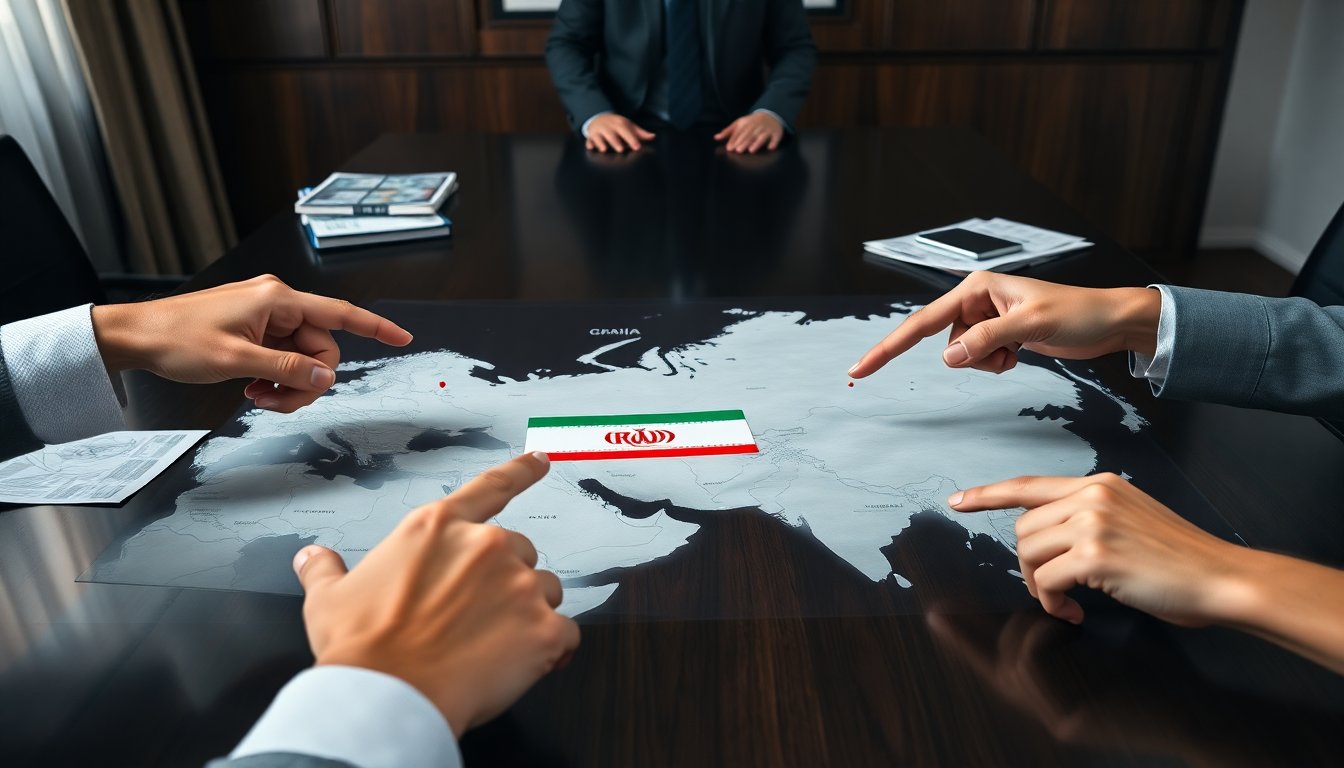
Beyond internal politics, the statements carry implications for Tehran’s international alignments. By publicly dismissing Beijing’s mediation efforts, Pahlavi’s allies signal a willingness to question partnerships that the current regime has cultivated, particularly with China and Russia. If momentum builds behind an alternative leadership, those relationships could be re-evaluated. Such a re-evaluation would not only affect bilateral ties but also regional strategic balances, especially in an environment where energy flows, security cooperation, and diplomatic recognition are closely intertwined.
How Beijing and Moscow might respond
Any change in Tehran’s domestic equation would force careful calculations from capitals that invested in the status quo. China and Russia could pursue a range of options from reinforcing ties with current authorities to hedging bets by engaging emerging actors. Analysts note that foreign responses are likely to be calibrated and cautious, given the risks of instability. Meanwhile, Washington has maintained a reserved public line, wary of endorsing any specific outcome while monitoring developments and humanitarian concerns on the ground.
Domestic fallout and international reactions
On the domestic front, Pahlavi’s team points to mass demonstrations and allegations of violent repression as evidence of the regime’s weakening grip. During media appearances, Khansarinia referenced casualty figures attributed by others to the wider campaign of suppression, citing a number that was publicly attributed to prominent international voices. These references are used to underscore urgency and to justify calls for coordinated action. Internationally, governments and institutions have reacted with a mixture of condemnation, cautious diplomacy, and calls for restraint, highlighting the complexity of responding to fast-moving political claims.
As the narrative evolves, observers will watch for concrete signs: defections within security circles, visible shifts in street mobilisation, and responses from key external partners. For now, Pahlavi and his advisers are projecting a plan that blends domestic mobilisation with diplomatic repositioning, while critics question the feasibility of rapid realignment. What is clear is that statements from the exiled prince’s camp have injected fresh uncertainty into Tehran’s foreign relations and intensified debate about the trajectory of Iran’s political future.