
Table of Contents
Fighting intensifies along israel-lebanon frontier as civilians flee
Who: Israeli forces and Hezbollah are exchanging air and ground strikes along the Israel-Lebanon frontier.
What: The conflict has escalated into one of the region’s most intense fronts. Lebanese authorities report a rising death toll as attacks continue across southern and eastern Lebanon. Hezbollah has urged residents near the border to evacuate. Israel says it will not relocate border towns and has moved additional troops into position.
When and where: The clashes are concentrated along the southern and eastern Lebanese border areas and nearby Israeli towns.
Why it matters: The fighting has created a mounting humanitarian crisis. Tens of thousands have sought shelter, and many cannot reach designated safe zones. Infrastructure damage is reported across Beirut’s southern suburbs and other areas. Both parties say they are targeting military sites, but civilians — including refugees and families with children — bear the heaviest toll.
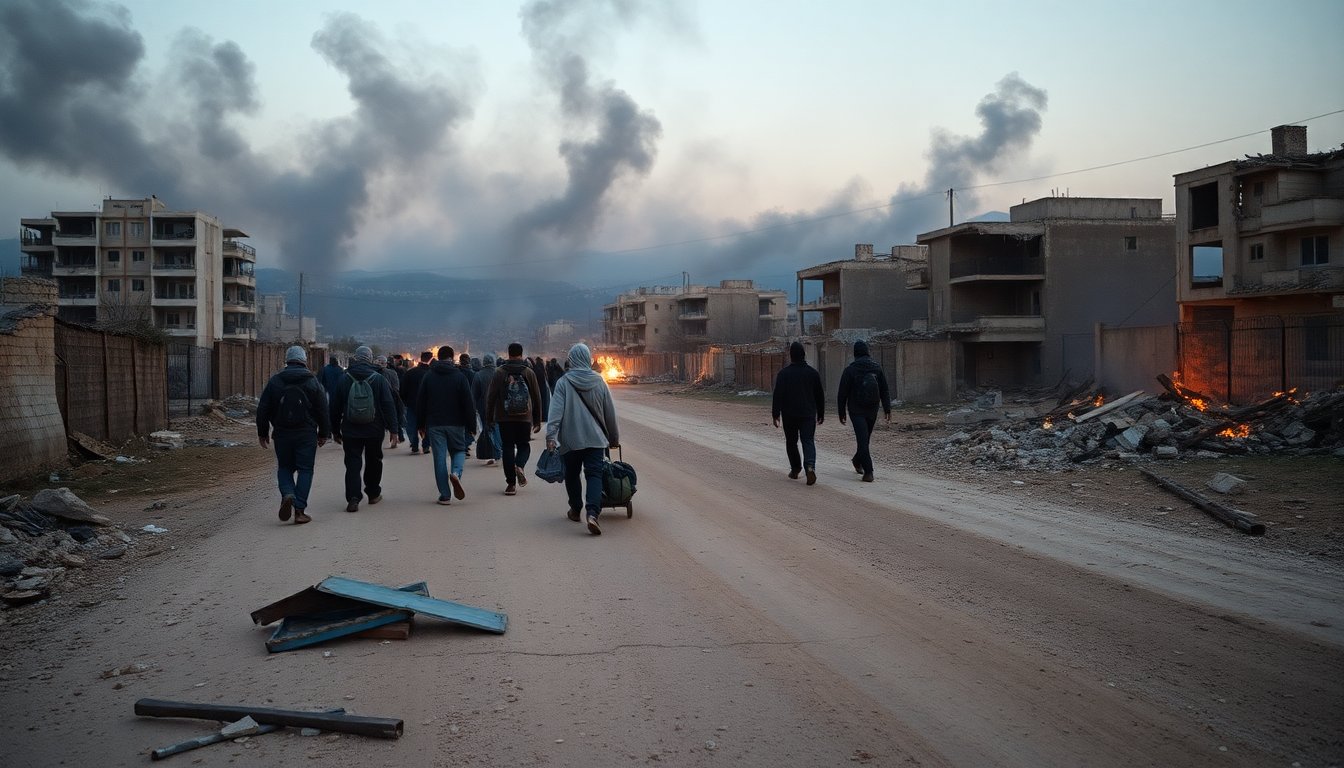
The scene is chaotic and immediate. Buildings are damaged, roads are impassable, and displacement is widespread. Humanitarian agencies warn of growing needs for shelter, medical care and basic supplies.
As a former chef turned writer, I note how sensory detail anchors facts: the acrid smell of smoke after strikes, the sudden silence where market noise once was. The palate never lies — and neither do the visible signs of a community under strain.
This account begins the report. Further updates will follow with verified casualty figures, humanitarian responses and statements from both sides.
Casualties, strikes and tactical claims
Lebanese health authorities reported a rise in deaths and injuries after a fresh series of air raids and other attacks across the country. The Ministry of Public Health published figures citing at least 123 fatalities and hundreds wounded following the latest wave of strikes.
State media and witnesses described nighttime and predawn attacks on multiple towns in the south and strikes farther east. Officials did not provide an exact breakdown by location for the reported casualties.
Israel said its operations targeted what it described as Hezbollah command centers and logistics sites. The military also cited strikes on warehouses and facilities it alleges were used for drone operations.
Humanitarian groups and local authorities are working to verify casualty figures and assess damage to infrastructure. Further updates will follow with confirmed figures, relief responses and statements from both sides.
Hezbollah’s response and cross-border engagements
Following previous updates, Hezbollah announced coordinated attacks against Israeli ground units and military installations. The group said its operations took place within Lebanese territory and included strikes on positions in the occupied Golan Heights and on naval facilities near Haifa.
Hezbollah issued a public warning urging Israeli civilians living within 5 km (3 miles) of the border to leave. The group described the order as a precautionary measure amid escalating hostilities.
In its statements, Hezbollah framed the actions as a defensive response to what it called assaults on Lebanese sovereignty and civilian infrastructure. Israeli authorities have not independently verified all of the group’s claims.
Ground movements, evacuations and military posturing
Israeli authorities have not independently verified all of the group’s claims. Israeli forces described recent troop deployments into southern Lebanon as part of a forward defence strategy aimed at preventing attacks on border communities. The Israeli military said additional positions were established along the frontier and that units were operating inside southern Lebanese territory.
Lebanese military sources reported withdrawing personnel from several forward positions near the border to protect troops amid intensified strikes. Officials said those withdrawals left some local civilian populations more exposed to cross-border fire and displacement risks. Humanitarian responders reported increased movement of families away from frontline areas.
Analysts said the deployments reflect heightened military posturing on both sides and increase the risk of wider clashes along the frontier. The movement of forces and civilians underscores the conflict’s potential to deepen unless de-escalation measures are pursued.
Orders, countermeasures and political claims
Following renewed exchanges, Lebanon’s government announced measures intended to reassert state authority and to ban non-state military activity within its borders. The authorities framed the decision as necessary to preserve the state’s exclusive right to decide on matters of war and peace.
Hezbollah rejected the measure. The group described it as unjustified amid what it called ongoing violations of national sovereignty and continued threats to Lebanese security.
The announcement follows recent movements of forces and civilians and aligns with efforts by state officials to reassert control over security decisions. Critics warn the step could heighten tensions unless complementary de-escalation measures are pursued.
Humanitarian fallout and displacement
Hundreds of thousands of people have been displaced after renewed exchanges of fire intensified across targeted suburbs and towns. Shelters established by the Lebanese government and humanitarian agencies have struggled to absorb the influx, leaving many families without secure accommodation.
Reporters on the ground described long lines at reception centres and overcrowded facilities. Many displaced people have been unable to access transportation to safer areas, forcing extended stays in makeshift arrangements or with host families. The strain is exacerbated by the presence of established refugee communities, including Syrians and Palestinians, which increases demand for limited food, medical care and shelter.
Humanitarian agencies warn that the situation could deteriorate further if access routes and supply lines remain disrupted. Aid workers cite shortages of clean water, emergency medical supplies and winterised shelter kits as immediate priorities for newly uprooted populations.
Behind every displacement there’s a story: families leaving homes, small businesses and social networks. Local officials and relief groups say coordinated de-escalation and safe corridors are critical to allow orderly movement and to expand humanitarian assistance.
Humanitarian coordination clusters are calling for increased funding and unobstructed access for relief convoys. Rapid scaling of shelter capacity, transport support and basic services is needed to prevent secondary crises among displaced civilians.
Displaced civilians face shortages of shelter, fuel and child care
Sources on the ground described urgent shortages of basic supplies, heating and childcare for people fleeing the fighting. Evacuees gathered on beaches and in improvised sites reported frustration and fear. Some said their families had already fled during earlier rounds of violence.
International agencies said tens of thousands were sheltering in formal facilities. Many more were sleeping in vehicles or stranded in traffic while moving away from front-line areas. The scale of needs is outpacing available support, officials and aid coordinators warned.
Rapid scaling of shelter capacity, transport assistance and basic services is required to prevent secondary crises among displaced civilians. Behind every displaced household there is a story of loss and disrupted routines, and the immediate priorities remain shelter, warmth and safe care for children.
Outlook and implications
The security situation along the Israel-Lebanon border remains volatile, with air raids, rocket and drone launches, and ground maneuvers shaping the near-term trajectory. Damage to populated areas and the rapid movement of civilians underline heavy humanitarian consequences. International actors continue to monitor developments closely as analysts warn that further escalation could widen the conflict and destabilize the region.
Immediate priorities remain civilian protection, access to shelters and humanitarian assistance, and measures to prevent a deeper, more prolonged confrontation. Military operations and political declarations are unfolding in parallel, indicating competing tactical aims and broader strategic calculations. Local communities on both sides face mounting uncertainty as services and supply lines come under strain.
Behind every displaced household there is a story of loss and disrupted routines. As a former chef I learned to read needs by taste and texture; here the test is plain and urgent: basic shelter, warmth and safe care for children. Humanitarian groups and regional actors have signalled support, but the immediate humanitarian challenge will depend on access and security on the ground.