
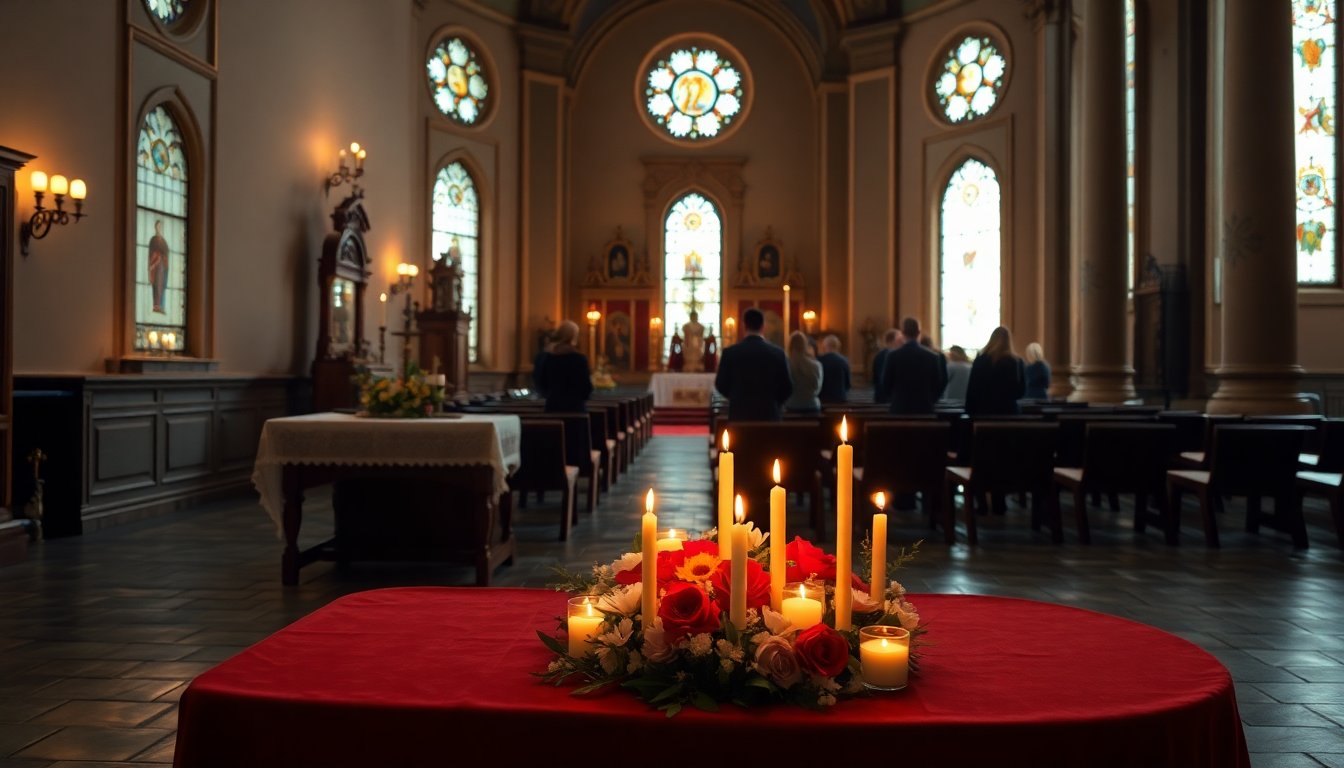
Since the onset of the extensive conflict in Ukraine, church services in Russia have seen a dramatic increase in costs. The Russian Orthodox Church has raised fees for essential rites such as weddings, baptisms, and funerals, placing significant financial burdens on families seeking these services. This trend has been further exacerbated by the rising demand for funerals due to wartime casualties.
According to a recent analysis from The Moscow Times, the average costs associated with these religious services have surged by nearly 40%. This increase is notably higher than the prevailing inflation rates, reflecting the unique circumstances surrounding the war.
Escalating costs of church services
Anastasia, a resident of Kopeysk in the Chelyabinsk region, experienced firsthand the shock of these new prices. Two years ago, she could arrange memorial prayers for her deceased relatives at a cost of just 100 rubles (approximately $1.25) per name for a year. Today, that same service costs a staggering 5,000 rubles (around $62) per name. “I was frozen in disbelief,” she recounted, highlighting how such financial demands can deeply affect grieving families.
Many parishioners are grappling with the reality that these so-called voluntary donations have transformed into what resembles fixed prices. The costs are set by individual church rectors and can vary widely depending on the region. For example, in central Moscow, fees are considerably higher compared to rural areas, reflecting the economic disparities across the country.
Understanding the financial dynamics
According to Archpriest Andrey Kordochkin, a former rector, the term “donation” is misleading in this context. “In reality,” he explained, “these payments function more like set prices.” The financial demands placed on parishioners have raised ethical questions. Some individuals argue that sacraments should be accessible to all, regardless of their financial situation.
The most significant increases have been observed in services that are in high demand, such as baptisms, weddings, and funerals. The rise in funeral services is particularly concerning, as estimates indicate that over 200,000 Russian soldiers have died since the beginning of the full-scale invasion. This stark reality has contributed to the heightened demand for such rites.
Financial management within the church
Interestingly, most of the funds collected by churches remain within local parishes or dioceses. Sociologist Nikolai Mitrokhin notes that the structure of the Russian Orthodox Church comprises numerous legally independent entities, which means that only a small fraction of income makes its way to the central Moscow Patriarchate. This financial independence can lead to wide variations in pricing and service availability across different areas.
Many church leaders, including Kordochkin, acknowledge that the rising costs are also influenced by practical considerations. Churches are facing increased utility costs and must ensure that staff wages keep pace with inflation. Additionally, many parishes are now required to make larger contributions to diocesan authorities, further straining their financial resources.
Church services and community response
Despite the financial burden, responses from the community vary. While some parishioners accept the price increases as a necessary consequence of current economic realities, others feel that the church should not operate like a commercial enterprise. Kordochkin emphasizes the importance of maintaining a spiritual environment within the church, stating, “It is crucial that those who come to worship do not feel as if they are entering a shop.”
The spiritual community is at a crossroads, grappling with the dual demands of providing essential religious services while managing rising operational costs. As the war in Ukraine continues to unfold, the financial landscape of religious practices in Russia remains in flux, prompting calls for a reevaluation of how these services are priced and offered.


