
Table of Contents
Escalation of violence in Sudan’s Kordofan region
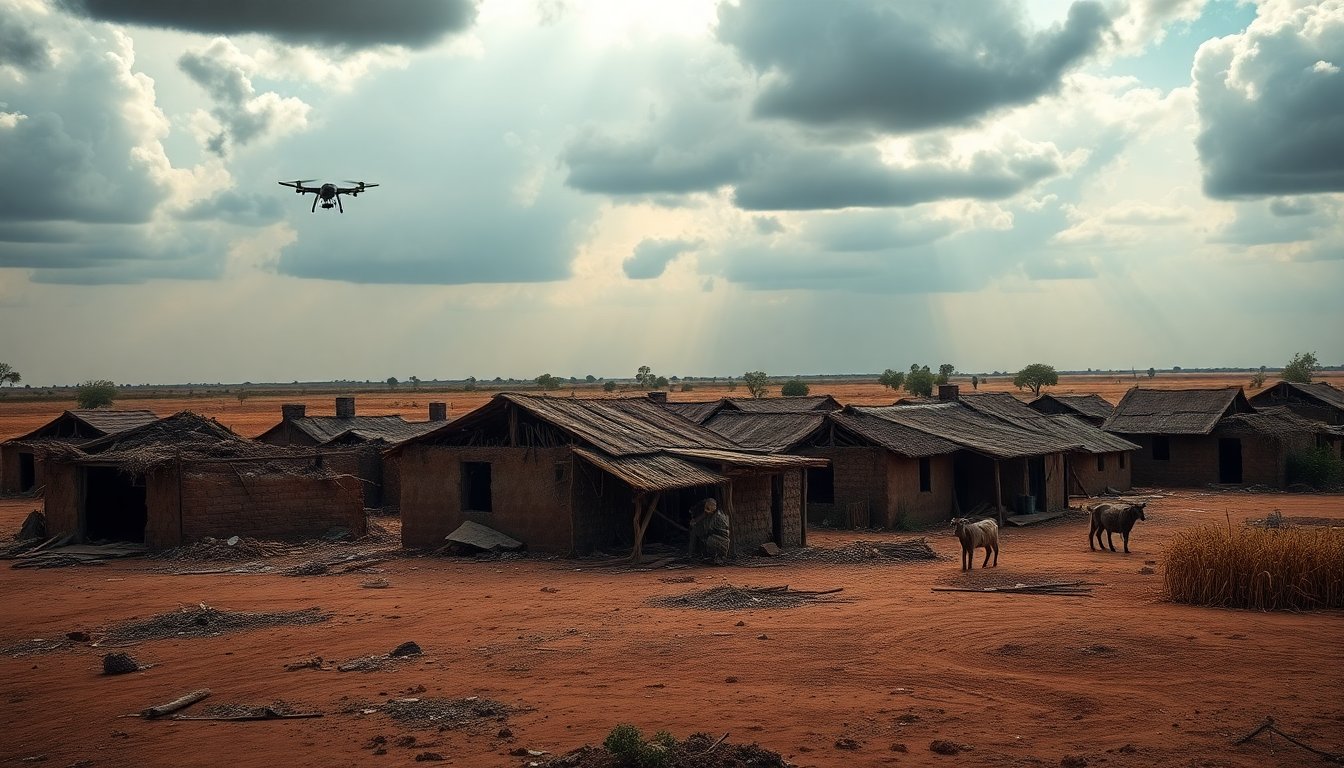
The conflict in Sudan’s Kordofan region has escalated dramatically. The United Nations reports a troubling increase in drone strikes that are targeting civilians. This surge has transformed Kordofan into a new epicenter of violence amid a civil war that has persisted for nearly three years.
During a recent meeting of the Human Rights Council in Geneva, UN High Commissioner for Human Rights Volker Turk highlighted the devastating impact of these attacks on innocent lives. The ongoing violence raises urgent questions about the protection of civilians in conflict zones.
Consequences of the ongoing conflict
The ongoing battle between the Sudanese Armed Forces (SAF) and the Rapid Support Forces (RSF) has plunged the nation into a humanitarian crisis. As the fighting escalates, civilians are increasingly caught in the crossfire, resulting in widespread bloodshed. Reports indicate mass killings and significant violations of human rights, transforming the situation in Sudan into a preventable human rights catastrophe.
Survivor accounts from the frontline
In his address, High Commissioner for Human Rights Volker Turk presented harrowing testimonies from survivors in el-Fasher, the capital of North Darfur. Following an 18-month siege, the city fell under the control of the Rapid Support Forces (RSF). Reports have emerged detailing alarming atrocities, including targeted attacks against civilians. Turk emphasized that the responsibility for these crimes rests squarely with the RSF and its backers, highlighting the urgent need for accountability and international intervention.
Drone warfare and its implications
The introduction of advanced drone weaponry by both the Sudanese Armed Forces (SAF) and the Rapid Support Forces (RSF) has heightened concerns regarding civilian safety. The United Nations recently documented over 90 civilian fatalities and more than 140 injuries attributed to drone strikes. A series of attacks in South Kordofan resulted in the deaths of 31 individuals, many of whom were targeted while seeking medical assistance.
On February 7, a devastating attack by the RSF targeted a vehicle carrying displaced families in central Sudan, claiming the lives of at least 24 people, including eight children. These incidents underscore the escalating danger faced by civilians as the conflict extends from the western Darfur region into central areas.
Impact on humanitarian efforts
The United Nations has voiced significant concern over the effects of drone strikes on humanitarian operations. Attacks by the Rapid Support Forces (RSF) have not only targeted civilians but have also disrupted vital infrastructure, including food and water supplies. Volker Turk highlighted that repeated strikes on facilities like the Merowe Dam have profound implications for healthcare and essential services in the region.
The World Health Organization and various humanitarian agencies are increasingly alarmed by the rising frequency of attacks on aid convoys. These assaults worsen the already dire conditions faced by millions of Sudanese. The state government of North Kordofan has condemned these violations of international humanitarian law and has called for immediate international sanctions against RSF leadership.
International response and the call for action
The ongoing violence in Sudan has prompted a strong international response, with calls for immediate action to address the escalating crisis. The United States has condemned the recent drone attacks on humanitarian convoys, stressing the necessity for accountability and support for those affected. Currently, more than 21 million individuals in Sudan are facing acute food shortages, further complicating the humanitarian situation.
Saudi Arabia has also expressed its concerns, labeling the actions of the Rapid Support Forces (RSF) as criminal. The prolonged conflict, according to the Saudi Ministry of Foreign Affairs, is largely attributed to foreign interference. The influx of weapons and mercenaries into Sudan exacerbates the violence and obstructs peace efforts. The ministry has urged an end to these violations and emphasized the urgent need for the RSF to comply with international humanitarian standards.
Critical juncture for Sudan’s Kordofan region
The ongoing conflict in Sudan’s Kordofan region has reached a critical juncture. The international community is now faced with a pressing challenge to address escalating violence and protect civilians.
Without decisive action, the situation is expected to worsen significantly. The implications for regional stability and humanitarian conditions could be profound, affecting not only Sudan but neighboring countries as well.
As the violence continues, the urgent need for effective intervention grows. The international response must prioritize the protection of civilians and the restoration of peace to prevent further deterioration of the crisis.