
Table of Contents
The political landscape in Washington is facing significant upheaval due to allegations involving Robert F. Kennedy Jr., the Secretary of Health and Human Services, and journalist Olivia Nuzzi. As details of their alleged affair emerge, concerns about integrity and journalistic ethics have surfaced, impacting both individuals’ careers.
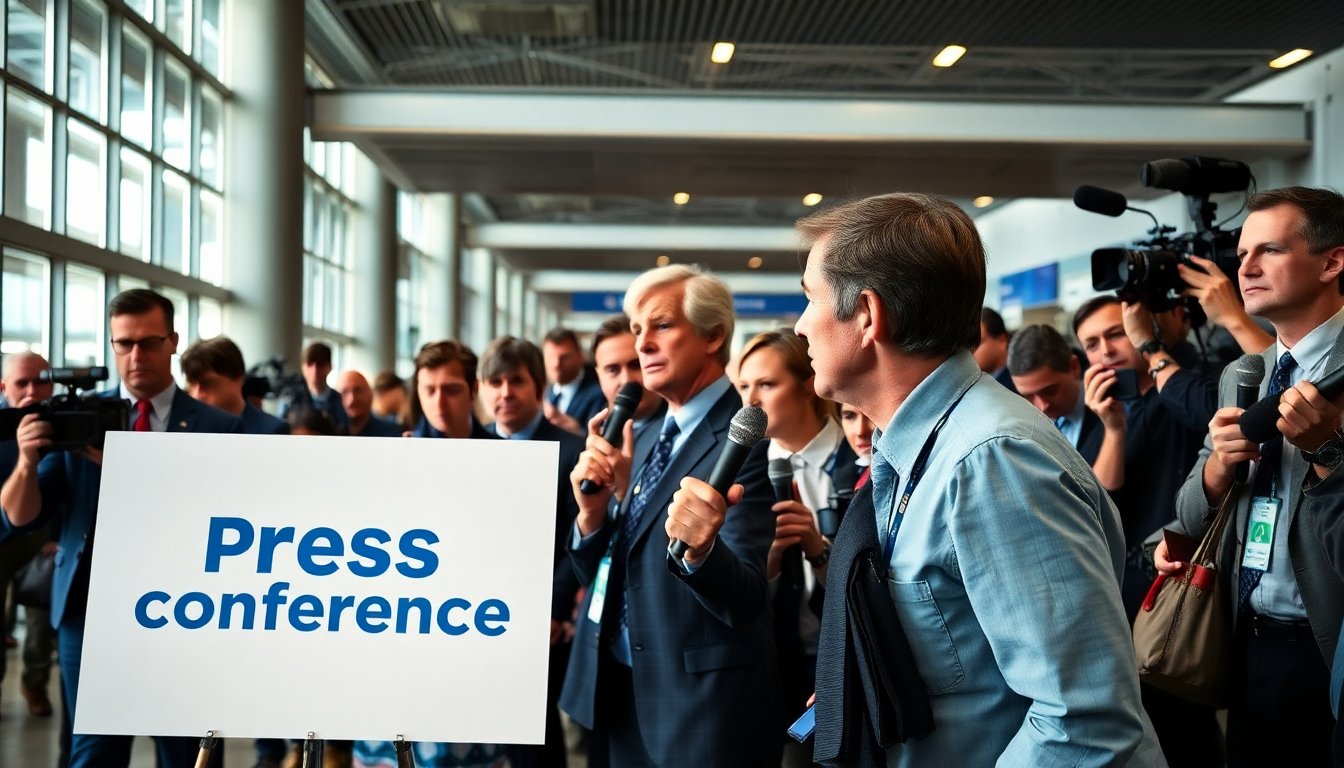
During a press conference at Ronald Reagan National Airport, Kennedy was questioned by a reporter from The Post regarding claims that Nuzzi had authored a strategic memo for him during his presidential campaign. Instead of addressing the question, Kennedy remained silent, casting a steely gaze at the reporter before quickly leaving the venue, effectively sidestepping the issue.
The unfolding narrative of the affair
Despite Kennedy’s denial of a sexting relationship with Nuzzi, allegations continue to circulate in the media. Recently, Ryan Lizza, Nuzzi’s former fiancé and an experienced journalist, released what he described as a strategy memo penned by Nuzzi for Kennedy. This document drew comparisons between Kennedy and the fictional character, Rocky Balboa, while also providing advice on navigating the competitive political landscape.
In the alleged memo, Nuzzi expressed frustration over media exclusion, stating, “It sucks, and it’s unfair that CNN and the major parties colluded to exclude you, but you have to deal with that reality as it is.” This candidness not only raised eyebrows but also suggested a potential conflict between her roles as a journalist and a political advisor.
Career repercussions for Olivia Nuzzi
As the scandal unfolded, Nuzzi’s professional life began to deteriorate. She was recently dismissed from her position as West Coast editor at Vanity Fair, a decision reached in collaboration with the magazine in light of the controversy. Her previous role included reporting for New York Magazine, where she was suspended amid revelations of her inappropriate relationship with Kennedy.
When the affair became public, New York Magazine released a statement acknowledging Nuzzi’s breach of the publication’s standards regarding conflicts of interest, leading to her suspension. Although the magazine’s internal investigation found no inaccuracies in her reporting, the damage to her reputation was substantial.
Public reactions and personal turmoil
The fallout from the affair has not only impacted Nuzzi’s career but has also generated personal discord. Cheryl Hines, Kennedy’s wife and actress, reportedly expressed her anger toward Nuzzi, referring to her as a “liar” in private discussions. This personal conflict adds another layer of complexity to the already fraught situation.
In her recent memoir titled American Canto, Nuzzi explores her experiences, including the alleged affair with Kennedy. She claims that Kennedy expressed a desire for her to bear his child, a revelation that further complicates the narrative. While Nuzzi acknowledges the affair, she has dismissed Lizza’s portrayal of events as a mixture of “fan fiction and revenge porn,” suggesting that her version is more nuanced than it appears.
Continuing implications for Robert F. Kennedy Jr.
While Kennedy continues to deny the allegations, the political implications remain significant. As a prominent figure in the government and a key player in the health sector, any scandal involving him could influence public perception and political dynamics. The controversy surrounding his alleged affair has the potential to hinder his political ambitions and tarnish his legacy.
Additionally, Ryan Lizza has not only criticized Nuzzi but has also raised concerns about her conduct as a journalist, claiming she shifted from being a reporter to acting as a political operative for Kennedy. This accusation highlights the ethical dilemmas present in the political journalism landscape, where the distinction between advocacy and reporting can become dangerously blurred.
During a press conference at Ronald Reagan National Airport, Kennedy was questioned by a reporter from The Post regarding claims that Nuzzi had authored a strategic memo for him during his presidential campaign. Instead of addressing the question, Kennedy remained silent, casting a steely gaze at the reporter before quickly leaving the venue, effectively sidestepping the issue.0