
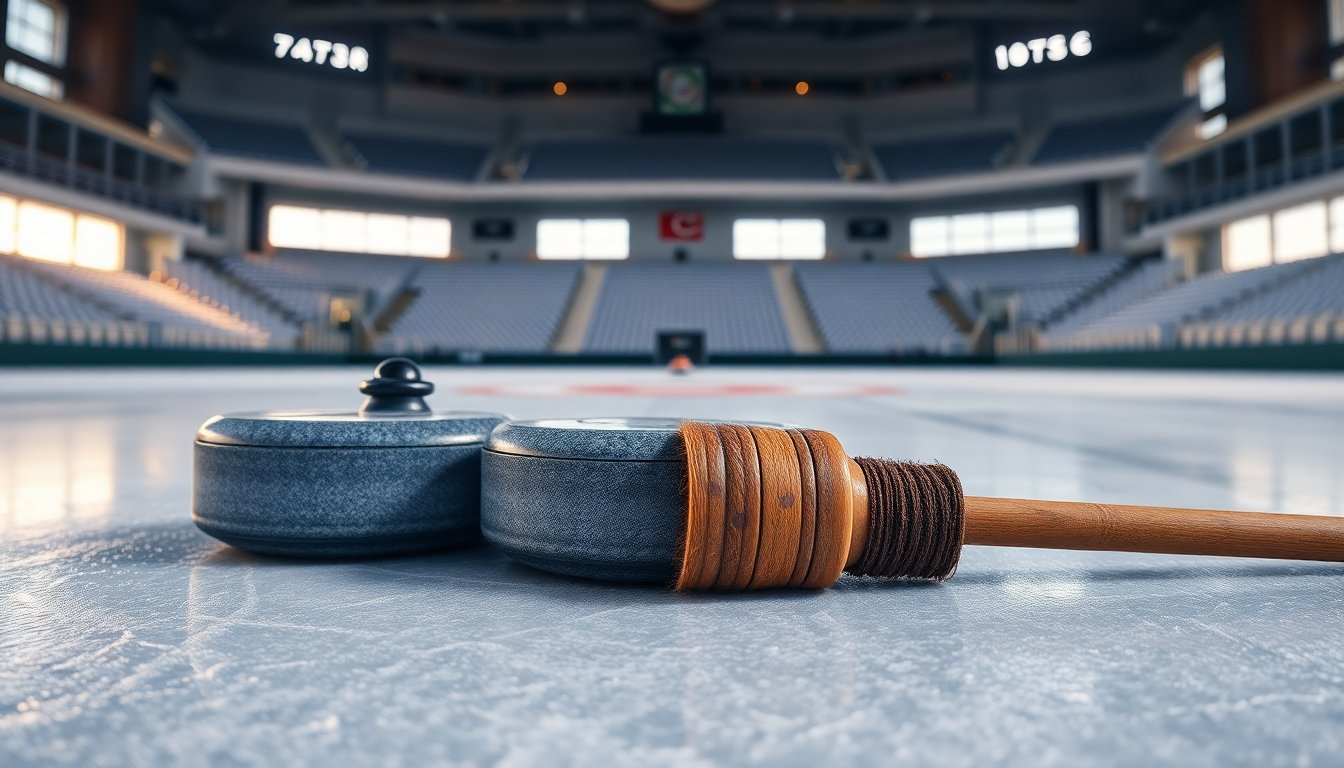
The professional face of curling has a new name: Rock League. The competition kicks off in Toronto at the TMU Mattamy Athletic Centre, launching on April 6 and concluding with finals on April 12. For audiences in the United States the entire preview week is available on ESPN+, which will pair live coverage with studio analysis and on-ice reporting. This first run is designed as a concentrated showcase that brings the sport’s top talent into one location and presents curling in a format tailored to live streaming and broadcast consumption. The week-long schedule and curated match-ups aim to introduce new viewers to the sport while offering familiar fans a higher-stakes competition than traditional events.
Behind the spectacle is a roster and structure built to emphasize elite, mixed-gender competition. Six franchises—Alpine Curling Club, Frontier Curling Club, Maple United, Northern United, Shield Curling Club, and Typhoon Curling Club—each field ten athletes split into five men and five women. In total the event collects 60 athletes, including 39 who competed at the 2026 Winter Olympics and 25 Olympic medalists. The week will also showcase 36 competitors who are Grand Slam champions and representation from 12 countries, a rare concentration of top-level curling talent in a single league setting intended to accelerate the sport’s professional evolution.
Broadcast team and presentation
Rock League’s American distribution leans on the reach of ESPN+, which brings a mix of live feeds, replays and integrated app features. Complementing the platform are an all-star broadcast crew assembled for ringside analysis: play-by-play duties are handled by John Cullen and Tyler George, while former champions like Jennifer Jones, Joanne Courtney, Mike Harris, and Chelsea Carey provide expert commentary. On-ice interviews and behind-the-scenes material will be produced by Devin Heroux and Matt Hamilton, offering ice-level perspective and quick-turn reaction. The combined presentation is intended to educate viewers about tactical elements while keeping the pace lively for streaming audiences.
Teams, talent depth and ownership
Rock League is operated by The Curling Group and its co-founder and CEO, Nic Sulsky, has positioned the league as a platform to highlight the sport’s best players in a franchise model. Each club fields traditional four-player matches across separate men’s and women’s contests, a mixed match format that blends athletes on the same sheet, and scheduled mixed doubles showdowns. The assembled talent pool—Olympians, medalists and Grand Slam winners—gives the league instant credibility and allows fans to see top competitors from different countries collide in new team combinations, emphasizing both international appeal and franchise identity during the seven-day preview season.
How the competition runs
The week’s structure mixes several match types and finishes with championship playoffs on April 12. Standard four-player games are contested in separate men’s and women’s fixtures, while mixed matches combine athletes from both rosters under franchise banners. Mixed doubles rounds introduce faster, head-to-head strategy and can decide closely matched franchise results. Tie-breaking procedures such as a draw-to-the-button are employed in tight scenarios, making individual precision and ice-reading essential. This variety is aimed at balancing traditional curling tactics with formats that reward quick decisions and viewer-friendly drama.
Culture, crossover and why it matters
Beyond competition, Rock League highlights cultural links between curling and other precision sports—most notably golf. Many competitors split their off-season with rounds on classic links and professional-am events, creating a social and strategic overlap that has players and fans taking an interest in both calendars. Athletes have noted parallels in course and ice reading, and both sports prize etiquette and self-officiation at recreational levels. That shared culture reinforces fan engagement; supporters often follow athletes across sports and seasons, which helps Rock League position curling within a wider sports ecosystem and attract viewers curious about the personalities as much as the play.
Tradition, etiquette and competitive spectacle
Tradition is part of Rock League’s DNA: the league leans into curling’s emphasis on sportsmanship, fair play and respectful rivalry while presenting the game in a modern, professional package. By gathering elite players and packaging matches for a streamed audience, Rock League seeks to preserve the sport’s established values while experimenting with formats and presentation. The result is a hybrid experience that keeps the rules and etiquette intact but frames them within a faster-paced, broadcast-first context intended to grow the audience and build new traditions around the professional era of curling.


