
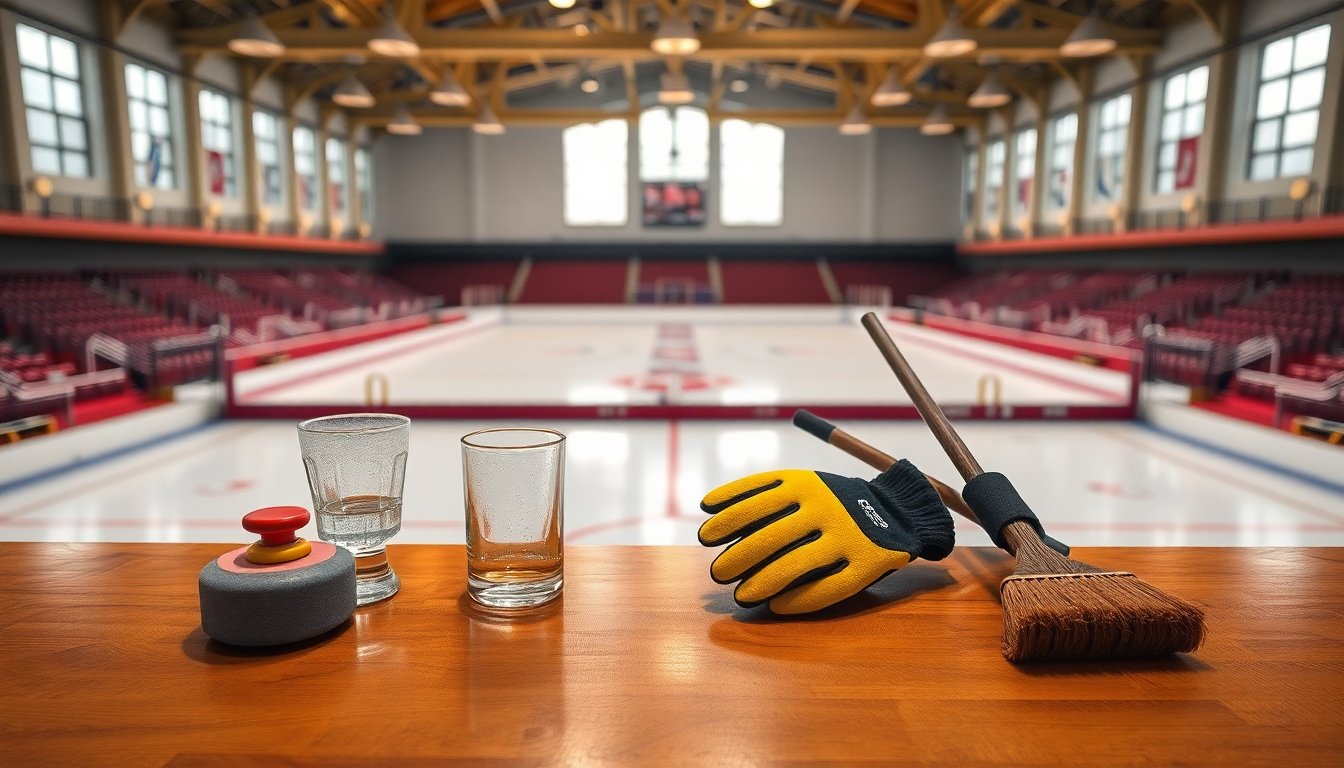
The curling landscape is being nudged in a new direction as the inaugural Rock League kicks off this week. The event opens on Monday at the Mattamy Athletic Centre in Toronto and continues through Sunday, featuring three draws per day and live streaming on CBCSports.ca and CBC Gem. Organizers have intentionally mixed spectacle with sport: rosters are larger, some scoring formulas have been modified, and the spectator layout includes a bar placed between the playing sheets. That blend of novelty and high-level talent raises questions about how teams will balance enjoyment with the drive to win.
Many of the competitors describe the week as experimental rather than exhibitionary. Reigning Scotties champion Kerri Einarson emphasized the challenge of forming cohesion within a 10-person roster, noting the extra work of learning teammates’ strengths and communication styles. At the same time, Northern United’s captain Bruce Mouat stressed that his multinational side — packed with accomplished Europeans — intends to be highly competitive rather than merely social. The format’s designers will hand one of six squads a unique trophy built from a custom-handled rock, an incentive that keeps the tournament’s competitive stakes meaningful.
Formats and rule changes
The league includes experimental elements meant to refresh how fans see the sport. Teams compete with expanded, mixed 10-player rosters rather than traditional four-person lineups, and organizers introduced new formats such as mixed fours. A notable rule tweak awards two points to stones that fully cover the central pinhole in the decisive seventh end of men’s and women’s fours — a variation often referred to informally as the pinhole rule. Those changes increase strategic variety and place a premium on shotmaking under pressure. Broadcasters and event organizers hope these adjustments make games faster-paced and easier for new audiences to follow, while still preserving the technical demands of high-level curling.
Teams and personalities
The tournament draws a global mix of names and clubs. Shield Curling Club fields a roster that includes six Canadians and Olympic champion Brad Jacobs, while Northern United blends players from Sweden, Norway, Scotland, Switzerland and Italy. Sweden’s Isabella Wranå — an Olympic mixed doubles gold medallist with her brother Rasmus — is part of that European contingent. Other notable pairings include Oskar Eriksson skating with Alpine Curling Club and shares sheets with experienced players such as Emma Miskew and Scotland’s Hammie McMillan. Japan’s Chinami Yoshida teams up with Swedish icon Anna Hasselborg for Typhoon Curling Club, a lineup put together and managed by general manager JD Lind.
Communication across languages
Language and limited practice time add another layer to the competitive equation. Several teams have members who speak different native languages, which can complicate in-game calls, sweeper timing and strategy discussion. Northern United, for example, has relied on group chats while arriving members finish commitments in other events; some players expected their first ice session just before opening play. Finding a common lingo and quickly building rapport will be essential, particularly in formats that emphasize mixed-pair dynamics and quick tactical adjustments.
Atmosphere, strategy and expectations
Beyond lineup puzzles and rule experiments, the environment itself is intentionally lively. The Rock League is run by The Curling Group, the same organization behind the Grand Slam series, and aims to amplify the social, dressed-up energy fans have seen at other events. That includes a bar positioned between sheets, which players say could create a more interactive experience with spectators. Despite the festive setting, most competitors insist the ice action will remain serious: everyone wants to lift the trophy, and teams will spend early sessions experimenting to find the best chemistry and role assignments.
Fan engagement and the broader goal
Players and organizers share a similar hope: that the format attracts new viewers without alienating traditionalists. Several athletes welcome the shakeup as an opportunity to broaden curling’s reach and inject fresh narratives into the calendar. For fans, the combination of star names, unusual rules like the pinhole rule, and closer proximity to players promises a different sort of spectacle. Whether the experiment improves long-term interest will depend on whether the balance between entertainment and competitive integrity holds through the week.


