
Table of Contents
In a significant escalation of hostilities, Russia executed a substantial missile and drone assault on Ukraine late Friday night. This occurred concurrently with ongoing discussions between U.S. and Ukrainian representatives, who are engaged in their third day of negotiations aimed at concluding a nearly four-year conflict.
The attacks erupted as U.S. President Donald Trump’s team and Ukrainian officials expressed optimism about achieving a consensus on a security framework for a postwar Ukraine. However, the path to any agreement remains precarious, hinging fundamentally on Russia’s willingness to commit to a lasting peace.
The latest attacks and their implications
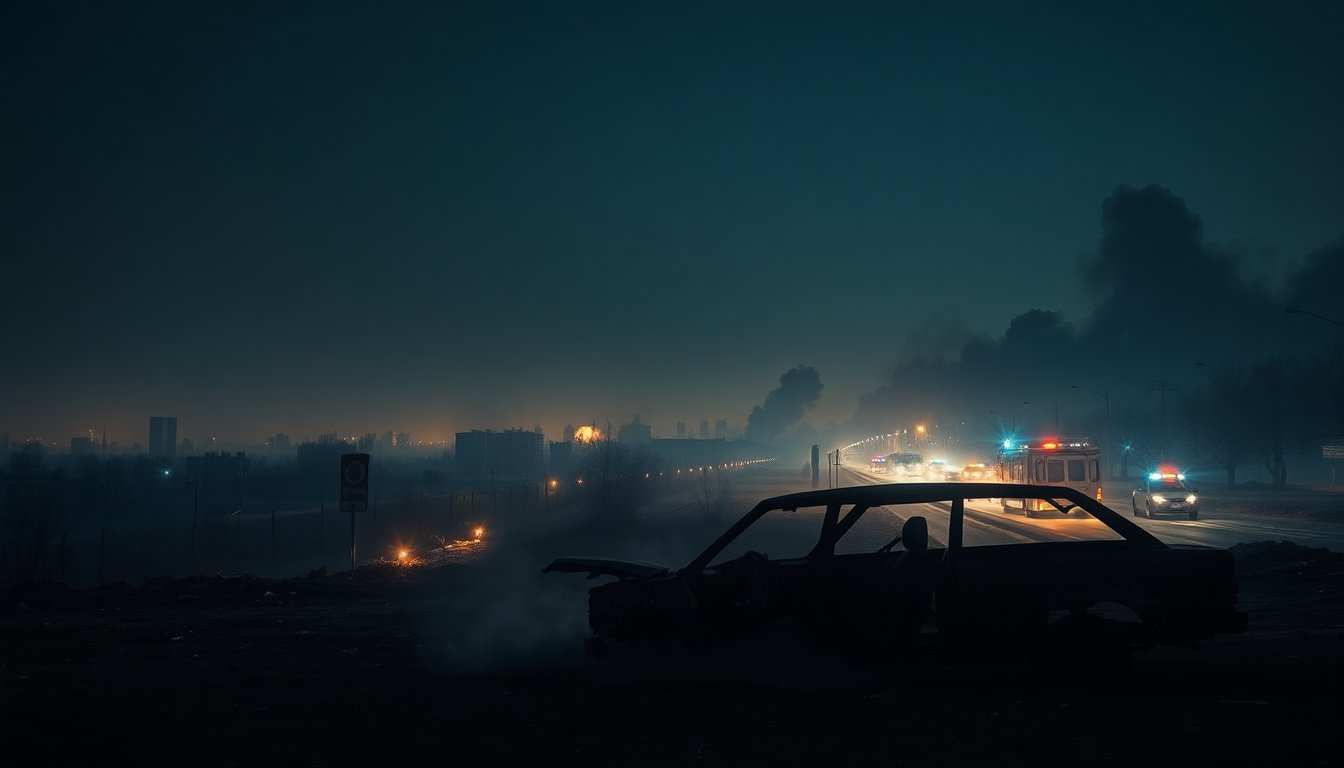
Reports indicate that Russia unleashed a staggering 653 drones and 51 missiles in what has been characterized as a coordinated and widespread offensive. Air raid alarms echoed throughout Ukraine, marking the somber occasion of Armed Forces Day in the country. Ukrainian air defense forces successfully intercepted a majority of the assault, neutralizing 585 drones and 30 missiles; nonetheless, 29 locations were impacted.
In the aftermath of the attacks, Ukrainian Minister of Internal Affairs Ihor Klymenko confirmed that at least eight individuals sustained injuries, with three reported in the Kyiv region alone. Drone sightings extended as far west as Lviv, underscoring the extensive reach of the Russian military operations.
Energy infrastructure under siege
Russian forces targeted critical energy infrastructure, including power stations, aiming to cripple Ukraine’s power grid. The national energy operator, Ukrenergo, reported that the Zaporizhzhia nuclear power plant temporarily lost all external power due to the attacks. This facility, under Russian control since the early stages of the invasion, is essential for cooling its shutdown reactors and spent fuel, thus preventing potential nuclear hazards.
Ukrainian President Volodymyr Zelenskyy emphasized that energy facilities were the primary targets of these assaults, noting significant damage caused by a drone strike on a train station in Fastiv, located within the Kyiv region.
Russia’s claims of defensive actions
In response to the barrage, Russia’s Defence Ministry stated that they intercepted 116 Ukrainian drones over their territory, claiming to have thwarted a potential threat. Additionally, Russian media reported that Ukraine launched an attack on the Ryazan oil refinery, with footage suggesting a fire and smoke rising from the facility. However, the authenticity of the video remains unverified.
As the conflict escalates, Ukrainian forces have increasingly targeted Russian refineries, aiming to cut off the oil revenue that fuels Moscow’s military campaign. This strategic approach represents an ongoing effort to undermine Russia’s economic capabilities.
The humanitarian aspect of the conflict
As the fighting continues, Kyiv and its Western allies emphasize that Russia’s actions are an attempt to weaponize the harsh winter conditions against Ukrainian civilians. Officials in Ukraine warn that relentless assaults could deprive countless families of essential services such as heating, electricity, and clean water as winter approaches.
In a show of solidarity, French President Emmanuel Macron announced plans to meet with Ukrainian President Zelenskyy, British Prime Minister Keir Starmer, and German Chancellor Friedrich Merz in London. The discussions aim to address the ongoing situation in Ukraine and explore the potential for further negotiations under U.S. mediation efforts.
The attacks erupted as U.S. President Donald Trump’s team and Ukrainian officials expressed optimism about achieving a consensus on a security framework for a postwar Ukraine. However, the path to any agreement remains precarious, hinging fundamentally on Russia’s willingness to commit to a lasting peace.0
The attacks erupted as U.S. President Donald Trump’s team and Ukrainian officials expressed optimism about achieving a consensus on a security framework for a postwar Ukraine. However, the path to any agreement remains precarious, hinging fundamentally on Russia’s willingness to commit to a lasting peace.1