
Table of Contents
In a concerning escalation of hostilities, Russia has launched a series of airstrikes against Ukraine, utilizing advanced weaponry, including the Iskander-M ballistic missile and numerous drones. This offensive occurred during critical peace negotiations in Abu Dhabi, where Ukrainian and Russian officials were attempting to negotiate a resolution to the ongoing conflict.
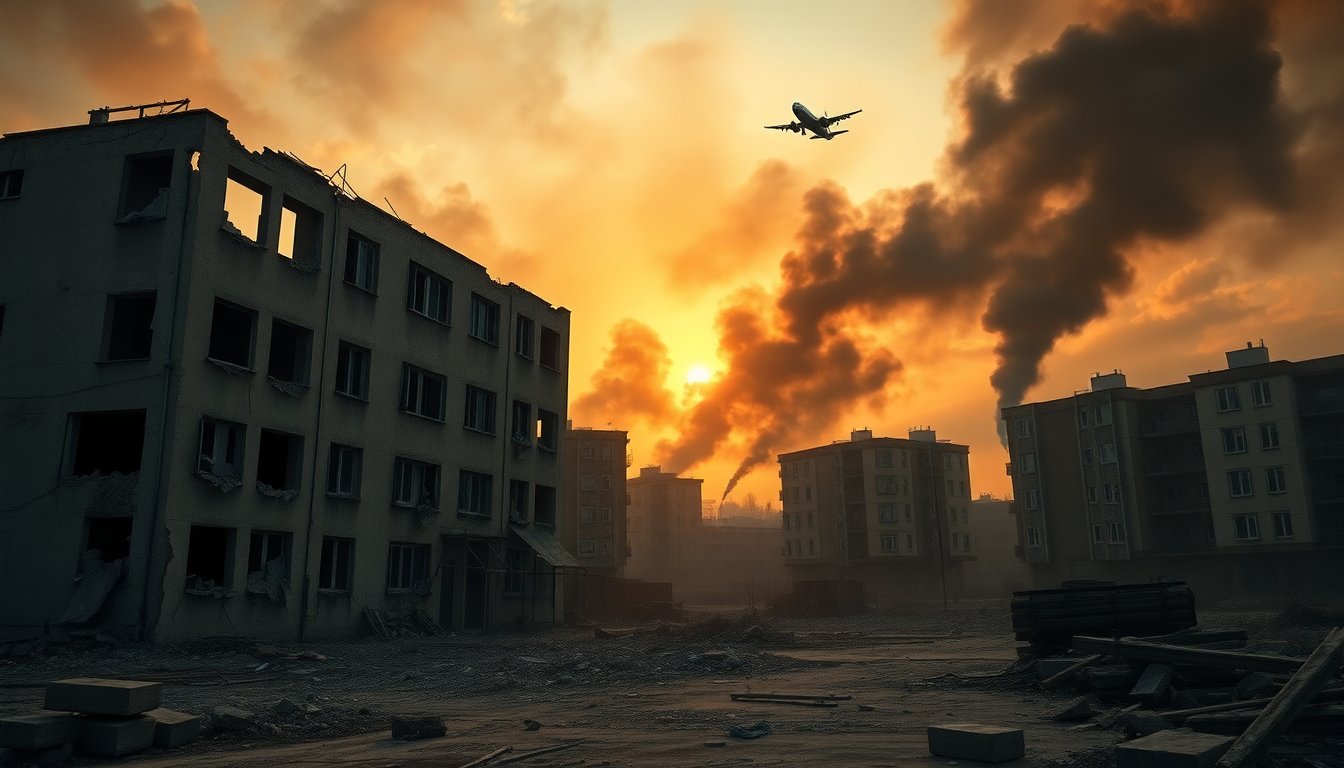
Local authorities have reported fatalities and injuries resulting from these strikes, particularly in the Kyiv region and central Ukraine. Such violent actions have overshadowed efforts to establish a ceasefire, as both sides grapple with the ramifications of military aggression.
Details of the attacks
According to Ukraine’s air force, the recent bombardment involved 146 drones, with 103 successfully intercepted by air defense systems. Tragically, these attacks resulted in casualties in various regions, including the Bilohorodska community near Kyiv, where two individuals were killed, and another person lost their life in the Dnipropetrovsk region due to a drone strike. The devastation included damage to residential buildings, leaving many without power amid harsh winter conditions.
Impact on civilians
The attacks on civilian infrastructure have sparked outrage and fear among the Ukrainian populace. President Volodymyr Zelenskyy condemned the strike on a passenger train in Kharkiv, labeling it an act of terrorism. This incident, which resulted in five fatalities, highlights the vulnerability of civilians who rely on trains for transportation in a country where airspace remains closed due to the ongoing conflict.
Zelenskyy urged international allies to increase pressure on Russia, stating that such assaults undermine any potential peace efforts. “In any nation, an attack on a civilian train would be perceived solely as terrorism,” he remarked, calling for accountability for Russia’s actions.
Negotiations and international responses
The backdrop of these military actions is the ongoing peace talks mediated by the United States, which aim to end hostilities that began with Russia’s full-scale invasion in. Despite the violence, there have been reports of constructive dialogue among negotiators, with discussions focusing on the terms necessary to establish a lasting peace.
Challenges to reaching an agreement
However, significant obstacles remain. Ukraine has made it clear that it will not concede any territory, particularly in the eastern Donbas region, which Russia has long sought to control. Zelenskyy emphasized the need for robust security guarantees from the U.S. to ensure that any peace agreement would prevent further aggression from Russia.
As the situation develops, the international community watches closely, hoping for a resolution. The stark reality of the conflict, illustrated by the recent airstrikes, underscores the complex interplay between military actions and diplomatic efforts. While President Zelenskyy described the talks in Abu Dhabi as constructive, the violent backdrop raises serious doubts about the prospects for peace.
The humanitarian impact of these attacks is profound, as civilians bear the brunt of the violence. As leaders navigate this treacherous landscape, the hope for a lasting resolution hangs in the balance.