
Table of Contents
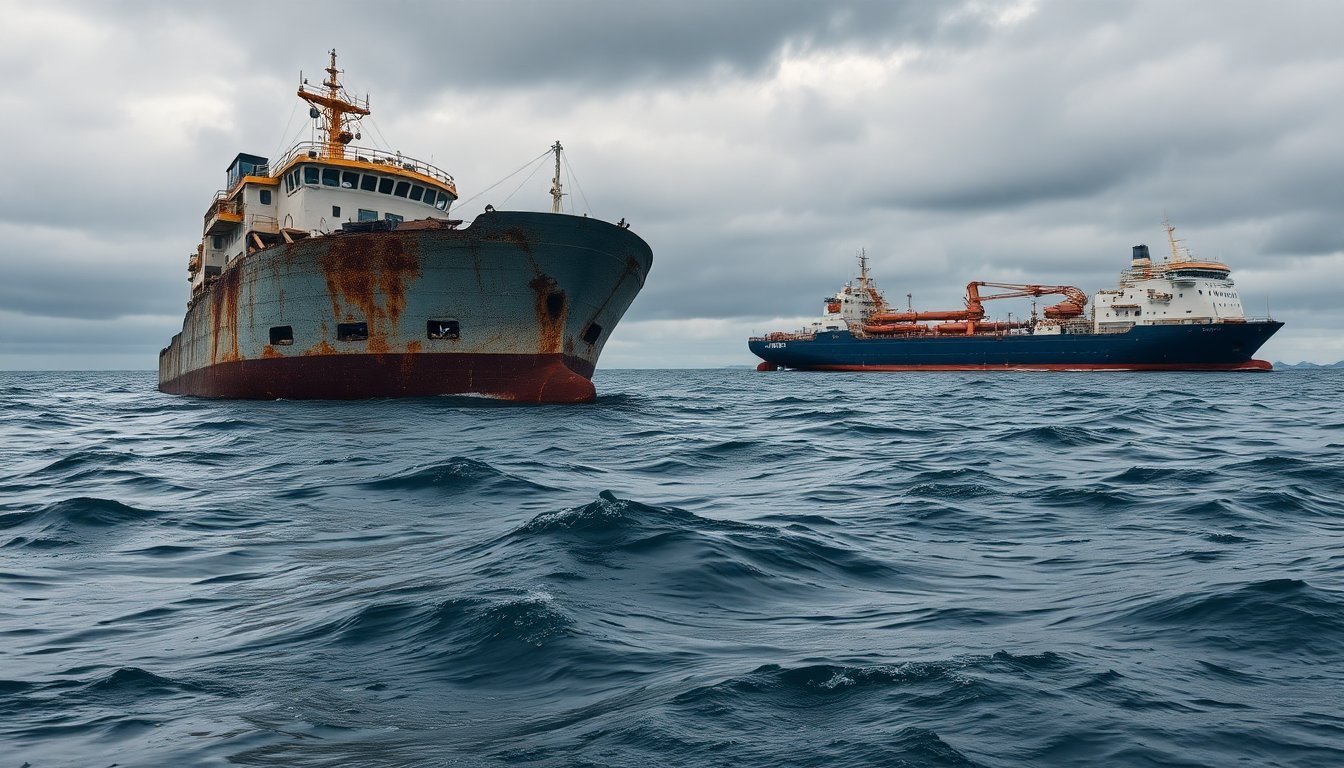
In a significant ruling, a UK court sentenced a Russian ship captain to six years in prison following a fatal maritime incident that claimed the life of a crew member. The event took place in March when the cargo ship Solong collided with the anchored oil tanker Stena Immaculate in the North Sea, near the coast of Yorkshire. The crash not only led to the tragic loss of life but also ignited a massive fire that required extensive rescue efforts.
Details of the incident
The captain, Vladimir Motin, aged 59, was on duty alone when the accident occurred. The court heard that the collision happened at approximately 9:47 AM, resulting in a catastrophic fire that engulfed both vessels. Tragically, 38-year-old crew member Mark Angelo Pernia, who was working on the bow of the Solong, perished instantly in the flames, and his remains were never found. At the time of his death, Pernia was a family man, with a five-year-old child and a pregnant wife who would later give birth to their second child.
The court’s findings
Judge Andrew Baker described Motin as an “accident waiting to happen” during the sentencing at London’s Old Bailey. He emphasized that the collision was a result of a gross failure to recognize the risk of collision. The jury convicted Motin of manslaughter by gross negligence after deliberating for eight hours. Judge Baker noted, “The blame for it lies squarely at your hands,” underlining the irreversible pain caused by Pernia’s untimely death.
Legal implications and public reaction
The judge’s comments highlighted that no punishment could restore the life lost or alleviate the suffering experienced by Pernia’s family. The prosecution argued that Motin had been negligent in his duties, failing to take necessary precautions to avert the disaster. It was stated that the Solong had been on a direct collision course with the Stena Immaculate, which had been visible on radar for over half an hour before the impact. Despite this, Motin took no action to change course or alert the crew of the impending danger.
Expert testimonies and evidence
During the trial, prosecutor Michael Gregory characterized Motin’s actions as “truly exceptionally bad negligence.” The court was presented with evidence indicating that Motin had not attempted to slow down, sound alarms, or communicate with the Stena Immaculate, even as the two ships approached each other at speed. Dramatic footage captured the moment of impact, showcasing the subsequent inferno that engulfed both vessels, raising concerns about potential environmental damage.
Background and consequences
The Solong, measuring 130 meters in length and carrying a crew of 14, was transporting alcoholic beverages and hazardous materials, including empty containers previously used for sodium cyanide. The Stena Immaculate, on the other hand, was significantly larger at 183.2 meters and was carrying over 220,000 barrels of high-grade aviation fuel. This combination of flammable cargo made the collision particularly dangerous, as noted by Detective Chief Superintendent Craig Nicholson of Humberside Police, who referred to the incident as a “simple, senseless tragedy.”
Motin’s defense argued that he was not negligent, asserting he was attentive and that the Stena Immaculate was moving unpredictably. Yet, this defense was ultimately dismissed by the jury, leading to his conviction. The aftermath of this incident not only affected the families involved but also raised questions about safety practices in maritime operations.
As the Solong burned for eight days following the collision, the incident served as a stark reminder of the potential consequences of negligence at sea. While Motin faces a lengthy prison sentence, the broader implications for maritime safety and accountability remain a critical concern for the industry.