
Table of Contents
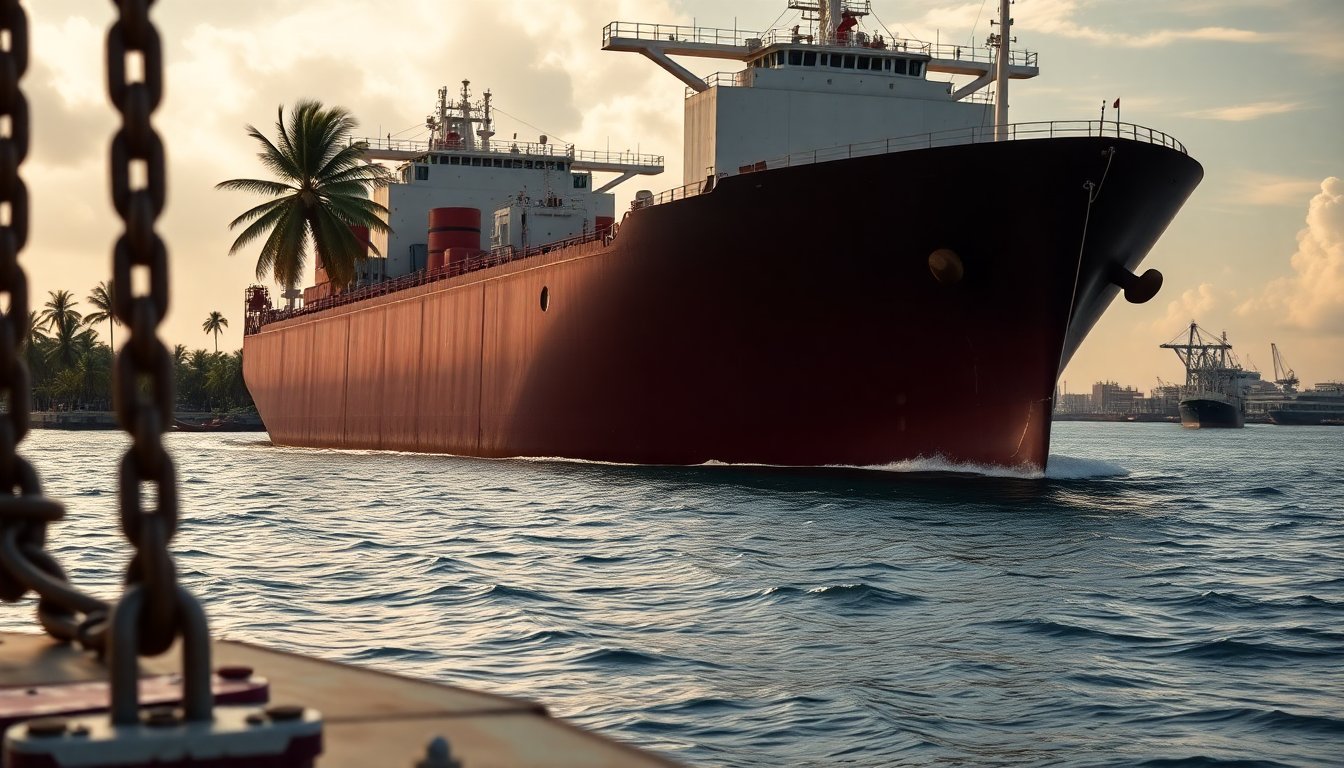
The report that a Russian ship may be carrying fuel toward Cuba has taken on significance beyond a simple commercial voyage. On 21/03/2026, Kremlin officials acknowledged they were looking at “possible options for assisting Cuba in the difficult situation it finds itself in,” a statement that turned a maritime movement into a test of allyship and political resolve. Observers see the episode as a compact example of how state-to-state logistics can double as diplomatic signaling in regional contests and larger global alignments.
At first glance the situation involves routine elements—vessel tracking, port clearances and cargo manifests—but it quickly touches on sensitive themes such as sanctions, reputational risk and maritime insurance. The uncertainty around the ship’s declared cargo and intended destination has prompted analysts to treat the voyage as a deliberate move that could measure how far the Kremlin will go to support a partner. The presence of a government statement about exploring assistance amplifies the perception that this is a strategic, not merely commercial, episode.
What the voyage signals
The voyage functions as a communication tool: it conveys that the Kremlin is willing to take visible action in support of a partner, even when that action risks scrutiny. In diplomatic terms this is a form of political signaling—a low-cost way to demonstrate solidarity without committing to full-scale intervention. For receiving states and third parties, the arrival of an oil-laden tanker could be read as confirmation of a dependable relationship, while for opponents it may appear as a provocative step that tests the limits of international tolerance.
Logistical and legal hurdles
Transporting fuel across long distances involves layers of practical obstacles: port access, customs procedures, and the willingness of insurers and shipping service providers to handle controversial cargoes. If a shipment runs afoul of financial or trade restrictions, companies may be reluctant to participate, increasing the logistical complexity. At the same time, maneuvers such as reflagging, transshipment or routing via intermediary ports can complicate enforcement of restrictions and raise questions about the legality and transparency of the operation.
Diplomatic messaging
The Kremlin’s phrasing—saying it is considering “possible options for assisting Cuba in the difficult situation it finds itself in”—serves both an internal and external audience. Domestically, it signals responsiveness to an ally and the government’s capacity to act. Internationally, the language is deliberately measured: it promises support while leaving room for diplomatic maneuvering. Such calibrated statements are a hallmark of modern statecraft, where words are used as carefully as ships to shape perceptions and preserve flexibility.
Potential international reactions
Responses from other capitals are likely to range from cautious statements of concern to formal diplomatic protests, depending on the perceived legal and policy implications of the shipment. Countries attentive to enforcement of international law and trade controls may press for transparency or seek clarification from port authorities. Meanwhile, neutral states and regional partners will weigh whether the event merits public comment, private channels of protest, or closer monitoring of maritime activity in the area.
Economic and strategic consequences
In practical terms, the delivery or diversion of fuel can alter short-term energy availability and supply chain dynamics for the recipient. Strategically, the episode may reinforce existing networks of support and embolden similar moves in the future, affecting how alliances are perceived and how competitors respond. The incident also highlights the intersection of economics and geopolitics: a single tanker can influence market expectations and diplomatic calculations simultaneously.
Why this matters
Beyond the immediate question of a ship’s cargo and destination, the story illustrates how contemporary international relations often play out at sea, where commerce, state policy and regulatory regimes intersect. The Kremlin’s public acknowledgment on 21/03/2026 that it is exploring ways to assist adds a layer of intentionality that transforms the voyage into a barometer of Kremlin allyship. Observers will watch both the vessel’s movements and ensuing diplomatic exchanges to judge whether this is an isolated act of support or the start of a broader pattern.