
Table of Contents
Local safety, art-market reassessment and military training: three developments from the past week
Authorities, collectors and military trainers addressed distinct risks across Asia and Europe during the past week. In Hong Kong’s New Territories, investigators examined multiple canine deaths that local officials suspect may be linked to poisoning. In the art sector, collectors and institutions are reassessing the commercial and cultural value of performance art. In Italy, the 173rd Airborne Brigade conducted a demanding squad leader academy to prepare new noncommissioned officers.
Who: municipal investigators in Hong Kong, museum directors and private collectors, and leadership of the 173rd Airborne Brigade. What: probes into suspected animal poisonings, reassessment of an art-market segment, and an intensive military leadership course. Where: Hong Kong, international art markets and institutions, and an Italian training facility. When: developments unfolded over the past week. Why: each response addresses perceived or emerging risks—public-safety concerns for residents and pet owners, economic and reputational uncertainty for the art world, and readiness for future military operations.
Key facts: local authorities in the New Territories have reported multiple dog fatalities and are carrying out toxicological tests and neighborhood inquiries. Art institutions and collectors have initiated reviews of pricing, conservation and exhibition strategies for performance art, citing variable market demand and questions about reproducibility and provenance. The 173rd Airborne Brigade’s squad leader academy emphasized leadership, tactical decision-making and small-unit cohesion to prepare noncommissioned officers for complex operational environments.
Implications for stakeholders vary. Neighborhood residents and pet owners face immediate public-safety and animal-welfare concerns and may press for enhanced surveillance and public-awareness campaigns. Gallery visitors, donors and artists could see changes in how performance works are funded, displayed and preserved. Military planners and defense policymakers are likely to evaluate training outcomes for broader force-development priorities.
Context and next steps: investigators in Hong Kong will release toxicology results once available and may recommend public advisories or enforcement actions. Art-market reassessments may lead to revised acquisition policies, new conservation protocols or public programming designed to clarify value and authenticity. The 173rd Airborne Brigade will apply lessons from the academy to subsequent leader development courses and may report metrics on trainee performance to higher headquarters.
This report summarizes the opening developments and their immediate significance. Subsequent updates will provide test results, institutional responses from the art sector and formal evaluations of the brigade’s training outcomes as those details become available.
Public safety and animal welfare: a cluster of poisoning cases in Hong Kong
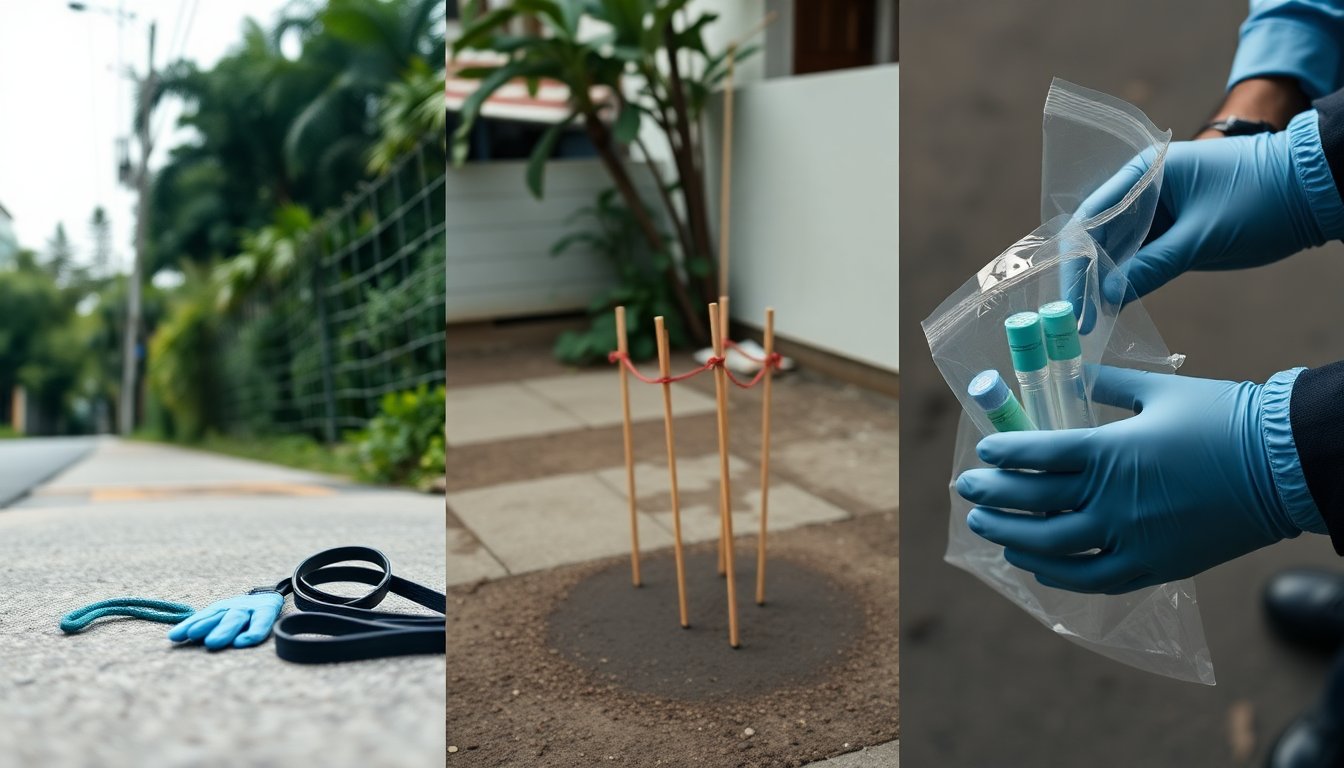
Police reported four separate reports between February 16 and the preceding Saturday about five dogs found dead in an open area on Liu Pok Road in Lok Ma Chau. On Sunday, officers recorded a further incident in which another dog believed to have been poisoned was found. The series of events raised the total number of suspected poisoning fatalities to five within a week.
A preliminary police inquiry has classified the most recent case as cruelty to animals. No arrests have been announced. The original report was published on 22/02/2026 at 15:49. Investigators continue to examine the scene and to gather forensic evidence.
Community impact and enforcement challenges
Residents reported heightened concern about safety for people and pets near the site. Local users of the open space described increased reluctance to walk dogs there. Animal welfare organisations urged precaution and swift investigative action.
Authorities face practical challenges when probing suspected poisonings in open public spaces. Contamination can disperse quickly. Physical evidence may degrade before it is recovered. CCTV coverage in the affected area is limited, police said, complicating efforts to identify suspects and reconstruct events.
Legal experts noted that proving intent in animal poisoning cases can be difficult without clear chain-of-custody evidence or witness testimony. Enforcement agencies must balance rapid public communication with preserving the integrity of the investigation.
Police asked anyone with information or relevant footage to contact local authorities. Further developments and any institutional responses will be reported as they become available.
In the meantime, residents and animal owners have expressed concern and urged authorities to increase patrols, improve public communication about hazards, and carry out prompt investigations. Local people asked for clearer guidance on keeping animals safe and for faster reporting of suspicious activity.
From a policing perspective, clusters of animal deaths pose distinct forensic and logistical challenges. Investigators must establish toxicological causes, trace potential sources of poison and secure witness accounts from public spaces. Evidence collection may require veterinary necropsies, environmental testing and coordinated scene management.
The classification as cruelty to animals activates legal mechanisms that can lead to enhanced penalties if suspects are identified and successfully prosecuted. Prosecutors will consider the pattern of incidents, available forensic evidence and statutory aggravating factors when deciding charges.
The art market: performance art’s evolving commercial life
Collectors, galleries and museums have long wrestled with how to value and trade works whose existence is fleeting. The market has developed several practical responses. Institutions package photographic and video records, written instructions and contextual material into performance editions that can be sold and conserved. Other models rely on oral-transfer protocols, licensing agreements and authenticated live restagings to preserve market value while acknowledging the work’s temporal nature.
Dealers and curators identify a series of turning points that made performance art more transactable. High-profile museum presentations, notably those by Marina Abramović, encouraged standardized documentation practices. Reproducible records and clear ownership frameworks enabled buyers and institutions to assess provenance and risk. Those changes helped integrate performance-based practices into conventional collecting, lending and insurance systems.
From editions to live presentations
From editions to live presentations, institutions and market actors have developed concrete mechanisms to capture value from performance. Some galleries issue collectible objects tied to specific performances. Others sell authorized recordings or controlled renditions that carry provenance and resale terms.
Artist-led models offer alternative templates. The oral-transfer editions created by Tino Sehgal and subsequent high-profile acquisitions by museums have shown how non-physical works can enter institutional acquisition and lending systems. Those precedents have encouraged galleries to program durational and live works as a way to attract attention and younger audiences. Institutional backing, alongside digital amplification, is shifting the value proposition for performance away from solely experiential currency toward forms that can be documented, insured and circulated within conventional art-market frameworks.
Military leadership development: 173rd Airborne Brigade’s squad leader academy
The 173rd Airborne Brigade conducted a weeklong squad leader academy at Caserma Del Din in Vicenza, Italy. The training took place Jan. 23-30, 2026. The course prepared emerging noncommissioned officers to lead squads in complex, uncertain environments. Instruction combined small-unit tactics, troop-leading procedures, maintenance standards and physical readiness training drawn from the U.S. Army Holistic Health and Fitness program. Instructors from across the 2nd Battalion, 503rd Parachute Infantry Regiment evaluated students against brigade standards and emphasized both character and competence.
Lessons from history and the weight of leadership
Leaders reviewed historical case studies to illustrate decision-making under stress. Instructors used past operations to show consequences of poor planning and the benefits of disciplined execution. The curriculum stressed ethical responsibility, accountability and the relationship between leader behavior and unit readiness.
Practical exercises simulated degraded communications, limited resources and civilian presence. Students executed mission planning cycles, rehearsals and after-action reviews under time pressure. Evaluators scored performance on technical skills, procedural compliance and adherence to maintenance and safety standards.
Physical training emphasized operational tasks, resilience and recovery protocols from the brigade’s Holistic Health and Fitness approach. Medical readiness, sleep management and physical conditioning were integrated with tactical instruction to reflect real-world demands.
The academy concluded with a graded field exercise that combined navigation, combined-arms coordination and casualty management. Successful candidates met the brigade’s benchmarks for leadership, sustainment and unit cohesion. The brigade plans further leader development events to maintain standards and prepare squads for upcoming rotations.
Leaders discuss documentary and veteran insights
The academy featured a focused discussion of the documentary Restrepo, which chronicles the 2‑503rd’s Battle Company deployment in Afghanistan. Instructors arranged a live teleconference with veterans who served during that deployment, allowing participants to hear first‑hand accounts of decision‑making under fire and trust‑building within small teams.
Leaders emphasized that readiness encompasses technical skill as well as emotional and ethical preparedness. Participants described how veterans’ accounts clarified commanders’ moral responsibilities and the human factors that shape tactical choices.
Course attendees noted direct continuity between lessons from earlier deployments and current training designs. Instructors pointed to live‑fire exercises and defensive‑position drills as examples of how historical experience informs present practice.
The 173rd’s role as a contingency response force in Europe, forward stationed to respond rapidly across adjacent regions, makes this type of leader development essential. The brigade plans further leader development events to maintain standards and prepare squads for upcoming rotations.
Conclusion: different arenas, similar stakes
The three stories span public safety, cultural markets and military preparation, yet they share common challenges. Each involves assessing and managing risk, improving communication with affected communities, and adapting organizational structures to new pressures. In Lok Ma Chau, investigators and local authorities face immediate public-safety imperatives. In the art world, collectors and institutions are refining valuation and support models for performance art. Within the brigade, leaders focus on deliberate squad-level development to sustain readiness.
Stakeholders will monitor next steps closely. Residents in Lok Ma Chau expect decisive law-enforcement action to prevent further harm. Collectors and institutions will continue to develop mechanisms for preserving and pricing ephemeral works. Military leaders will carry forward additional leader development events to maintain standards and prepare squads for upcoming rotations.