
Table of Contents
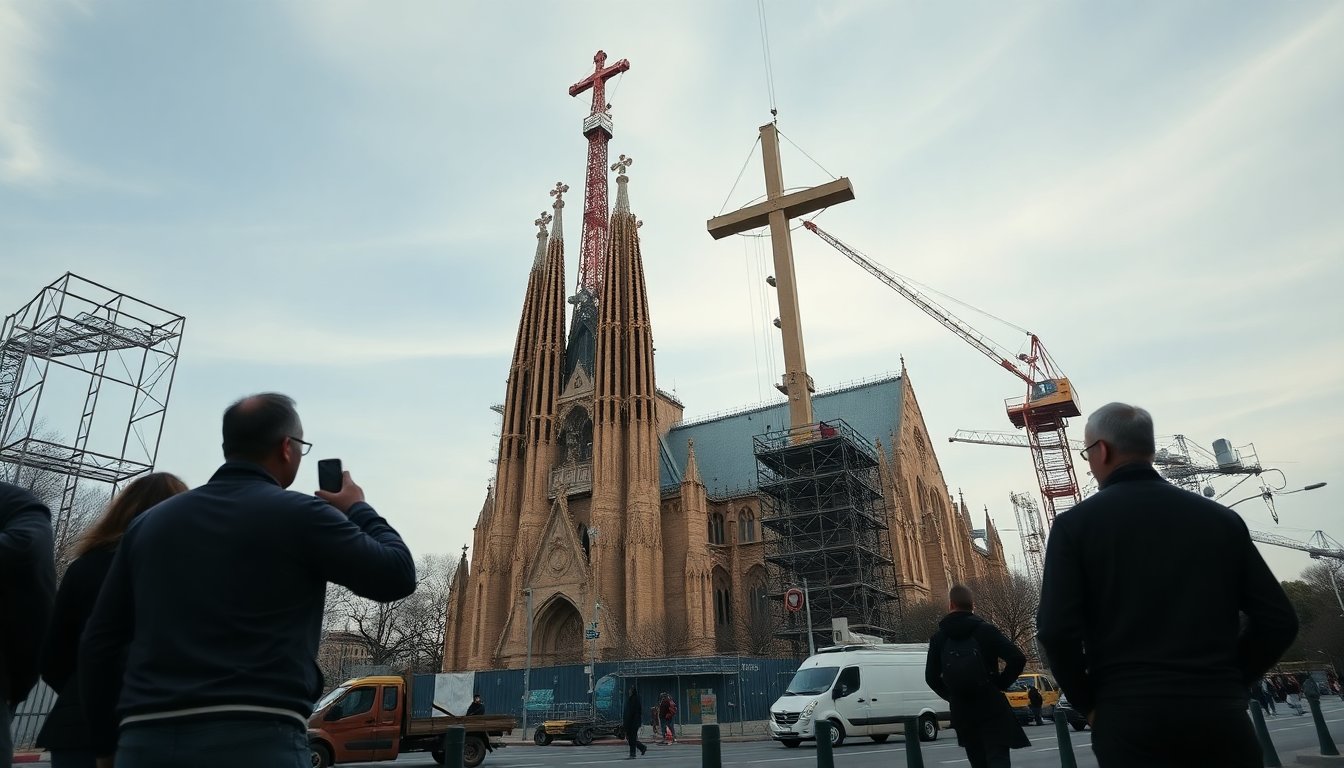
The iconic Sagrada Família in Barcelona has reached a new construction milestone: the basilica’s central spire, known as the Tower of Jesus Christ, has been crowned and now stands at a maximum height of 172.5 metres. A crane operation hoisted the final upper arm of the cross into position, completing the tower’s external form after years of phased assembly. Visitors and onlookers gathered as workers placed the last visible piece, while scaffolding and equipment still frame the structure.
This achievement is the latest step in a long-running project that began when the first stone was laid in 1882. Though the exterior has reached its planned apex, the Sagrada Família remains an active construction site: interior finishing, access features and decorative details are still being completed before official celebrations.
What was installed and why it matters
The element raised into place was the upper arm of a cross that crowns the central tower. The complete cross measures approximately 17 metres in height and 13.5 metres across, while the single upper arm lifted during this operation measured about 7 metres. The cross is built from white ceramic and glass with fluted windows, designed to catch and reflect light so it will shine above the city.
According to the basilica’s coordinators, the cross follows Antoni Gaudí’s original concept: it is hollow inside and accessible to visitors, offering a panoramic 180-degree viewpoint over Barcelona. The shape with four arms ensures the symbol is legible from any angle, and the design incorporates both visual presence and functional access.
Construction progress and remaining work
Work on the tower has been carried out in stages, with the cross installation taking place in several phases beginning in late and culminating with the placement of the upper arm. Although the tower’s exterior has now reached its planned height, project leaders emphasize that a series of interior tasks remain. The cross itself is still surrounded by temporary scaffolding because its interior surfaces and detailing require additional work.
Project officials expect scaffolding to be removed in a short period, revealing the finished cross to the public. In the meantime, cranes and support structures remain around the spire while specialists complete the internal finishes, lighting elements and access points. Entry fees from millions of annual visitors continue to fund the ongoing construction efforts.
Design features and visitor experience
The cross’s hollow construction is a deliberate part of Gaudí’s approach. By allowing visitors to enter the interior chamber, the basilica creates a viewing platform that combines religious symbolism with an urban panorama. The materials chosen—ceramic and glass—are intended to give the cross a luminous quality, and plans include the possibility of light beams projecting from each arm if city regulations permit.
Historical context and upcoming events
The Sagrada Família project began in 1882 and evolved into Gaudí’s life work, although he did not live to see most of the structure completed. Only one of the planned towers had been finished at the time of his death in 1926. Over the decades, construction speed increased, particularly as the site became one of the world’s most visited religious monuments and a global symbol of Catalan Modernism.
With the central tower now at its final elevation, the basilica has scheduled an inauguration ceremony for June 10, chosen to coincide with the centenary of Gaudí’s death. Organizers have noted that invitations have been extended and that the Vatican has been contacted; however, whether the Pope will preside over the event has not been confirmed.
Comparative significance
When the central tower exceeded other historic church spires, it became the tallest church structure in the world. This new pinnacle surpasses many longstanding records, situating the Sagrada Família not only as an architectural achievement rooted in Catalan Modernism but also as a contemporary engineering milestone.
Even as the project reaches visible completion at the top, conservation, finishing touches and public access works will continue. The recent installation represents both a symbolic and practical leap forward: it closes a long chapter of vertical construction while opening the final stages of internal completion ahead of the centenary commemorations.
Visitors and residents alike can soon expect the scaffolding to come down and the cross to be fully revealed. Until then, the structure remains both a work in progress and a finished silhouette on Barcelona’s skyline—an enduring synthesis of Gaudí’s original vision and modern construction techniques.