
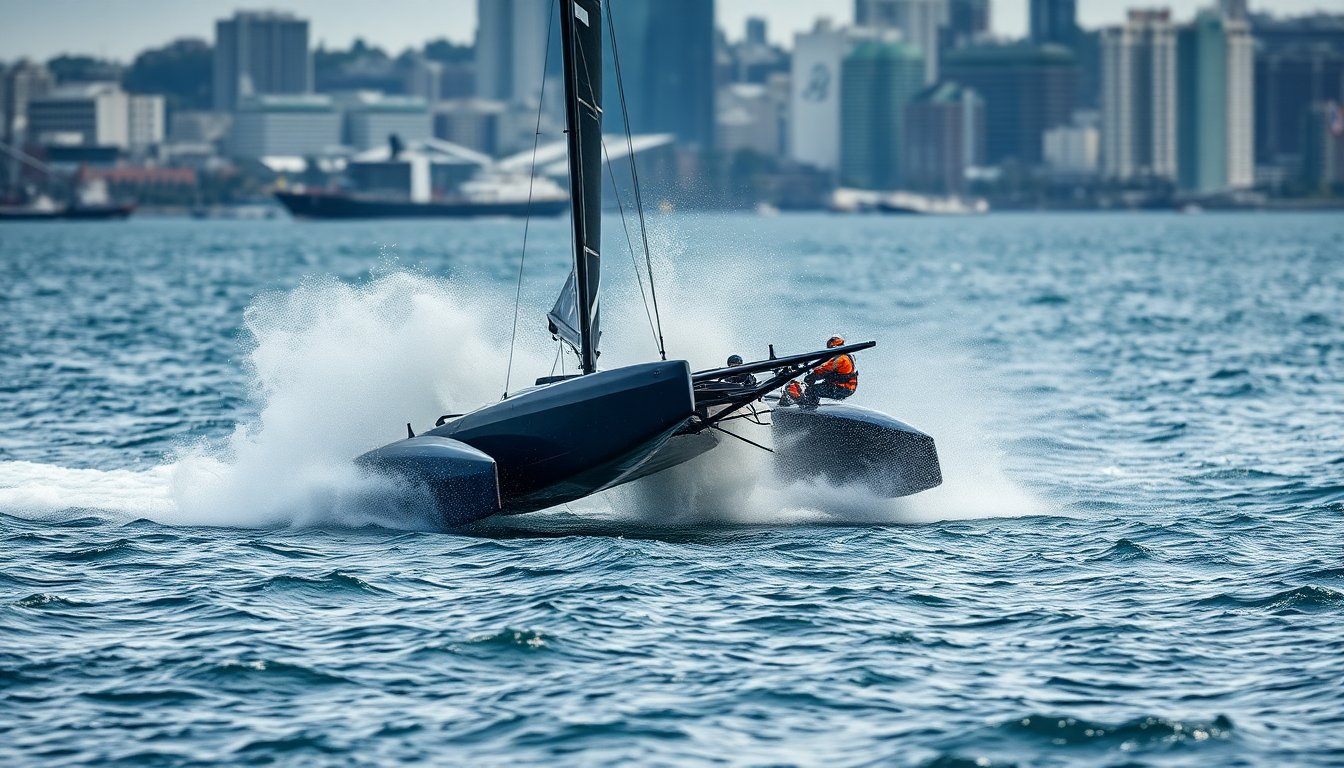
Foiling Catastrophe off Auckland: How two SailGP boats collided at speed
What happened on the water
– As the fleet closed on the first mark off Auckland, two 50-foot foiling cats — New Zealand’s Black Foils and DS Automobiles SailGP Team France — slammed into each other at race pace. Broadcast replay and on-scene footage show both boats charging the mark and then, almost instantly, losing control before impact. Race telemetry recorded speeds nearing 90 km/h at the moment of contact.
– Support boats and shore medical teams reacted immediately. Racing was halted for the day while injured sailors were treated and the two damaged boats were removed from the race area.
Injuries and response
– Medical crews carried out on-water triage and rapid extraction. Debris was cleared from the race lane while medics stabilized the injured and arranged transfers to shore hospitals.
– One member of the New Zealand crew, identified later as grinder Louis Sinclair, suffered compound fractures to both legs and was taken ashore. His team reports he is in stable condition. A French sailor also received hospital treatment; the team has not disclosed that person’s name.
– All other crew from both boats were accounted for and returned safely to shore.
What likely went wrong
– Investigators will lean heavily on high-frame-rate video and onboard telemetry to piece together the sequence. Early signs from footage and eyewitness accounts point to a sudden loss of rudder control aboard the Black Foils just before the mark, which pushed her across the fleet.
– With boats bunched on one of the course’s fastest legs, that loss of steering left almost no time or space to avoid a collision. The two boats became interlocked and sustained severe structural damage, ending both teams’ racing for the day.
Why grinders and foiling crews are especially at risk
– These 50ft foilers are extreme machines; every crew role is precise and physically demanding. Grinders supply the raw power to trim sails and adjust foils, often working inches from high-load gear. A violent jolt or sudden mechanical failure can throw a crew member into moving parts or cause rapid entanglement.
– The combination of speed, load and cramped working zones makes any control failure potentially catastrophic.
Season impact and next steps
– Organisers have suspended further racing while they assess damage, support the injured, and investigate the cause. The incident will prompt a detailed review of systems, emergency procedures and course setup — especially on the fastest legs where spacing is minimal.
– Teams, event officials and SailGP’s technical staff will examine telemetry, structural failures and human factors before deciding whether changes to equipment, regulations or race logistics are needed for the remainder of the season.
Looking ahead: safety under the microscope
– Expect a thorough forensic reconstruction of the incident, plus immediate short-term fixes to keep sailors safe in Auckland and at upcoming events. The priority is clear: protect crews, learn from the failure, and adapt the rules and gear so racing can continue without repeat incidents.
If you want, I can:
– Summarise the technical telemetry findings when they’re released.
– Produce a visual timeline of the collision using available footage and data.
– Draft a short explainer for young readers about foiling catamarans and crew roles. Which would help most?