
Table of Contents
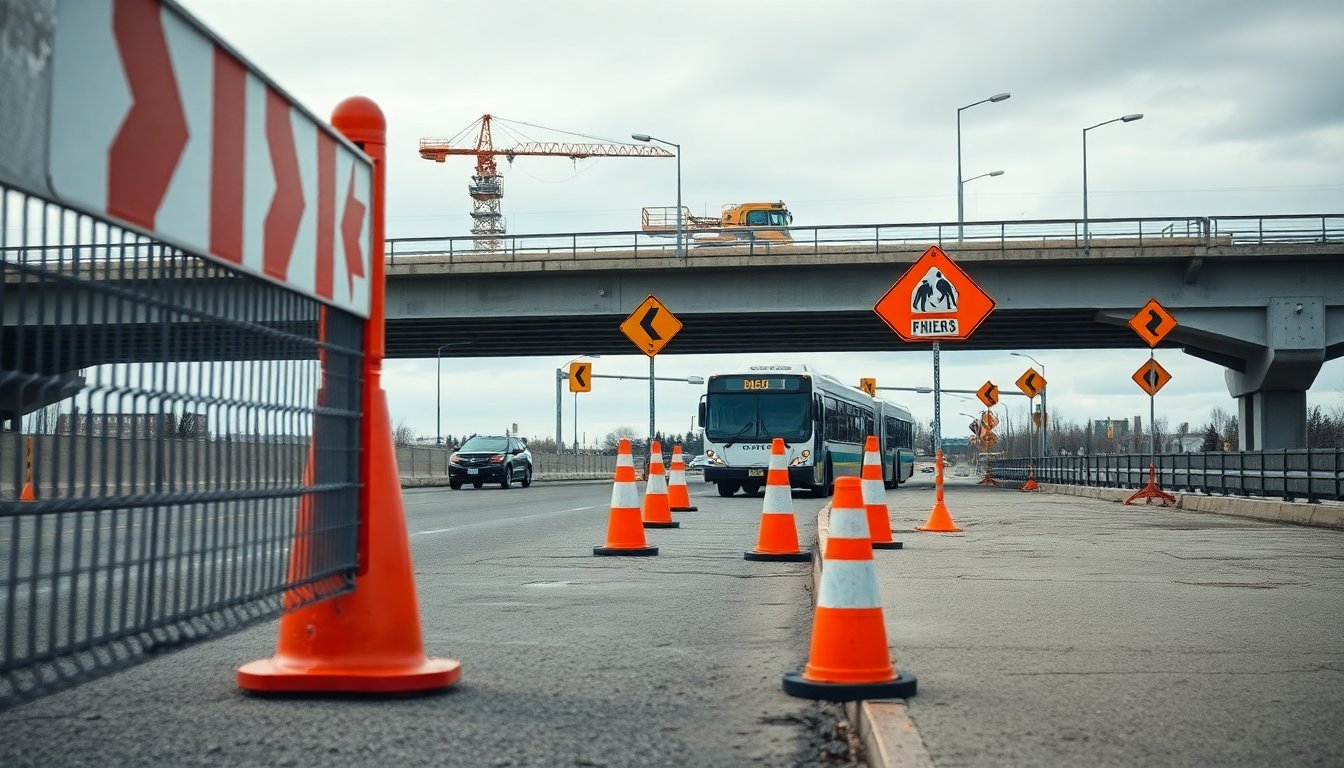
The city of Saskatoon has confirmed that the University Bridge will be taken offline for staged work related to the College Drive rapid bus plan beginning the week of April 6th and continuing into June. After last summer’s disruptions around the Broadway Bridge, officials say they are trying to balance construction progress with traffic flow. A recent mix-up by contractors — who briefly posted signs indicating a start date of the 31st of March — led to confusion; the municipality has apologized and reiterated that work will begin the week of April 6th, weather permitting.
The work will not amount to a continuous, full-season shutdown of the route, but motorists should plan for changing patterns. During active construction periods there will be alternating traffic on the bridge, allowing vehicles to cross in both directions on a reduced number of lanes. The city also confirms that a dedicated lane for emergency vehicles will remain open to ensure access to the nearby hospital. Officials warn, however, that precise timing for lane switches and full resumptions of normal traffic is not yet finalized.
Scope of the work
The bridge activity is part of the broader College Drive rapid bus initiative, a transit upgrade aimed at improving reliability and travel times along the corridor. In this phase crews will focus on structural and intersection improvements around College Drive and Clarence Avenue, which are critical nodes for routing the new service. The term bus rapid transit (often abbreviated BRT) describes enhanced bus corridors that use dedicated lanes, priority signals and station-style stops to emulate some of the benefits of rail transit while remaining flexible and cost-effective.
How traffic will be managed
Traffic management will rely on a lane-sequencing strategy where one set of lanes is worked on while the other carries two-way traffic. Terry Schmidt, general manager of Saskatoon’s Transportation and Construction department, explained that crews will complete work on one side of the bridge before switching operations to the opposite side, allowing a single lane in each direction to operate on the unaffected lanes. This alternating arrangement is intended to preserve movement across the river while enabling crews to progress with necessary upgrades.
Phasing and timeline
This initial stage covers work on the bridge and the intersection upgrades between Cumberland Avenue and Hospital Drive, and is described by the city as the first phase of the College Drive Rapid Bus construction. While the announced window runs through June, further construction along the corridor will continue through the year. Because of weather dependencies and the need to protect public safety, exact dates for each lane flip and detour period will be published as they are confirmed, so drivers should watch for updates from municipal channels.
What drivers and transit users should expect
Commuters and local residents should anticipate periodic lane restrictions, temporary detours and changes to signal timing near the work zone. Although the bridge won’t be fully closed for the whole summer, there will be intermittent phases where traffic is reduced to one lane per direction. The city is emphasizing that emergency vehicles will retain a clear route to the hospital throughout construction, and cyclists and pedestrians may face altered crossings or temporary closures depending on the work underway at any given time.
Safety and communication
Saskatoon officials say signage, flaggers and traffic control will be used to reduce confusion and maintain safety for workers and the travelling public. The contractor’s earlier incorrect signage is being corrected, and city communications teams will provide notices before major shifts in traffic patterns. Residents and drivers are encouraged to follow municipal updates, allow extra travel time during peak periods and consider alternative routes where feasible while the College Drive rapid bus project advances.
As this construction moves forward, stakeholders will be watching how the phased approach balances infrastructure upgrades with everyday mobility. The city insists that maintaining hospital access and minimizing broad disruption are priorities, even as crews work to deliver the long-term benefits of the bus rapid transit corridor.