
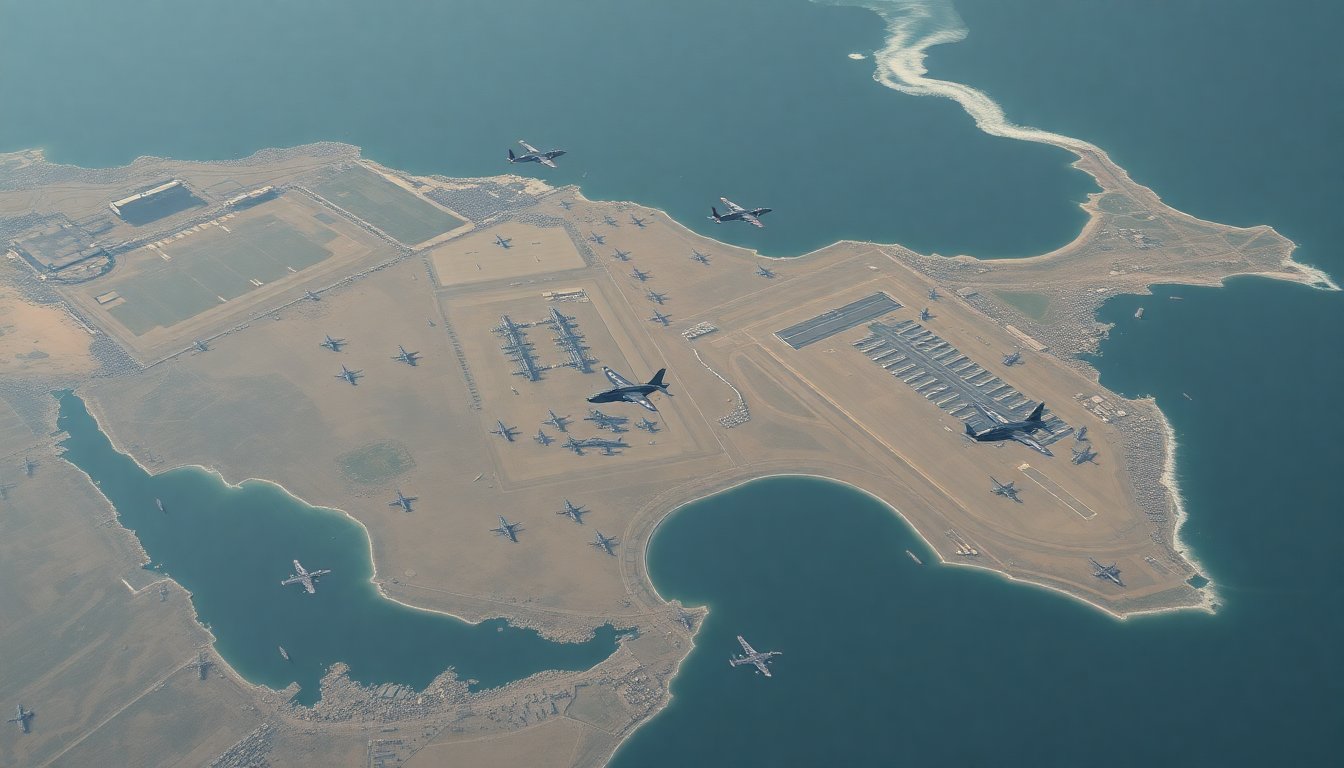
U.S. aircraft surge near Iran after nuclear talks stall
Satellite photos show a rapid redeployment of U.S. air power toward Iranian airspace. Analysts say more than 150 aircraft were moved in a matter of days after nuclear negotiations collapsed — a shift that coincided with intensive diplomacy and naval repositioning across the region.
What this posture means
The buildup is part signal, part preparation. Massing aircraft near a rival raises the stakes without a shot fired: it strengthens deterrence, gives commanders quicker response options and forces adversaries to rethink their calculations. Historical patterns from regional crises suggest that compressing forces next to an opponent shortens decision times and raises the risk of missteps — mistakes that can escalate simply because choices must be made faster.
Beyond the military line
The effects ripple far beyond bases and carriers. Diplomatic activity has accelerated — private consultations and shuttle diplomacy are multiplying — while markets, insurers and companies that rely on Middle Eastern shipping and energy routes are already recalibrating risk. Ports, flight paths and supply chains are being reexamined in real time as governments and businesses brace for sustained instability rather than a brief demonstration.
Logistics, politics and commercial pressure
A sudden concentration of aircraft creates immediate logistical headaches: more demand for air-to-air refueling, maintenance, supply lines and command-and-control bandwidth. Politically, the margin for error narrows; countries in the neighborhood and coalition partners may feel compelled to declare positions or risk being pulled into dangerous misperceptions. For commercial actors, the prudent move is to update contingency plans and scout alternative routes on the assumption that higher activity could last weeks or months, not days.
Carriers and maritime calculations
The eastward move of a large aircraft carrier from the Caribbean toward the Middle East is not routine repositioning. A carrier brings persistent, flexible airpower and reshuffles naval deployments, affecting sortie rates, patrol patterns and how regional navies and shippers plan their operations. Watch sustainment activities — escort composition, fueling patterns and logistics hubs — for clues about whether this is a short signal or a sustained deterrent. If the carrier stays for an extended period, expect shipping routes, insurance premiums and naval postures in the region to shift more noticeably.
Private diplomacy behind the headlines
High-level, off-the-record meetings have become more frequent. Leaders are pairing public statements with extended bilateral and multilateral talks to coordinate strategy and contingency plans. For example, recent extended consultations between U.S. and Israeli officials — while officially framed around non-proliferation — also reflect deeper concerns about regional influence and the security of energy corridors. Private diplomacy like this often accelerates operational planning and moves decision-making away from public posturing toward concrete contingency coordination.
How Iran and the region might respond
Tehran’s response will depend on its calculations of risk and opportunity: whether to escalate, deter, or pursue de-escalatory channels. Neighboring states will also recalibrate — balancing the pressure to protect their interests with the desire to avoid being drawn into conflict. Expect a mix of public statements, back-channel communications and tactical adjustments at sea and in the air.
What to watch next
– Are the aircraft deployments rotational or maintained over weeks and months? Duration matters. – Do sustainment footprints (escorts, refueling patterns, supply hubs) indicate a temporary signal or a longer-term posture? – Will private diplomatic exchanges produce confidence-building measures or harden positions? – How will insurers, shippers and energy buyers change routes, contracts and premiums?
The coming days will tell whether this is a short-lived demonstration of force or the start of a more prolonged period of elevated tension — with consequences for diplomacy, commerce and regional security.