
Table of Contents
Recent satellite observations have revealed activity at two significant Iranian nuclear facilities previously targeted by military actions from Israel and the United States. These developments suggest Iran may be attempting to recover materials from these sites. However, experts assert that despite these salvage operations, there has been no substantial progress in revitalizing Iran’s nuclear capabilities after the strikes.
Joseph Rodgers, a prominent expert at the Center for Strategic and International Studies (CSIS), indicates that the evidence points to limited recovery efforts. He emphasizes that the observed activity does not signify a significant reinvigoration of nuclear work at these locations. The focus remains on determining what materials may still exist and how they can be retrieved.
Insights from satellite imagery
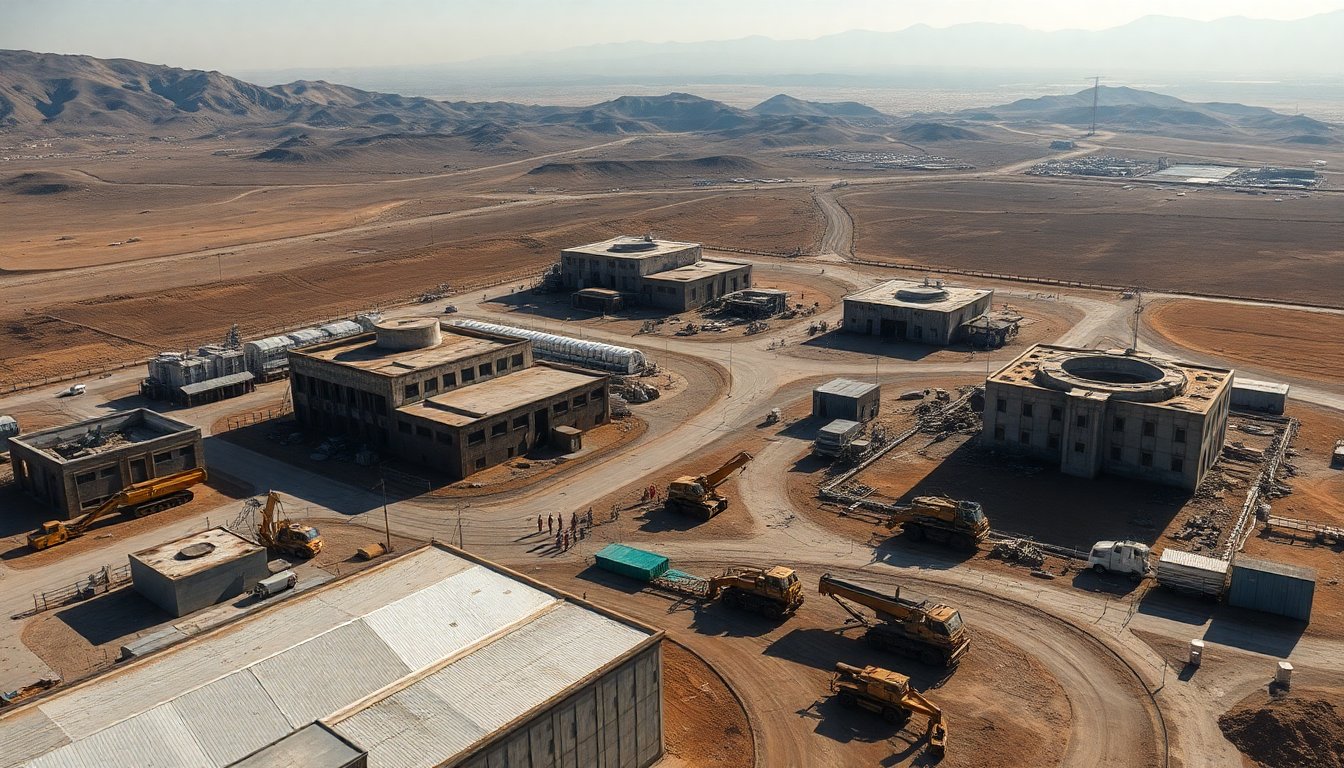
Recent images from Planet Labs PBC show notable changes at Iran’s Natanz and Isfahan nuclear sites. For instance, the Pilot Fuel Enrichment Plant at Natanz has been partially covered with a new roof, marking the first visible recovery efforts since military actions occurred in.
Assessing the damage
The Natanz facility, located approximately 220 kilometers from Tehran, plays a critical role in Iran’s uranium enrichment activities. The latest imagery illustrates that Iran has constructed a panel roof over the anti-drone cage at this facility. Spencer Faragasso from the Institute for Science and International Security interprets this as a measure to obscure ongoing activities, indicating a focus on recovery operations.
These efforts likely aim to locate any remaining materials, including enriched uranium, that could potentially be salvaged. Satellite views also suggest increased vehicular movement near tunnel entrances at the Isfahan site, which primarily produces uranium gas for enrichment processes.
Challenges in reconstituting capabilities
Despite visible activities, significant challenges remain in restoring Iran’s nuclear capabilities. Faragasso notes that while there is determination to rebuild, restoring the facilities to their original operational state will require considerable time and financial investment. Previous strikes have left Iran’s nuclear program in a precarious position.
Current status of Iran’s nuclear program
Even with some rehabilitation efforts underway, experts like Joseph S. Bermudez Jr. stress that the observed activity level is minimal. The reconstruction of roofs at these sites does not signify a major resurgence of nuclear research or development. The extensive destruction indicates that Iran’s enrichment program is currently non-functional.
Rodgers highlights that satellite images cannot fully capture what might be occurring underground, leaving uncertainty about the potential for undisclosed developments. Iran is believed to possess approximately 460.9 kilograms of highly enriched uranium, but the precise location of this material remains unclear.
This situation is further complicated by the geopolitical context, as Iran’s foreign minister has recently described indirect talks with the U.S. regarding its nuclear program as a constructive beginning. However, neighboring nations harbor concerns about the potential for military escalation in the region.
As the situation evolves, it is evident that while Iran is attempting to recover from military actions, the journey toward restoring its nuclear capabilities is fraught with obstacles. The extent of damage and the current limitations on the country’s enrichment activities underscore the challenges ahead.