
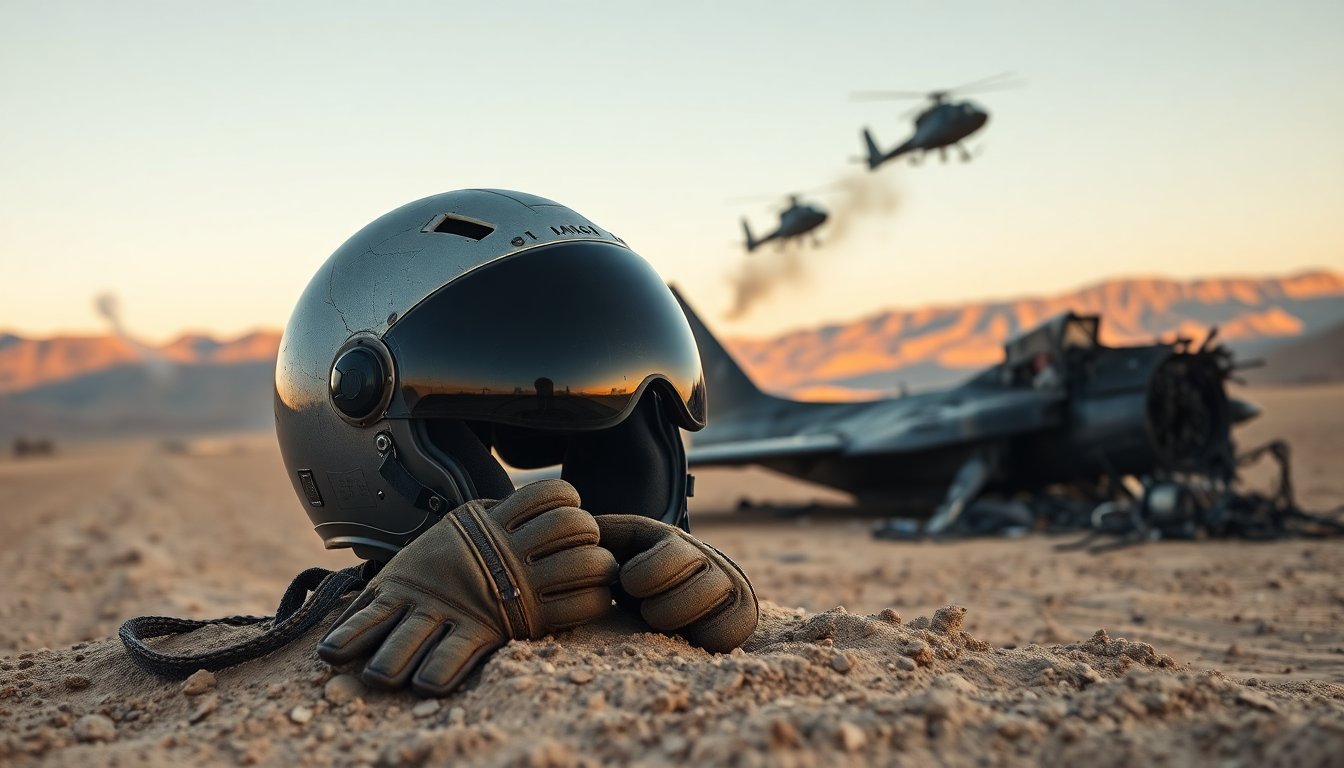
The international developments reported on April 3–4, 2026 describe a sharp escalation in a conflict that has already seen heavy air operations. According to U.S. officials and Iranian state outlets, an F-15E two-seat strike fighter was shot down over Iran, prompting an urgent search and rescue operation to find one missing crew member. Iranian media displayed images of wreckage and said local people were looking for survivors, even publicizing offers of compensation for anyone who captures or locates the downed airman.
The situation is complicated by conflicting statements from various Iranian authorities and by additional strikes that followed the F-15E incident. U.S. forces mobilized to recover the crewmember, and American officials confirmed that one F-15E crew member was rescued while the other remained unaccounted for. State-controlled outlets in Iran claimed responsibility for shooting down the jet, and Iranian provincial officials encouraged civilians to help find the pilot, offering rewards in some reports; other Iranian security commanders later denied that the missing crew member had been detained.
What happened to the aircraft and crews
U.S. military sources described a chain of hostile engagements after the F-15E was lost. An aircraft dispatched to support recovery efforts was reportedly hit as well: an A-10 Thunderbolt — the single-seat close-air-support jet commonly called a Warthog — was struck and crashed after the pilot ejected and reached Kuwait airspace, where the aviator was reported safe. Two U.S. Black Hawk helicopters involved in the search were also reportedly struck by hostile fire, though U.S. officials said their crews were unharmed. The Pentagon and U.S. Central Command issued limited public comment as the operation unfolded.
Search and rescue and media claims
Iranian outlets published photos they said showed the downed F-15E and an ejection seat with a parachute, and some regional spokespeople called on civilians to assist. A governor in Iran’s Kohgiluyeh and Boyer-Ahmad province at one point denied that any U.S. crew member had been captured, and the regional branch of the IRGC also refuted claims that a pilot had been detained. U.S. authorities maintained that one crew member had been recovered by American forces while the other remained missing, and they continued search operations amid unclear and rapidly shifting local reports.
Political and official reactions
President Donald Trump was briefed on the incident, White House officials confirmed, and his public remarks emphasized that the downing would not derail broader negotiations tied to the conflict — comments that U.S. and Iranian actors interpreted in various ways. A White House spokeswoman reiterated that the president had been updated on rescue efforts. Meanwhile, domestic Iranian rhetoric ranged from triumphant posts by politicians mocking U.S. claims of air superiority to cautious denials about capturing any American personnel, highlighting the mixed messaging from Tehran’s political and military ranks.
Strategic implications for air operations
This episode appears to be a notable shift because it is one of the first widely reported instances in this phase of the war of a U.S. fixed-wing aircraft coming down inside Iranian territory. That reality challenges assertions of uncontested U.S. dominance in Iranian airspace and comes after a series of earlier U.S. losses during the conflict: since the start of the war on February 28, U.S. forces reported multiple aircraft incidents, including the loss of several F-15s in friendly fire over Kuwait and a U.S. refueling tanker that crashed over Iraq with six fatalities. Iran has also consistently claimed to have struck numerous U.S. drones.
Possible causes and capabilities
Analysts point to remaining pockets of Iranian air defense capacity as a likely explanation for the strike on the F-15E. Even after sustained strikes on integrated networks, man-portable air defense systems and other mobile launchers remain operational and can pose a threat to low-flying or vulnerable aircraft. Military experts have suggested that a portable system could have downed the fighter, though U.S. officials will need to corroborate technical forensic evidence. The incident underscores the persistent risk of asymmetric air defenses and raises questions about future sortie planning and crew protection measures.
For now, the immediate priorities are locating the missing crew member and reducing the chance of wider escalation. U.S. search teams continued operations amid diplomatic channels that both sides described as active; Iranian officials offered local incentives to find survivors even as some agencies denied detentions. The unfolding developments will likely influence military tactics and political calculations in the coming days, as commanders and negotiators assess whether this incident alters the balance between battlefield pressure and outreach for talks.


