
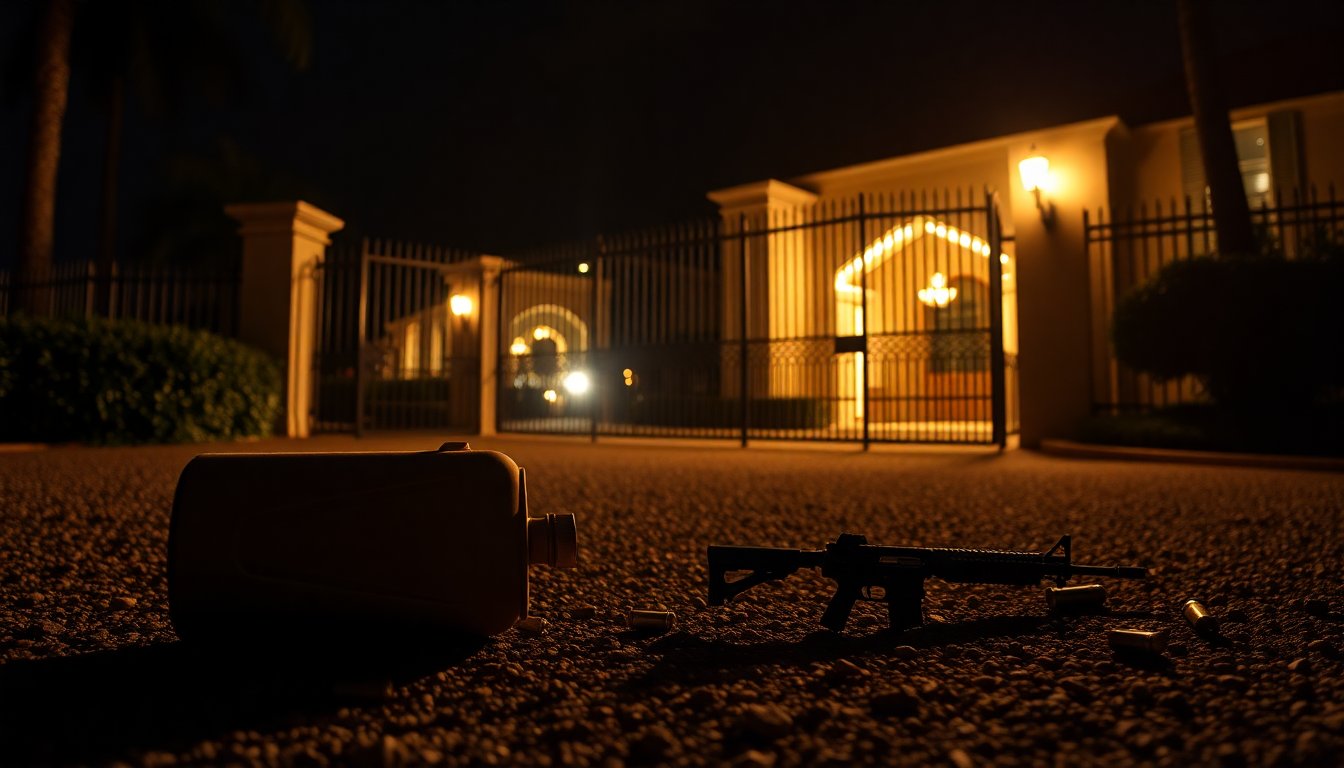
A man in his early 20s was shot and killed after breaching the secure perimeter at President Donald Trump’s Mar-a-Lago resort in Palm Beach, the U.S. Secret Service said. The incident happened around 1:30 a.m., and the president and first lady were in Washington, D.C.; no Secret Service protectees were on the estate at the time.
What officials say
– Secret Service and Palm Beach County authorities say the suspect was seen near the north gate carrying what looked like a shotgun and a fuel can. Agents ordered him to drop his items. He lowered the fuel can but then raised the shotgun into a firing position, and officers opened fire.
– The man’s identity has not been released pending notification of next of kin.
– The FBI, the Secret Service and the Palm Beach County Sheriff’s Office will review the shooting and examine the individual’s background, any possible motive, and whether the use of force followed policy.
Operational details
– Palm Beach County Sheriff Ric Bradshaw said two Secret Service agents and a PBSO deputy confronted the man. The deputy was wearing a body camera, Bradshaw noted.
– Officials have not identified who fired the fatal shot or how many rounds were fired. As is standard, the agents and the deputy involved are expected to be placed on administrative leave while investigators gather facts.
– Investigators will collect witness statements, forensic evidence and available body-camera footage as the review proceeds.
Security context and recent incidents
– The breach adds to a string of security incidents around the president’s properties in recent years. Authorities have pointed to multiple prior threats and breaches that prompted heightened protective measures.
– Officials previously reported an assassination attempt at a campaign rally in July 2026 that left the president wounded, and in September 2026 a man named Ryan Routh was caught near a golf course aiming a rifle; prosecutors say Routh was convicted and sentenced to life in prison earlier this month.
– These events have focused attention on perimeter controls, screening procedures and how multiple agencies coordinate protection of private properties that also receive federal security.
Investigation and public reaction
– The FBI is leading the probe with help from other agencies. Reviewers will assess whether officers’ actions complied with use-of-force policies and whether any prior intelligence or warning signs were missed.
– Motive has not been determined. Officials described the inquiry as ongoing and said more information will be released as evidence is processed.
– Public response has been mixed in Palm Beach and beyond: some demand transparency and independent oversight, while others emphasize officer safety and the need for fast, decisive action at a potential life‑threatening scene.
Broader implications for protective security
– Protecting private residences and clubs that also host official business creates tricky operational trade-offs: defining secure perimeters, allocating resources, and balancing privacy with public-safety needs.
– Reviews after incidents like this typically look at training, communication, surveillance coverage and coordination among federal and local teams. Any changes—new procedures, equipment or funding—carry operational and budgetary consequences.
What’s next
– Standard after-action reviews and interagency debriefs are expected. Authorities say they will release footage and more details as the investigation allows.
– Officials have not yet responded to requests for comment from the White House. Local agencies say they will provide updates as evidence is processed and formal findings are developed.