
Table of Contents
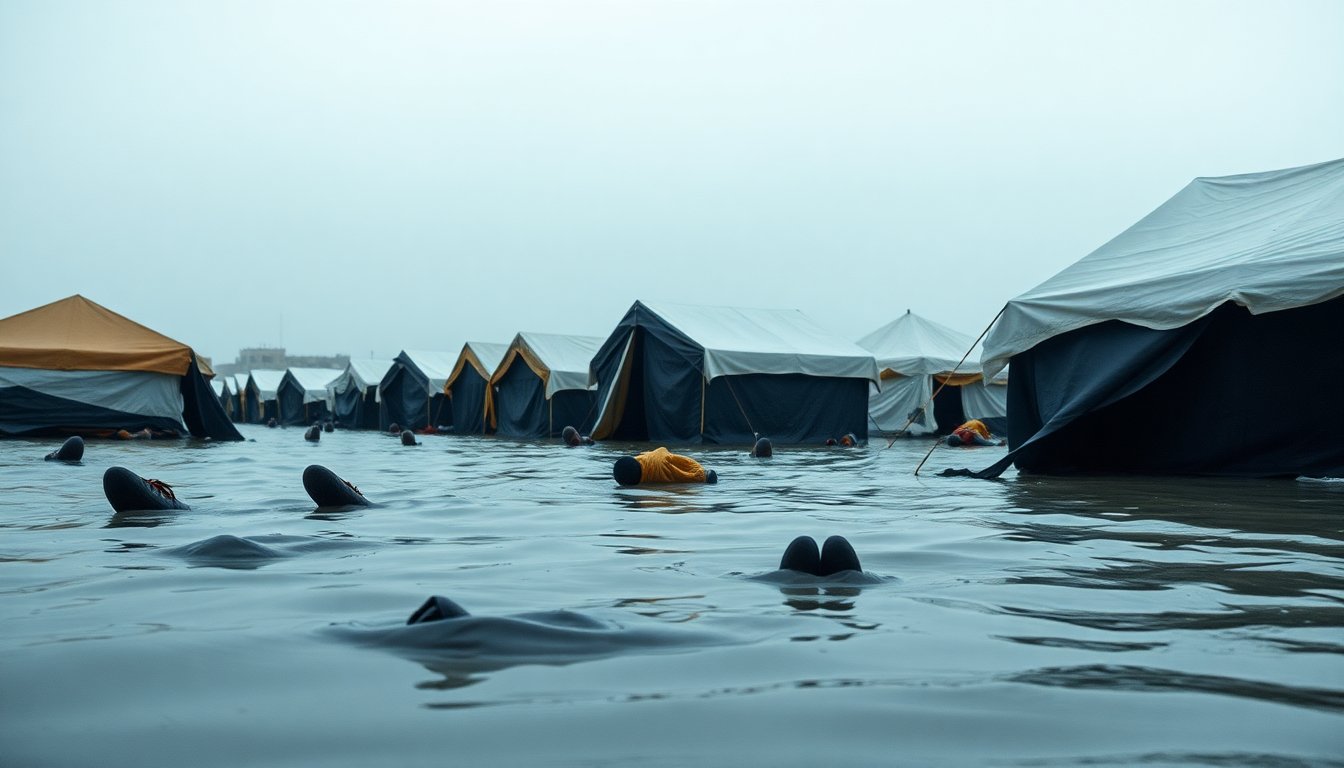
The Gaza Strip is facing severe challenges following a winter storm that has brought heavy rains, resulting in significant flooding and worsening the ongoing humanitarian crisis. Hundreds of families, already displaced by years of conflict, are struggling as temporary shelters become overwhelmed by water, leading to tragic consequences.
One particularly heartbreaking story is that of eight-month-old Rahaf Abu Jazar, who died from cold exposure after her family’s tent was flooded in Khan Younis. Her mother, Hejar Abu Jazar, expressed her sorrow, recalling how she had fed her daughter before they slept, only to awaken to a flooded tent and the devastating loss of her child.
Challenges faced by displaced families
In Khan Younis, individuals are working diligently to clear water and debris from their temporary shelters. Many are using shovels to dig out mud and construct makeshift barriers with sandbags to protect their tents from the harsh winds and rain. Umm Mohammed Abd Elaal, a local resident, shared her concerns, saying, “How can I let my children sleep in these conditions?” The urgency for safety and comfort in these challenging circumstances is evident.
The impact of inadequate shelter
Residents like Ahmed Salem have expressed their frustrations about the insufficient protection provided by their shelters. He remarked, “Our bedding becomes soaked, and it takes days to dry it out before we can use it again. These tents are not built for such weather.” The dire conditions of these temporary accommodations underscore the pressing need for improved living arrangements.
In another part of Gaza City, a man named Nael Rahma expressed his sorrow over the flooding of his family’s tent for the third time. With their belongings destroyed, he urgently called for international aid, highlighting the pressing need for proper shelter as they now find themselves living on the streets.
Response and limitations of aid efforts
Local authorities and civil defense teams are struggling to respond effectively to the storm’s impact due to a lack of resources and equipment. Many vehicles necessary for rescue operations have been destroyed during the ongoing conflict, leaving responders ill-equipped to manage the crisis. The situation is worsening as many displaced individuals are facing flooded encampments, with over 2,500 distress calls for assistance reported.
UN and humanitarian perspective
A report from the United Nations reveals that around 850,000 people in 761 displacement sites are facing an increased risk of flooding. The UN emphasizes the urgent requirement for at least 300,000 new tents to provide shelter for approximately 1.5 million displaced individuals. Many of the existing shelters are in poor condition, made from weak materials incapable of withstanding severe weather conditions.
In a striking example of resourcefulness, many residents are salvaging iron rods from the debris of bombed buildings to reinforce their tents or sell for a small amount. This situation highlights the resilience of the people in Gaza, who continue to seek ways to survive despite ongoing hardships.
Political implications and ongoing conflict
Ongoing aid challenges in Gaza amid ceasefire
Although a ceasefire has been in effect since October, the destruction of Gaza’s infrastructure continues to impede aid efforts. Hamas authorities have criticized Israel for not allowing sufficient humanitarian assistance into the region. In response, Israeli officials maintain that they are meeting their obligations. This persistent tension complicates the already fragile situation for those in need.
Human rights organizations have expressed similar concerns, highlighting that many Palestinians face the harsh realities of winter without adequate shelter or resources. This lack of support has raised the risks of illness and infection, further exacerbating the suffering of affected individuals.
As rain continues to pour, the humanitarian situation in Gaza has reached a critical point. Many are calling for increased support and urgent intervention. The international community faces a pressing need to provide humanitarian assistance to help those displaced by conflict and natural disasters.