
Table of Contents
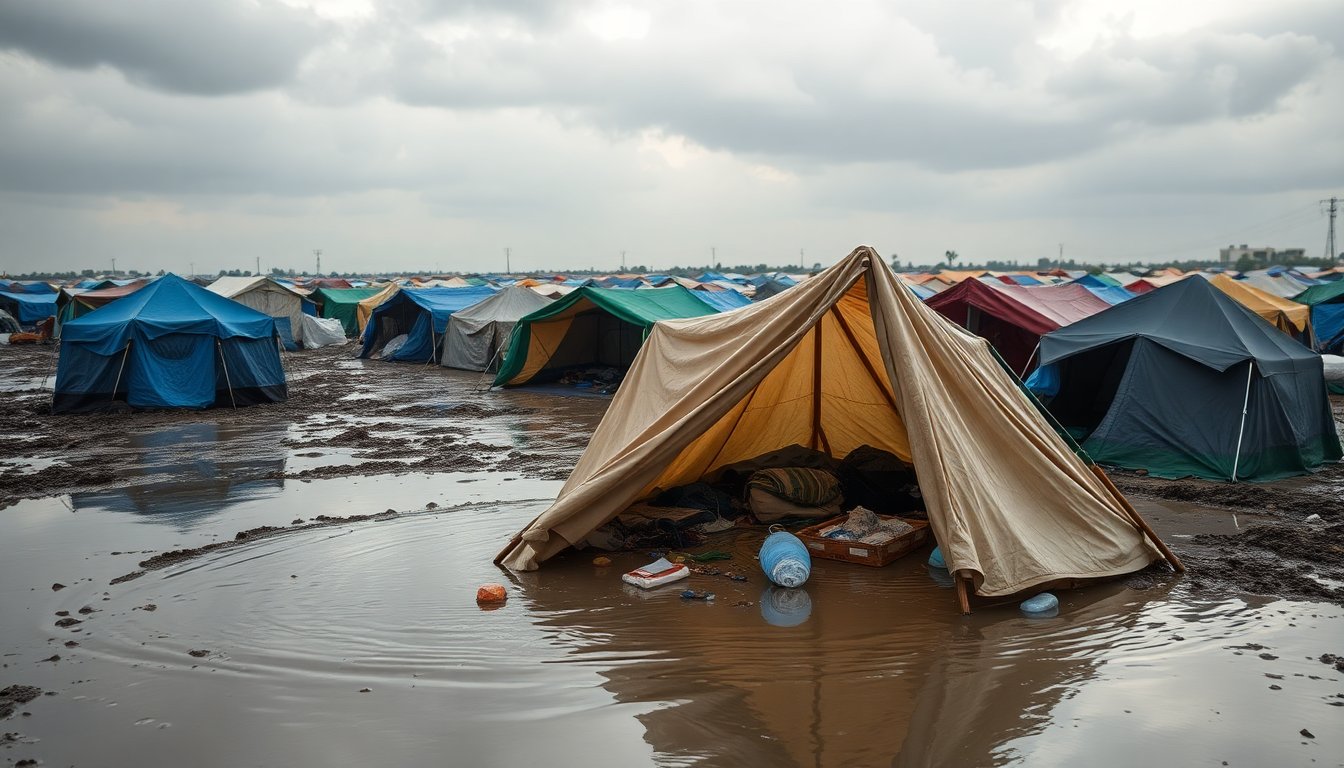
The humanitarian situation in the Gaza Strip has reached alarming levels as heavy rains inundate temporary shelters for displaced families. Storm Byron has overwhelmed thousands of tents, worsening conditions for those already suffering due to ongoing conflict.
As the rain began to fall, the Palestinian Civil Defence warned of an impending disaster, highlighting the immediate threat to families living in precarious conditions. Officials expressed concerns about further flooding, with a polar low-pressure system predicted to impact the region.
The facts
In Gaza, where infrastructure has been severely compromised, the effects of flooding are extensive. Municipal wastewater systems are largely destroyed, raising the risk of floodwaters mixing with untreated sewage. This situation poses significant risks for the spread of diseases such as dysentery and cholera, further endangering an already vulnerable population.
Accumulation of waste and health hazards
With waste collection services halted, vast amounts of garbage have accumulated throughout the region. Heavy rainfall risks dispersing medical waste, plastics, and other hazardous materials into areas where displaced families reside. Groundwater contamination remains a significant concern for the 2.4 million residents of Gaza, who are already struggling with limited access to clean water and sanitation.
Struggles for basic necessities
Families displaced by conflict, such as Mervat’s, face relentless challenges in securing basic provisions. Once able to provide for her family through her husband’s construction job, Mervat now navigates harsh conditions in a crowded displacement camp, where her family has been uprooted multiple times. Their shelter consists of a flimsy tent, offering little protection against cold winds and rain.
The emotional toll of displacement
The psychological impact on children in these camps is profound. Limited access to education and safe spaces leaves young minds vulnerable. Mervat recounts her children’s fear as they wait in long lines for food, only to return empty-handed when supplies run low. The experiences of families like hers reflect the broader struggle in Gaza, where over 92% of homes have sustained damage or destruction due to ongoing violence.
Humanitarian efforts and international response
In response to the escalating crisis, humanitarian organizations are intensifying their efforts to provide immediate assistance. The International Rescue Committee (IRC) has initiated a winter clothing distribution program to help families facing harsh winter conditions. Supported by the European Union, these initiatives aim to provide essential items such as jackets, hats, and gloves to those in need.
Beyond material support, the IRC is also offering psychosocial programs designed to help families cope with the emotional scars of displacement. These sessions are crucial in fostering resilience among children and caregivers, allowing families to find moments of joy amidst despair.
The call for international action remains urgent as the situation unfolds. Aid entering Gaza is insufficient to meet the overwhelming needs of its residents, underscoring the necessity for immediate and sustained support from the global community.