
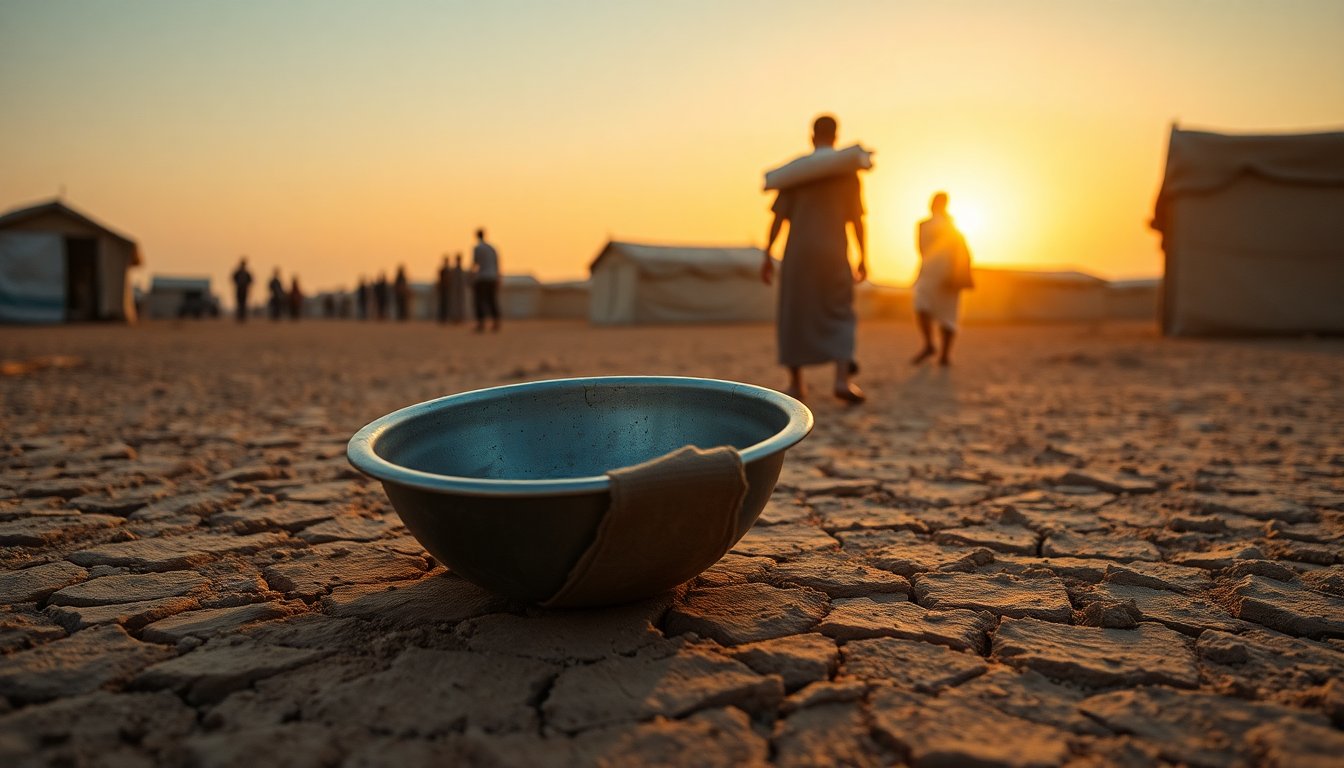
On April 24, 2026, a joint report from the Food and Agriculture Organization (FAO) and the World Food Programme (WFP) laid out a stark picture: the most extreme forms of food deprivation have grown sharply since 2016 even as resources to confront them have dwindled. The study, the annual Global Report on Food Crises, finds that roughly 1.4 million people were on the brink of starvation last year in six countries and territories, up from 155,000 in 2016. The analysis stresses that this surge has occurred against a backdrop of plummeting donor support and mounting barriers to aid delivery.
What the data makes clear
The report documents that 266 million people across 47 countries experienced high levels of food insecurity in 2026, a figure that experts warn is likely an underestimate because usable data were absent for 18 countries. In the same period the share of populations facing extreme food shortages has nearly doubled. For the first time in the report’s decade-long history, famine was confirmed in two separate locations at the same time — in Gaza and in Sudan — a development the FAO describes as unprecedented and directly linked to conflict and restricted humanitarian access.
Hotspots and levels of concern
The related Hunger Hotspots assessment identifies a set of countries where conditions are most likely to worsen between November 2026 and May 2026. Six areas are highlighted as of highest concern: Sudan, Palestine (Gaza Strip and West Bank), South Sudan, Yemen, Mali and Haiti. A second tier — very high concern — includes Afghanistan, the Democratic Republic of the Congo, Myanmar, Nigeria, Somalia and Syria, while Burkina Faso, Chad, Kenya and the Rohingya refugees in Bangladesh are also singled out as critical.
How funding shortfalls and politics amplify suffering
While needs increase, humanitarian and development spending aimed at food crises has fallen back to levels seen in 2016–2017. The report cites a near 57 percent reduction in U.S. foreign aid last year and substantial cutbacks from several European donors, including Germany, France, the Netherlands and the U.K.. The operational impact has been severe: the WFP reported losses exceeding $2.6 billion and the elimination of around 6,000 jobs after major changes to U.S. aid architecture, including moves that affected USAID. Other U.N. agencies such as the FAO have also reported acute budgetary pressure.
Why access, not just money, matters
Agency leaders emphasize that famine is not an abstract metric but the result of blocked supply lines and violent conflict. WFP’s outgoing executive director, Cindy McCain, warned that severe hunger has doubled and that the same countries are trapped in a cycle of conflict and deprivation compounded by insufficient resources. The FAO’s director for emergencies, Rein Paulsen, has stated plainly that famine is directly related to conflict. Beyond front-line violence, the report notes disruptive effects on global fertilizer and energy markets from Middle East hostilities, which further strain food-importing countries already under pressure.
A narrow window to prevent further loss of life
The FAO and WFP signal a dwindling opportunity to head off greater catastrophe, saying the world has only a limited period—already visible by late 2026—to scale up action in those hotspots. Closing the gap will require increased and predictable humanitarian funding, unimpeded access for relief convoys, protection of local agricultural cycles and measures to stabilize global supply chains for inputs such as fertilizer and energy. The report recommends coordinated diplomatic pressure to reopen aid corridors and targeted financial commitments from major donors to avert expanded famine and save lives.
Urgent steps and what to watch next
Policymakers and donors should treat the findings as a call to immediate action: restore funding to at least recent levels, negotiate safe passage for relief in conflict zones and prioritize data collection in the countries currently missing usable information. Without such moves, the combination of armed conflict, economic collapse, extreme weather and funding shortfalls will continue to push vulnerable communities toward starvation. The report makes clear that the cost of inaction will be measured in lives lost and in crises that are far costlier to resolve later than to prevent now.


