
Table of Contents
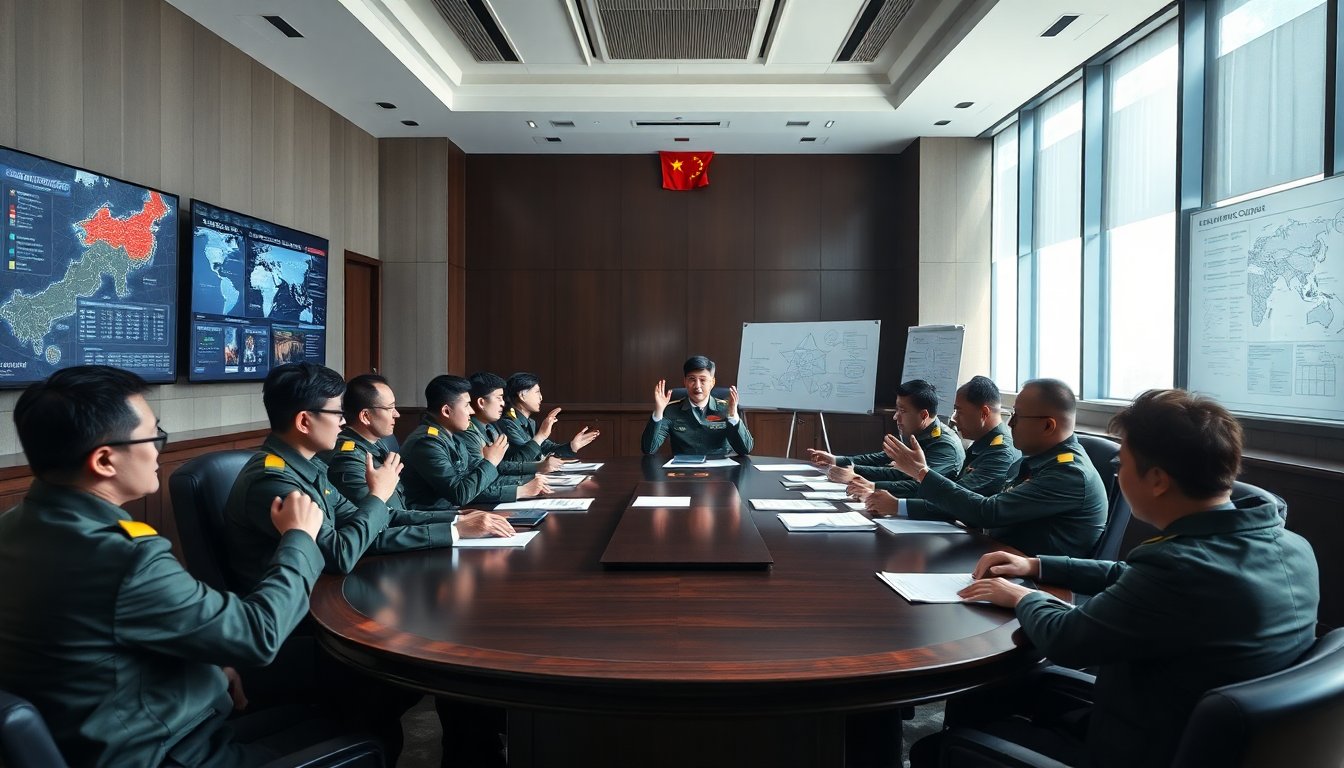
The Chinese military is undergoing significant changes following a series of high-profile purges that have reshaped its leadership. This transformation occurs amid internal challenges and a pressing need for modernization within the armed forces. The recent dismissal of General Zhang Youxia highlights a broader trend of consolidating military power under President Xi Jinping, who aims to secure his authority and streamline military operations.
General Zhang, previously regarded as a close ally of Xi and a key figure in the Central Military Commission (CMC), has been removed amid serious allegations of disciplinary violations. His ousting, alongside that of General Liu Zhenli, marks a pivotal shift in military command and raises questions about the future of China’s defense strategy.
Understanding the context of military purges
This upheaval is not unprecedented. Xi Jinping has pursued a vigorous campaign to root out corruption and enhance the operational capabilities of the People’s Liberation Army (PLA). These efforts have led to the dismissal of numerous high-ranking officials, signaling Xi’s intent to eliminate perceived threats to his leadership and establish a more loyal command structure.
Since taking office, Xi has managed a complex power dynamic within the military. The latest purges indicate a consolidation of authority that had previously been distributed among various factions. The military’s leadership is increasingly influenced by Xi, who has adopted a decisive approach against corruption and inefficiency.
The implications for military modernization
The impact of these purges extends beyond personnel changes; they reflect a broader strategy to transform the PLA into a modern fighting force. Xi’s vision includes integrating diverse military operations—air, land, naval, cyber, and space capabilities—into a cohesive structure that can effectively address contemporary security challenges.
However, this shake-up raises concerns about the PLA’s preparedness for potential conflicts, particularly regarding Taiwan. The removal of experienced generals like Zhang could impede strategic planning and operational readiness, especially as tensions rise in the region.
Navigating internal and external challenges
As the Chinese military undergoes transformation, it faces significant internal and external challenges. Internally, efforts to eliminate corruption must be matched by ensuring the new leadership is competent and capable of managing the complexities of modern warfare. Investigations into high-ranking officials’ conduct indicate that the military is still contending with systemic issues that could undermine its effectiveness.
Externally, the PLA must navigate an increasingly assertive United States and its allies, who are closely monitoring China’s military developments. The necessity to project strength while avoiding missteps is critical, making the current leadership transition particularly important. Xi’s ability to maintain control over the military during this period will be a key factor in shaping China’s military posture and international relations.
Potential outcomes of the leadership shift
The long-term consequences of these leadership changes are uncertain. While the purges may temporarily strengthen Xi’s grip on power, they also pose risks to the military’s operational effectiveness. A lack of experienced leadership could lead to a fragmented command structure, complicating decision-making during crucial moments.
Moreover, as Xi seeks to establish a new cadre of generals aligned with his vision, the cohesion and morale of the military may be tested. An emphasis on loyalty over competence could result in personal connections overshadowing strategic acumen, potentially jeopardizing the PLA’s crisis response capabilities.
General Zhang, previously regarded as a close ally of Xi and a key figure in the Central Military Commission (CMC), has been removed amid serious allegations of disciplinary violations. His ousting, alongside that of General Liu Zhenli, marks a pivotal shift in military command and raises questions about the future of China’s defense strategy.0