
Table of Contents
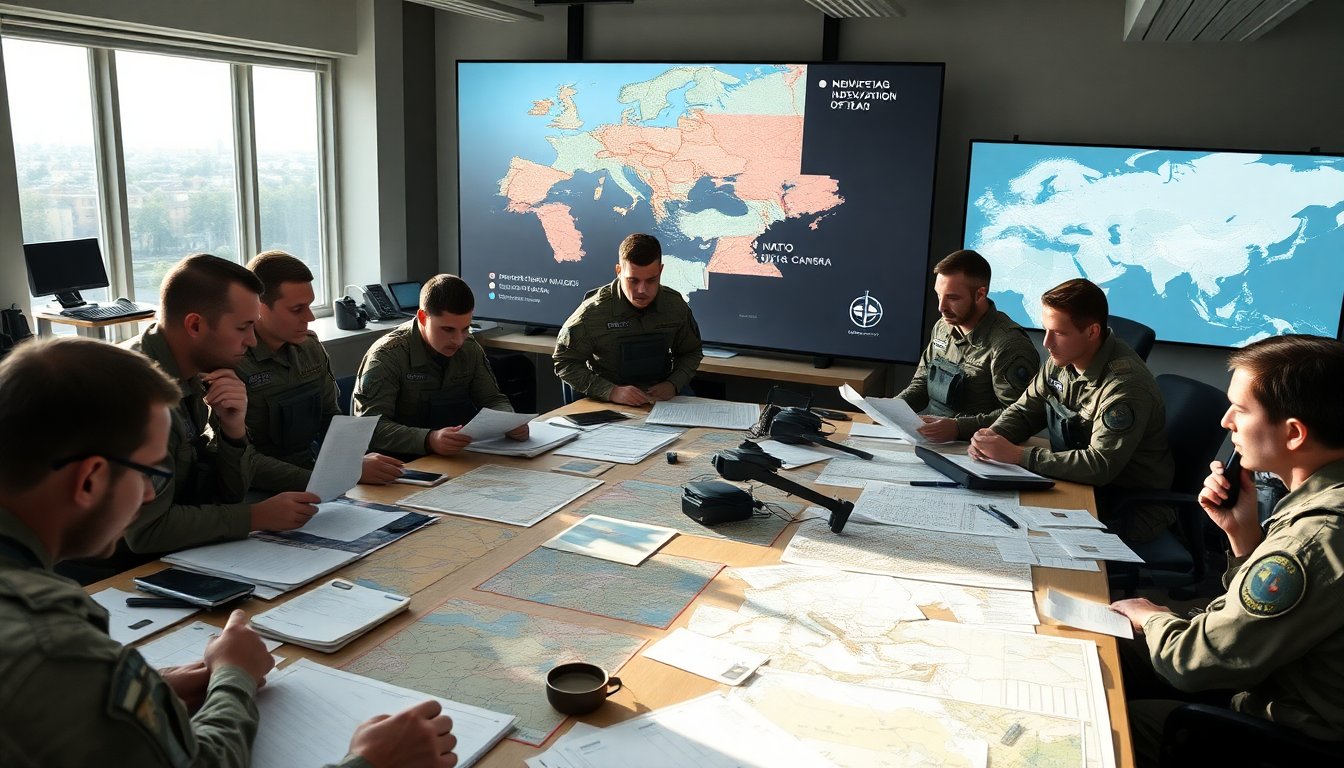
In December, a significant military simulation unfolded, organized by Die Welt in partnership with researchers from Helmut Schmidt University. The exercise aimed to explore the potential consequences of a Russian incursion into NATO territory, involving 16 participants, including former senior NATO officials and security experts. The simulation presented a concerning scenario for European allies.
During the exercise, Russian forces, represented by the Red Team, advanced through NATO nations with minimal resistance, capturing the Lithuanian city of Marijampole within the first three days. Alexander Gabuev, director of the Carnegie Russia Eurasia Center in Berlin, played the role of Vladimir Putin and shared insights from this critical simulation.
Structure of the simulation
Hosted at the University of the Federal Armed Forces in Hamburg, the simulation was structured as a high-pressure role-playing scenario. Participants operated from separate rooms, issuing orders to moderators while mimicking real-time decision-making processes typical of state officials. The game included specific rounds that represented distinct timeframes, enabling teams to make parallel strategic moves, with outcomes determined by referees adhering to a strict rulebook.
Team composition and roles
The simulation comprised three primary teams: a nine-member Blue Team representing the German federal government, a three-person Red Team standing in for the Kremlin, and four external strategic roles, including the NATO Secretary General, the European Commission President, the U.S. Secretary of State, and the Polish Prime Minister. The exercise unfolded over three simulated days, culminating in a declared winner by the judges.
Key strategies employed by the Red Team
The scenario began with a truce between Russia and Ukraine in May 2026, after which Moscow sought to strengthen its economic ties with Germany through offers of discounted natural gas. Concurrently, Russian military exercises near the Baltic states led to troop deployments in Belarus and the Kaliningrad region. As Russian forces gathered at the Lithuanian border, German military leaders convened an emergency meeting, where the simulation unfolded.
Gabuev noted that the primary objective of the Russian team was to divide NATO. They crafted a narrative alleging a humanitarian crisis in Lithuania, claiming the country obstructed supplies to Kaliningrad. By utilizing drones for fire control, the team laid mines at the Polish border before deploying troops alongside humanitarian organizations like the Red Cross.
The element of surprise
Gabuev emphasized that the Russian strategy relied on maintaining the facade of a humanitarian intervention. They even invited the United States to send unarmed observers to confirm that Russian troops were not harming civilians. When the U.S. declined, it became clear that American involvement in the conflict was unlikely, significantly easing the task for the Russian team.
Consequences and reflections
In the simulation, although the Polish military mobilized toward the Lithuanian border, they refrained from direct intervention, hindered by the mines laid by the Russians. Gabuev expressed that in real-world scenarios, European nations would likely have access to intelligence reports prompting a more immediate response. The simulation aimed to assess Germany’s response capability, revealing inadequacies in protecting the North Atlantic Alliance.
Gabuev commended his teammates for their preparedness, contrasting it with the reactionary stance of their opponents. He recalled a German participant remarking at the end of the wargame, “It’s fortunate that the actual Russians do not prepare as thoroughly as you did.” This reflection underscores the gravity of the simulation’s findings and the necessity for NATO to reassess its strategies in the face of potential Russian aggression.