
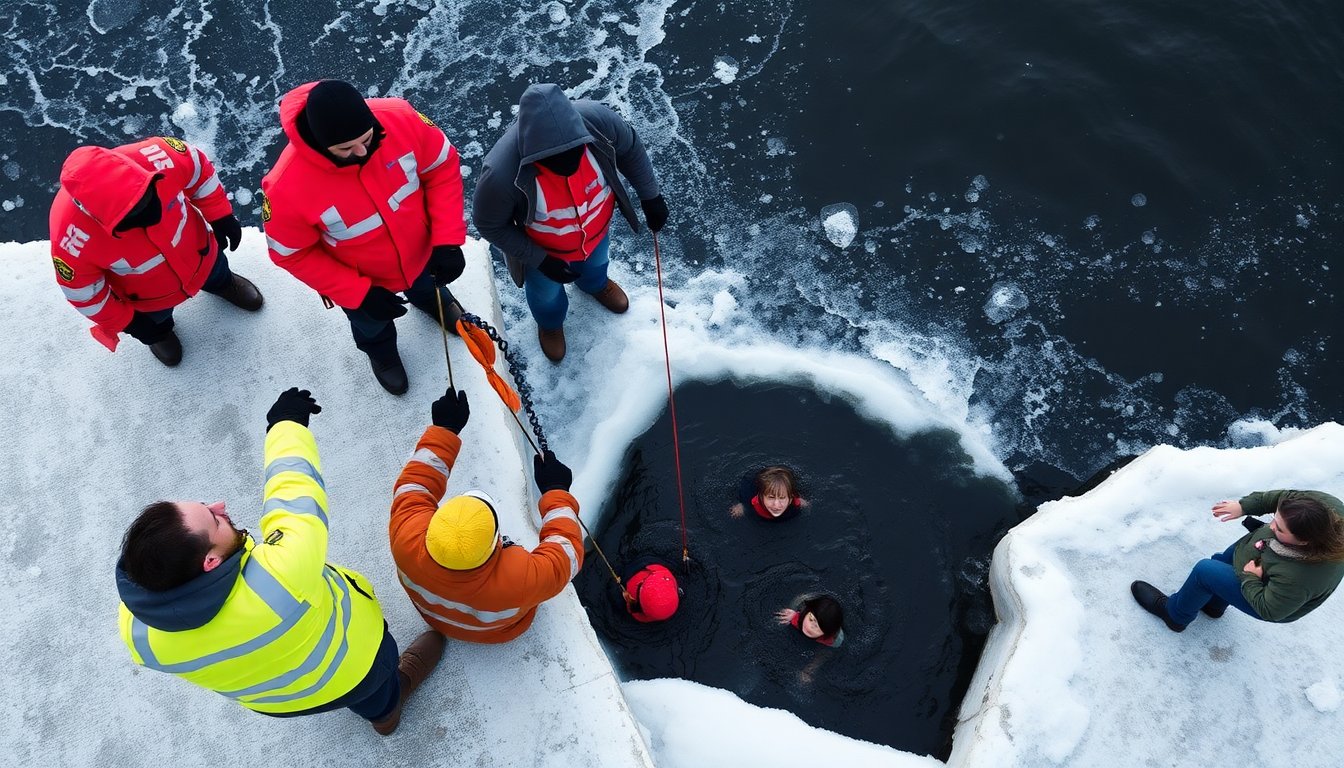
On the afternoon of March 7, 2026, a routine visit to Hamilton’s Pier 7 turned frightening when a patch of ice gave way and several people plunged into the cold water. A 9-1-1 caller reported that two youths had already fallen through near 121 Haida Ave, and bystanders were trying to help. Hamilton police and Paramedic Service crews arrived quickly. Using throw bags and coordinated efforts directed by officers, responders and nearby civilians pulled all six people who entered the water safely back to shore.
What happened
The break occurred on a public section of the boardwalk beside thin, thawing ice. Witnesses say two youths fell through first; others stepped onto the weakened surface to help and more break-throughs followed. Visitors who saw the ice bending tried to intervene before emergency teams arrived. Police secured the area while paramedics treated those removed from the water for cold exposure.
How responders acted
Officers established a safety perimeter and organized bystanders to reduce further risk. Crews relied on standard cold-water procedures and rescue tools—throw bags, ropes and flotation devices—to reach victims from safer positions on shore. Paramedics triaged everyone at the scene: five people were treated and sent home, while one youth, who had been submerged longer, was transported to hospital for further evaluation.
Why the ice failed
Recent warm spells and thaw cycles weakened the ice unevenly, making seemingly solid surfaces dangerously unreliable. When temperatures rise and refreeze repeatedly, ice loses structural integrity in patches—especially in high-traffic waterfront areas like Pier 7. That unpredictability is what turned a recreational outing into a multi-person emergency.
Why bystander rescues can increase danger
Trying to rescue someone by walking onto thin ice is often well-intentioned but risky. A rescuer’s weight can trigger new cracks, turning one victim into several. Cold water quickly impairs movement and breathing, so an untrained helper can be overcome within minutes. Tools such as throw bags, long poles or ropes let you assist from shore; stepping out onto suspect ice or using makeshift gear can make the situation worse.
Safety guidance and practical tips
– Avoid walking on ice that looks slushy, dark, discolored or otherwise unstable. – Keep a safe distance from shorelines during thaw periods. – If you see someone fall through, call 9-1-1 immediately. Give a clear location, describe the victim’s condition and follow dispatcher instructions. – From shore, extend a reach with a pole, rope, branch, ladder, or clothing tied into a line. Use a throw bag or floatation device if available. Don’t go onto the ice unless you are trained and equipped. – Wear a life jacket when near open water and keep your phone in a waterproof case. Know the signs of hypothermia: intense shivering, confusion, slurred speech and poor coordination. Prompt warming and medical assessment save lives.
Community and operational lessons
This incident highlights how quickly changing weather raises recreational risk and strains emergency services. Municipalities can lower future harm by updating signage, issuing timely public alerts, increasing patrols in high-traffic spots, and investing in routine ice-rescue training for first responders and volunteers. Simple, visible measures—barriers, marked hazards, and public education—go a long way toward preventing multi-victim incidents.
What happens next
Authorities continue to assess conditions at Pier 7 and advise the public to stay off or away from ice there until it’s declared safe. The Hamilton police reiterated the dangers of direct rescue attempts and urged people to call emergency services rather than put themselves at risk. All six people pulled from the water survived the incident; one youth received hospital care for prolonged cold exposure. Community awareness, clear warnings and prepared responders make the difference between a near miss and a tragedy.