
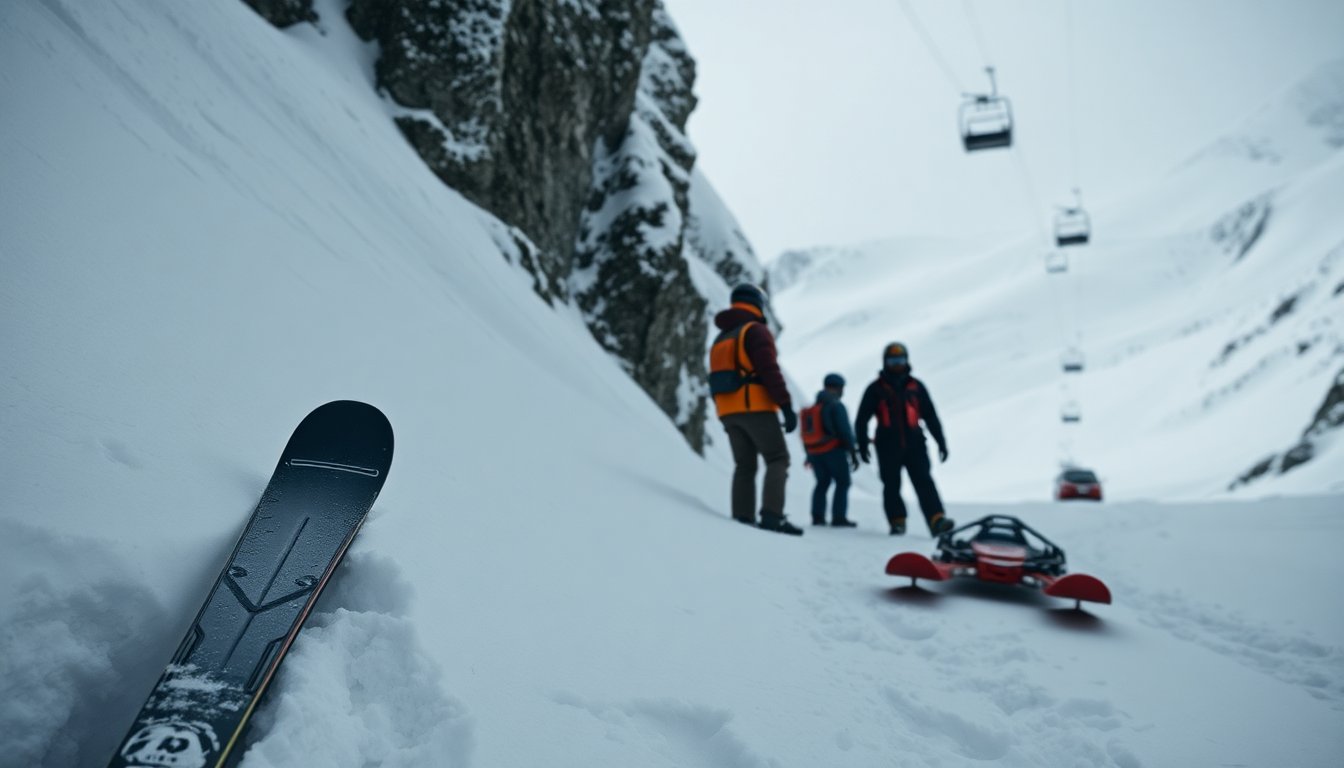
Mammoth Mountain is grieving after a fall in one of its toughest chutes left a local skier dead. Just before 1:00 p.m. on Feb. 5, ski patrol discovered 40-year-old Robert Carroll unconscious in Dropout Chute 2. He was rushed to Mammoth Hospital, where emergency teams worked to save him, but he later died. The resort and local authorities have opened inquiries as this tragedy follows several serious incidents at Mammoth in recent months, renewing debate over terrain management, equipment choices and mountain conditions.
What investigators know so far
– Patrol and first responders logged a distress call around 1:00 p.m., a rapid response by ski patrol, on-scene advanced care and ground transport to Mammoth Hospital. – Officials have requested patrol radio recordings, slope-condition reports, hospital records and witness statements to piece together a clearer picture. – Resort postings reviewed so far show no specific public advisory for Dropout Chute 2 immediately before the fall. – Investigators characterize current materials as preliminary; no definitive medical or biomechanical cause of death has been released.
Reconstructing the accident
Early accounts and patrol notes indicate Carroll lost his skis near the top of the chute, struck rock outcroppings and then tumbled downhill. Rescuers reached him within routine response windows, administered advanced life support, and evacuated him by ground. Forensic, operational and coroner reviews are under way. Investigators hope to supplement patrol and witness testimony with telemetry or tracking data if any personal devices were active. Until formal reports are finished, authorities are avoiding conclusions about contributing factors.
Who’s involved in the response
– Primary responders: Mammoth Mountain ski patrol and local emergency medical services. – Medical care: Mammoth Hospital treated the victim. – Oversight: Local law enforcement and the coroner’s office are leading the formal inquiry, with resort management cooperating and preserving records. – Witnesses: Skiers and patrollers nearby provided statements and supplied photos or video. – Potential technical contributors: If gear condition or compatibility is relevant, manufacturers, rental companies and independent experts may be asked to examine equipment.
Why Dropout Chute 2 is risky right now
Dropout Chute 2 is an experts-only line off the top of Chair 23 that drops about 1,200 vertical feet and features narrow constrictions, rock bands and variable snowpack. Recent weeks brought little new snow; wind scouring and icy, glazed surfaces have exposed hazards and altered how the run behaves. Hard-packed snow reduces edge bite and lengthens stopping distances — conditions that can quickly turn a challenging powder line into something far more dangerous on ice.
Immediate questions being debated
– Are signage and access controls for expert chutes adequate? – Is patrol coverage and readiness matched to steep, exposed terrain? – Are skiers matching equipment to the conditions — for example, choosing narrower, stiffer skis with strong edge grip when snow is hard instead of wide powder boards that “float” but lose hold on ice? – Should temporary closures, permits, or different rescue staffing be used during marginal conditions?
How icy surfaces change the run
Technicians and shop pros outline several ways hard snow raises risk: hard-pack boosts speed and reduces edge hold; exposed rock that powder would mask becomes a solid hazard; and abrupt firm-to-soft transitions can throw skiers off balance, forcing sudden, risky line changes. Maintenance logs note repeated freeze-thaw cycles that compact upper-slope snow into dense layers. Patrol reports reference recent falls tied to loss of edge hold, and emergency summaries show injuries consistent with high-speed impacts on hard surfaces. Those patterns have implications for rental guidance and public messaging.
A troubling cluster of incidents
This death is part of a string of serious events at Mammoth in roughly the last three months: a patroller killed during avalanche mitigation; a skier found unconscious off-trail on Christmas Day who later died; and a Jan. 31 chair-lift mishap that left a 12-year-old briefly suspended before rescue. Several severe but non-fatal injuries have also been reported. Together, these incidents have intensified scrutiny of natural hazards, mitigation practices and how the resort communicates risk to visitors.
What comes next
Investigators will keep collecting patrol logs, radio transmissions, slope-condition reports and witness testimony. The coroner’s report and a formal incident summary are expected to guide any regulatory, operational or legal steps. Mammoth Mountain says it is cooperating with the inquiry and conducting its own internal review; among possible responses under discussion are revised signage, stricter access controls for expert chutes and adjusted patrol deployments. Officials are asking anyone with photos, videos or device data from the area to preserve and share it with investigators.
This is a developing story; authorities ask for patience while they complete their work and for anyone with relevant information to come forward.