
Table of Contents
The National Portrait Gallery in Washington, D.C. has made headlines for its decision to update the portrait of former President Donald Trump. This change carries significant implications, as the gallery has removed a caption referencing Trump’s impeachments and the January 6 Capitol insurrection. The modification has raised eyebrows and sparked discussions about the portrayal of historical figures in public institutions.
Trump’s original portrait was displayed alongside other presidential images and included a detailed account of his time in office. The prior caption described his two impeachments, noting the charges of abuse of power and incitement of insurrection. These events marked pivotal moments in U.S. history, making the decision to redact this information particularly notable.
Changes to the portrait and its context
The Smithsonian has replaced Trump’s portrait with a new black-and-white photograph taken by White House photographer Daniel Torok. This updated image features Trump with an intense expression, his fists resting on the Resolute Desk, a powerful symbol of the presidency. This portrayal sharply contrasts with the previous image, which depicted Trump in a more reserved stance, hands folded in front of him.
Implications of the caption change
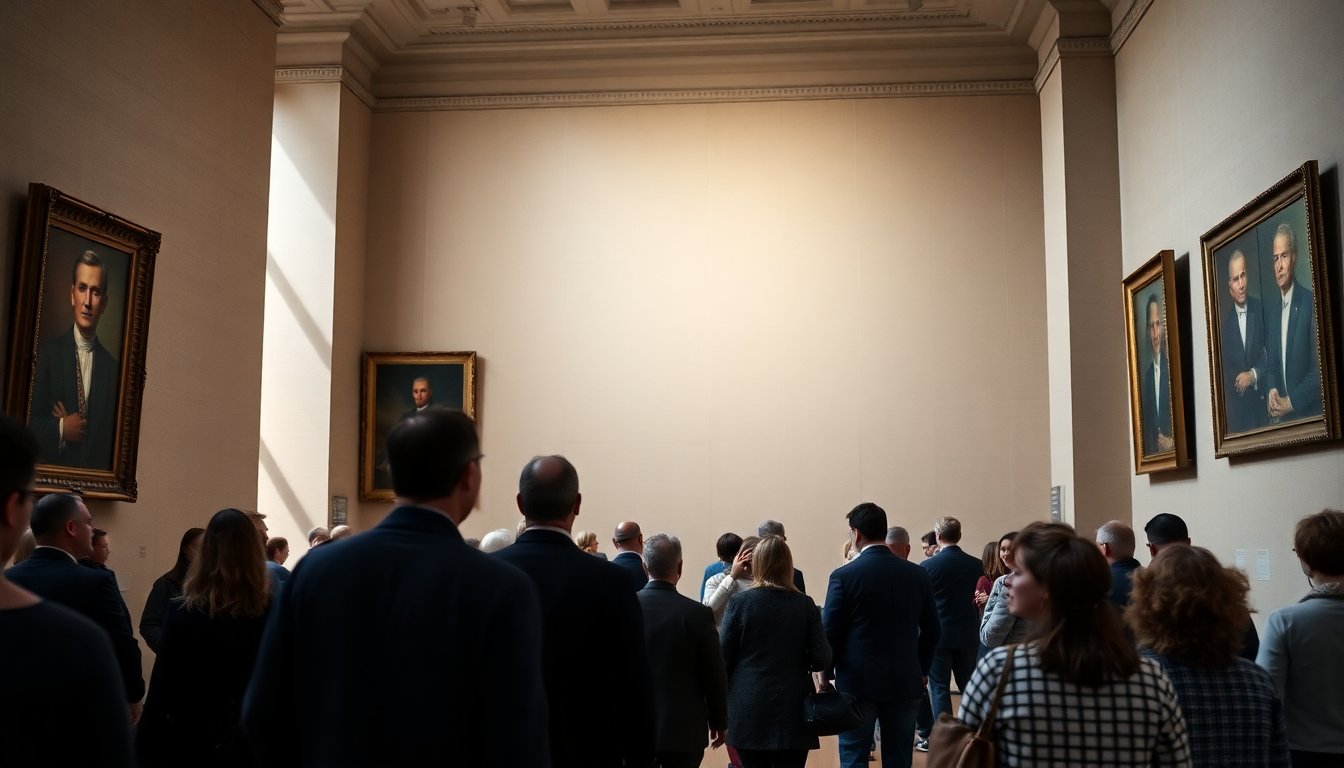
Along with the new image, the caption has undergone a significant alteration. The original caption provided a comprehensive overview of Trump’s presidency, including details about the impeachment process he faced. The new version, however, is much shorter and limited to simply stating the years he served in office. This change has resulted in a visible outline of the previous placard remaining on the wall, highlighting the stark differences in how Trump’s legacy is now presented compared to that of his predecessors.
In contrast, portraits of other former presidents, such as Joe Biden, Barack Obama, and Bill Clinton, continue to feature detailed captions that reflect significant events from their respective terms. Notably, Clinton’s portrait still includes a reference to his impeachment, raising questions about the consistency in how historical figures are represented based on political controversies.
Reactions to the Smithsonian’s decision
The decision to modify Trump’s portrait and remove references to his impeachments has generated mixed reactions. Supporters argue that the Smithsonian should focus on presenting a balanced view of history, free from partisan influence. Critics contend that this move amounts to an attempt to sanitize Trump’s presidency and diminish the impact of his controversial actions.
The role of museums in historical representation
Museums like the National Portrait Gallery play a vital role in shaping public understanding of history. The portrayal of significant figures can influence how future generations perceive their contributions and controversies. As such, the decision to alter Trump’s portrait raises important questions about the responsibilities of museums in accurately reflecting history.
While the Smithsonian aims to provide an engaging visitor experience, the omission of critical historical context can lead to a skewed understanding of past events. This becomes increasingly relevant in an era where historical narratives are debated and contested.
The future of historical representation in museums will likely continue to be a topic of discussion as institutions navigate the complexities of presenting multifaceted figures like Trump. As public interest in these issues grows, the Smithsonian and similar organizations must tread carefully to balance artistic expression with factual accuracy.