
Table of Contents
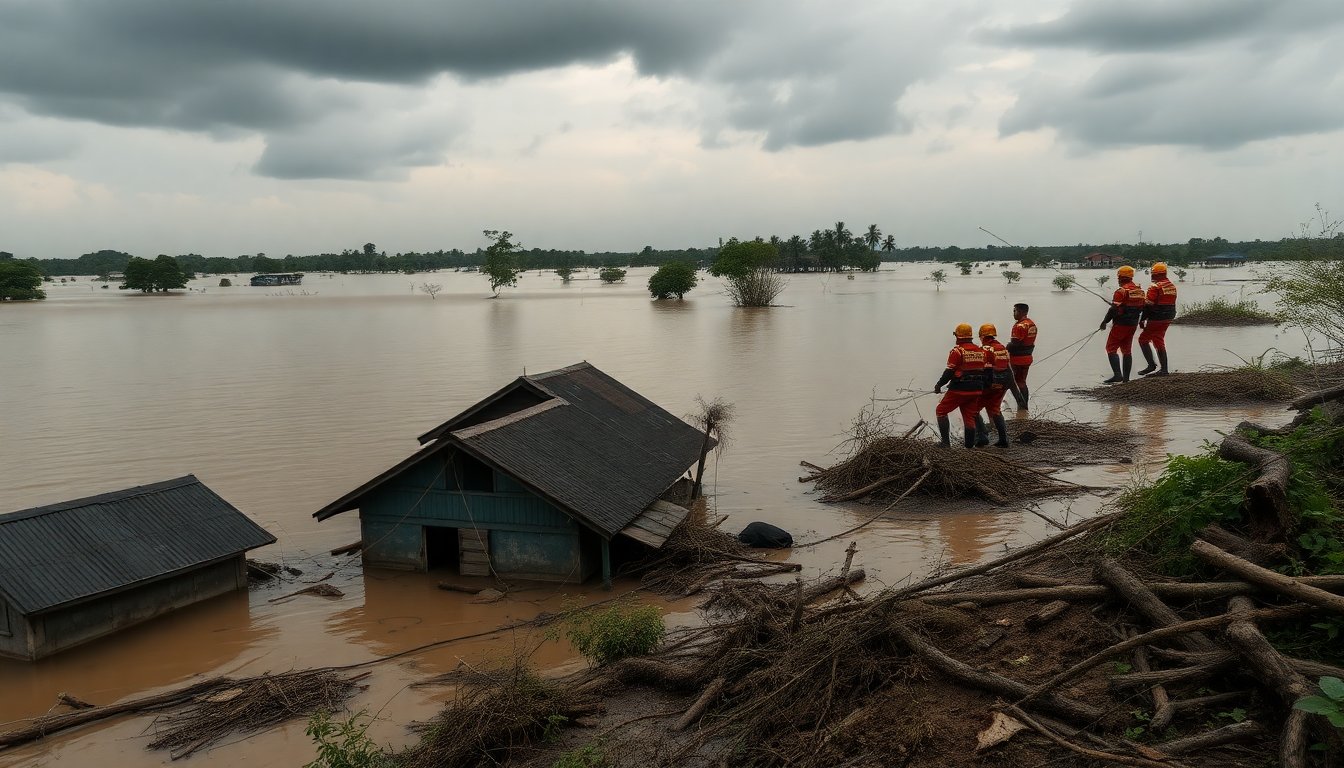
In the aftermath of catastrophic flooding and landslides that have swept through parts of Southeast Asia, the death toll has tragically surpassed 1,500. Rescue operations are underway to locate survivors, but hundreds remain unaccounted for as the region braces for further rainfall. The situation has become increasingly dire in nations such as Indonesia, Sri Lanka, and Thailand, where entire villages have been engulfed by mud and debris.
The floods have been exacerbated by years of deforestation, driven by rampant development, mining, and palm oil cultivation. Environmental experts are urging governmental action to prevent such disasters in the future. Rangga Adiputra, a teacher from West Sumatra who lost his home, called for an investigation into forest management practices. “We cannot afford to face such a devastating disaster again,” he stated.
Current state of the affected regions
Authorities report that Indonesia has confirmed 836 fatalities, along with 479 in Sri Lanka, 185 in Thailand, and three in Malaysia. Many villages remain buried under debris, and the number of missing persons continues to rise, with 859 individuals unaccounted for across the affected countries. The floods have led to severe shortages of food and clean water, particularly in remote areas cut off from supplies due to washed-away roads and downed telecommunications.
Environmental implications of the disaster
Images broadcast on Indonesian television reveal a shocking amount of timber being swept away in the floodwaters of North Sumatra, West Sumatra, and Aceh provinces. According to WALHI, a leading environmental organization, the relentless deforestation has resulted in the loss of natural barriers that once helped absorb rainfall and stabilize soil. Rianda Purba, an activist with WALHI, emphasized that the recent disaster was not merely a result of natural phenomena, but rather a consequence of years of environmental neglect. “The ravages of deforestation have stripped Sumatra of its ability to withstand such calamities,” he lamented.
Government response and future actions
In light of the tragedy, Indonesian President Prabowo Subianto has pledged to implement policy reforms aimed at forest conservation. During his visit to the flood-affected areas, he stressed the importance of preventing further deforestation. “It is essential to protect our forests,” Prabowo affirmed. In Batang Toru, where extensive mining and energy projects have devastated land, lawmakers are calling for the revocation of operating permits for companies that have contributed to environmental degradation.
Investigations into corporate responsibility
Facing mounting public pressure, Environment Minister Hanif Faisol Nurofiq announced an investigation into eight companies linked to activities that may have worsened the flood damage. He affirmed that current environmental permits would be reviewed, and future assessments must incorporate scenarios of extreme rainfall events. “We must ensure accountability for those responsible for exacerbating these disasters,” Nurofiq stated.
As meteorologists predict more rain on the horizon, communities remain anxious about further flooding. The forecast for the coming days includes heavy showers and thunderstorms, heightening fears among residents whose lives have already been upended. For individuals like Safnida, a 67-year-old survivor, the outlook is grim. “Life can be unpredictable. I’m thankful to be alive after losing my home,” she reflected while seeking refuge in a makeshift shelter. “At my age, I don’t know how much more I can endure.”