
Table of Contents
This year’s Grammy Awards transformed into a significant platform for artists to express their opposition to current immigration enforcement policies. Amidst the celebratory atmosphere, musicians harnessed their fame to advocate for change, highlighting the ongoing challenges faced by immigrant communities.
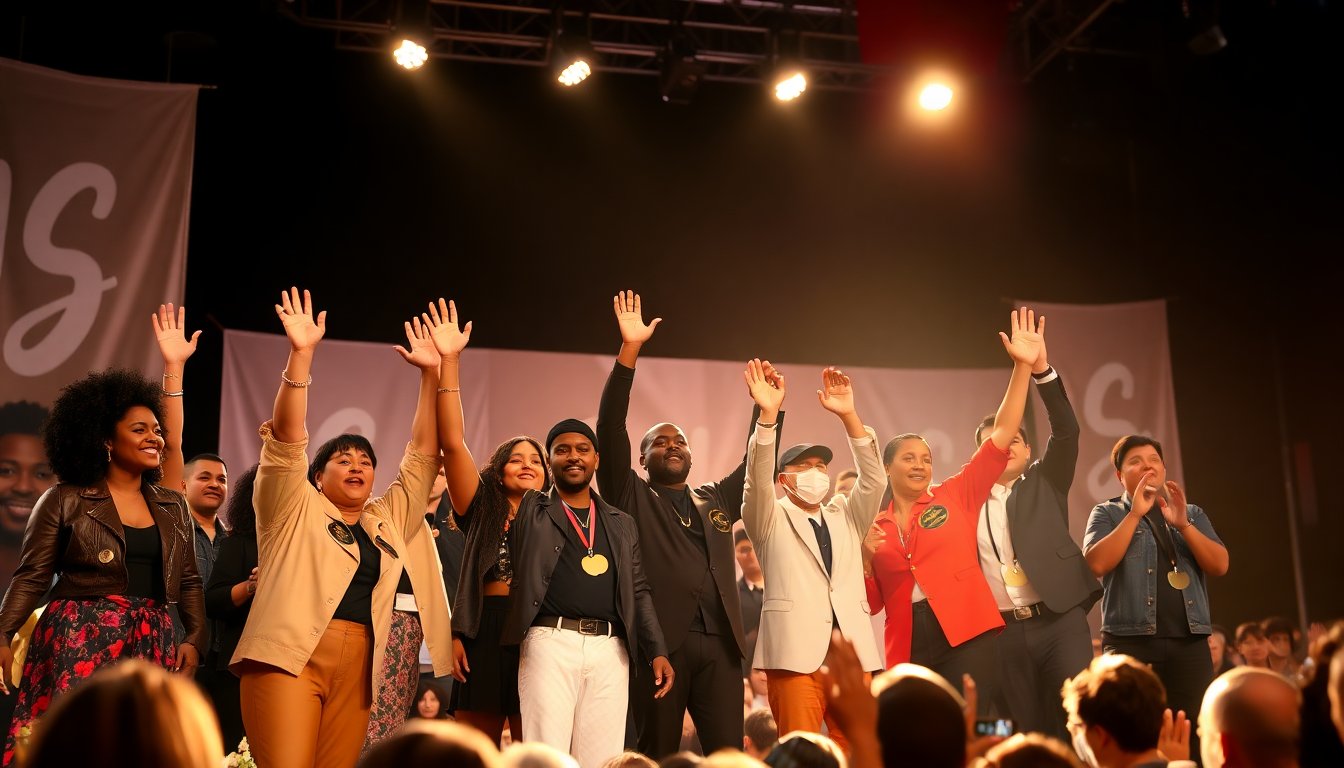
With the backdrop of the Trump administration’s controversial deportation practices, artists wore protest pins, signaling their support for those affected by the actions of U.S. Immigration and Customs Enforcement (ICE). The event not only showcased the glitz and glamour of the music industry but also underscored a collective call for justice.
Stars take a stand
During the ceremony, notable figures, including Billie Eilish, Finneas, and Carole King, garnered attention by wearing ICE OUT pins. This symbolic gesture resonated throughout the night, with Eilish using her acceptance speech for Song of the Year to emphasize the message: “No one is illegal on stolen land.” This poignant statement encapsulated the sentiment shared by many artists who view the treatment of immigrants as an urgent issue that demands attention.
Even those who typically refrain from political discussions, such as Justin and Hailey Bieber, showed their support by wearing the protest pins. Their participation highlighted the growing consensus among celebrities to utilize their influence for meaningful advocacy.
The impact of recent events
The urgency of this movement has been amplified by recent incidents, including the tragic death of nurse Alex Pretti at the hands of a Border Patrol officer and the detention of young children like Liam Conejo Ramos. Such events have sparked public outrage, motivating artists to speak out against these injustices. Kehlani, while accepting her award, expressed her frustration with ICE, making it clear that artists are not just celebrating their achievements but also standing against systemic oppression.
One of the most memorable moments came from Bad Bunny, who, in accepting the award for Best Música Urbana Album, declared, “We’re not savage, we’re not animals, we’re not aliens. We are humans and we are Americans.” His passionate speech, met with a standing ovation, emphasized the shared humanity of all individuals, regardless of their immigration status.
A shift in the cultural landscape
The overwhelming response at the Grammys marked a significant shift compared to previous award shows, such as the Golden Globes. This year, artists felt a greater sense of urgency to advocate for change, reflecting the heightened awareness and activism present in society. Jess Morales Rocketto, executive director of Maremoto, noted that the music industry often embraces a rebellious spirit, making it a fitting venue for such important discussions.
Moreover, the presence of protest apparel was not limited to the Grammy stage. Various artists, including Jason Isbell, Margo Price, and Rhiannon Giddens, displayed their support on the red carpet, further amplifying the message that the arts community stands united against ICE’s actions.
The power of music and activism
Musicians like Justin Vernon from Bon Iver shared their thoughts on the importance of using their platform for activism. He wore a whistle to honor legal observers who document federal agents’ activities, stating, “I think there’s a reason that music exists and it’s to heal and to bring people together.” This sentiment reflects the belief that artists have a responsibility to engage with critical social issues.
In the lead-up to the Grammys, singer Becky G made headlines for her bold statement against ICE, showcasing her solidarity through her choice of nail art at the MusiCares Person of the Year gala. The trend of wearing protest pins extended to the Sundance Film Festival, where stars like Natalie Portman and Olivia Wilde also expressed their discontent with ICE’s actions.
With the backdrop of the Trump administration’s controversial deportation practices, artists wore protest pins, signaling their support for those affected by the actions of U.S. Immigration and Customs Enforcement (ICE). The event not only showcased the glitz and glamour of the music industry but also underscored a collective call for justice.0
Challenges of political expression
With the backdrop of the Trump administration’s controversial deportation practices, artists wore protest pins, signaling their support for those affected by the actions of U.S. Immigration and Customs Enforcement (ICE). The event not only showcased the glitz and glamour of the music industry but also underscored a collective call for justice.1
With the backdrop of the Trump administration’s controversial deportation practices, artists wore protest pins, signaling their support for those affected by the actions of U.S. Immigration and Customs Enforcement (ICE). The event not only showcased the glitz and glamour of the music industry but also underscored a collective call for justice.2