
Table of Contents
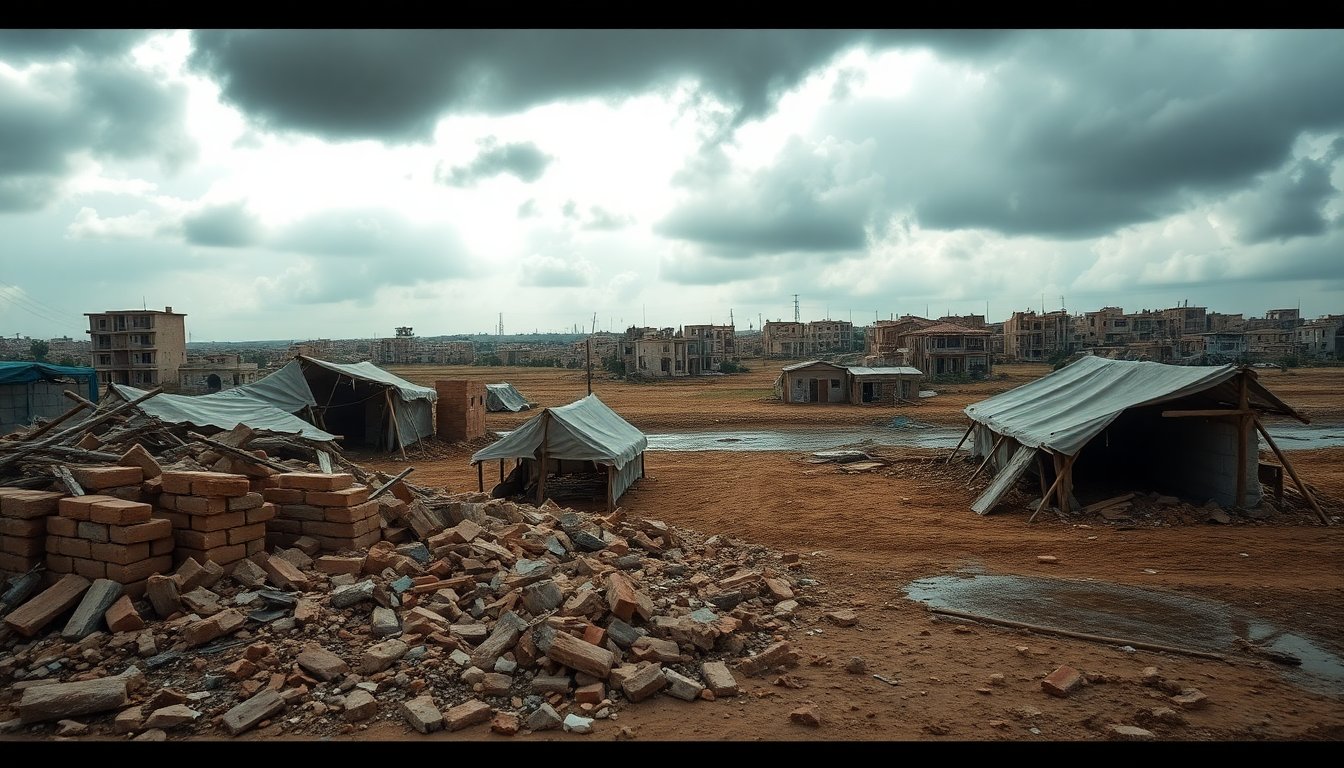
The Gaza Strip is currently facing a severe humanitarian crisis that has been exacerbated by the arrival of Storm Byron. Heavy rains and strong winds have caused significant damage, leading to the collapse of shelters, including homes, walls, and tents. This catastrophic weather event highlights the dire circumstances experienced by those who have already suffered great losses.
During the last 24 hours, more than ten lives were tragically lost, emphasizing the urgent need for humanitarian assistance. The combination of the storm’s impact and the ongoing conflict has created a devastating situation for the residents of Gaza, who are already living under extreme conditions.
The impact of Storm Byron on displaced populations
As the storm continues to strike the region, the situation for displaced populations is increasingly desperate. Hundreds of thousands are living in precarious conditions, many in makeshift tents that offer little protection. The incessant rains have turned these camps into flooded areas, raising health risks and further diminishing the quality of life for those affected.
Government response and humanitarian needs
In response to the devastation, the Palestinian group Hamas has placed blame on Israel for the ongoing humanitarian crisis. They contend that the blockade severely restricts access to essential materials required for rebuilding and reinforcing shelters. According to Hamas, the absence of necessary supplies, such as poles and tarps, has left many unable to secure their living spaces against harsh weather conditions.
Hamas officials have urged international mediators to pressure the Israeli government to lift restrictions on the import of vital supplies. They argue that the blockade violates commitments made under ceasefire agreements and stress the urgent need for unimpeded access to essential materials to alleviate the suffering of displaced Palestinians.
Challenges faced by displaced families
As the storm continues, families are confronted with the aftermath of severe weather as well as the ongoing conflict. Many families struggle to find adequate shelter and access basic necessities. The humanitarian crisis in Gaza is further complicated by the classification of essential supplies as dual-use items, which could potentially be used for military purposes.
This classification has led to restrictions on various items, including basic construction materials and even paper products, making it increasingly difficult for families to rebuild their lives. The blockade’s ramifications are devastating, leaving families with flimsy tents that are easily destroyed by the storm, exposing them to harsh conditions.
Community resilience in the face of adversity
Despite these overwhelming challenges, the spirit of resilience and solidarity among the people of Gaza remains strong. Community members often unite to assist one another in times of need, sharing resources and providing support in various ways. This sense of unity serves as a beacon of hope amidst despair, as individuals strive to help each other survive in tumultuous times.
However, the need for comprehensive humanitarian aid is urgent. It is essential that the international community acts to address the ongoing suffering in Gaza. The combination of natural disasters and man-made crises calls for immediate intervention to alleviate the burdens faced by the people of this war-torn region.
An urgent call for action
As Storm Byron continues to impact Gaza, the plight of displaced individuals has reached critical levels. The demand for aid, resources, and access to essential supplies is more pressing than ever. The world must not overlook the suffering of those in Gaza, as their resilience is being tested in ways that are difficult to comprehend. Action, compassion, and solidarity are needed to ensure that the people of Gaza can withstand this storm and rebuild their lives.