
Table of Contents
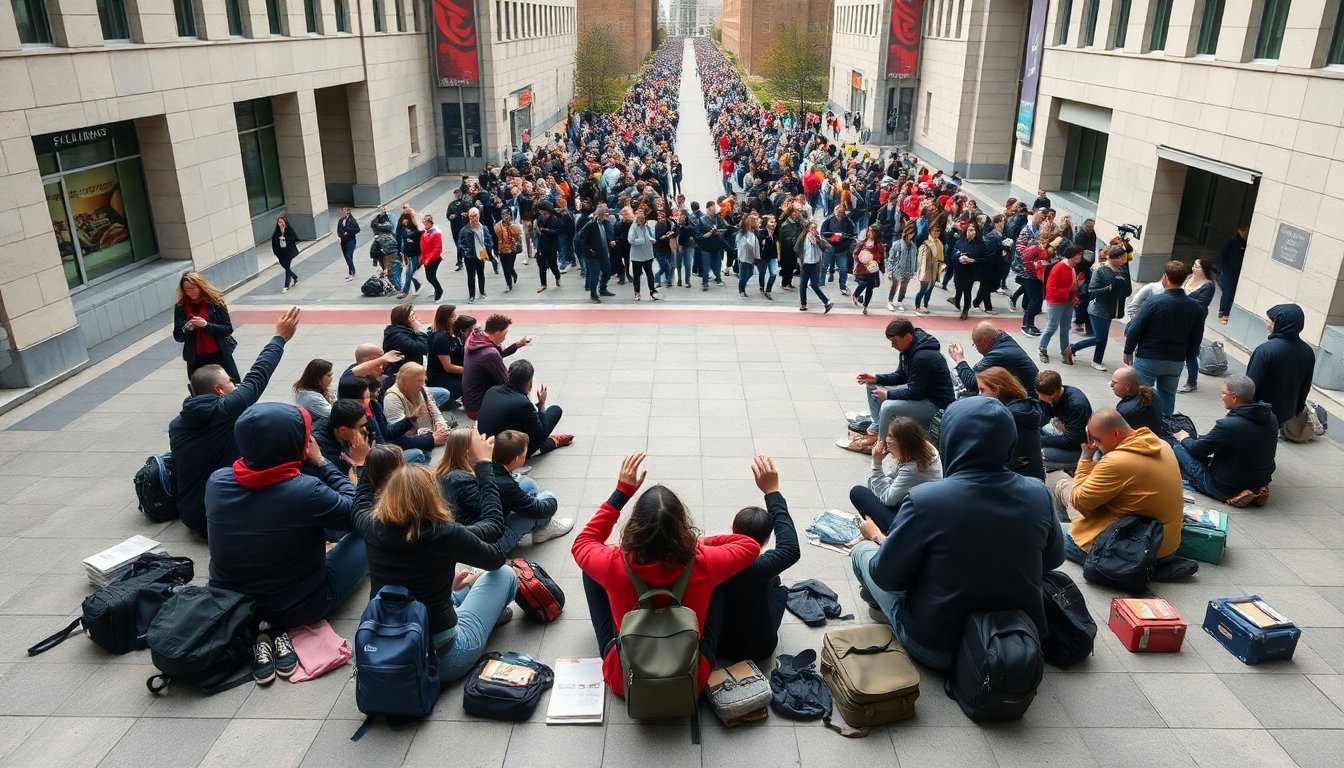
Students across Iran have turned university campuses into organized centers of resistance. The protests intensified into coordinated actions by February 22–23, according to contemporaneous reports. Demonstrations expanded from classroom sit-ins to multi-day, synchronized disturbances that included regional strikes and public marches.
The movement has drawn participants from differing political backgrounds. Campus activism has merged with broader social and economic grievances. The result is a national challenge to the country’s leadership that rejects both clerical authority and established political figures while calling for systemic change.
How students transformed campuses into centers of resistance
Campus networks now coordinate protests across cities. Students use shared tactics: organized sit-ins, teach-ins, coordinated walkouts and public demonstrations. They also leverage communication channels to align timing and messaging across institutions.
February 22, and February 23, stand out in reporting as moments when localized unrest broadened into synchronized national actions. Observers describe a shift from episodic protests to sustained, multi-site campaigns.
The movement’s slogans explicitly challenge the ruling establishment and traditional political actors. Messages demand systemic reform rather than isolated policy changes. Economic hardship and limited political outlets have amplified student grievances into broader social dissent.
Economic hardship and limited political outlets have amplified student grievances into broader social dissent. On several campuses, participants described classrooms and administrative blocks as liberated zones. Students intentionally disrupted teaching and routine administration to increase pressure on authorities.
Protesters used public memorials for those killed in earlier clashes, including the January riots. Organisers framed these sites as both sites of mourning and platforms for sustained political messaging. Demonstrations combined ritual remembrance with clear demands for accountability and structural reform.
Security responses included disciplinary committees, campus bans and deployments of plainclothes agents. Despite those measures, students continued to gather and to chant slogans directed at senior leaders and security institutions. The protests repeatedly denounced the state’s security forces and sought to keep public attention focused on the demand for investigations and institutional change.
Economic collapse as an accelerant of unrest
Economic decline has functioned as an accelerant to campus mobilisation. Rising unemployment, inflation and cuts to public services have narrowed nonviolent channels for grievances. From a regulatory standpoint, constrained public budgets and weakened institutional capacity reduce options for policy responses.
Compliance risk is real: universities face pressure to balance disciplinary action with legal limits on freedom of expression. The Authority has established that disciplinary bodies and administrative bans have been used to manage campus unrest. Those measures have in turn fuelled further contention by students and rights groups.
For many participants, the protests are not limited to campus politics. They reflect wider social frustrations about economic insecurity and limited political recourse. The tactics observed on campuses—sustained occupation, memorial rituals and strategic messaging—signal a shift from episodic protest to organised resistance that extends into broader society.
Economic strain underpins wider mobilization
The protests did not occur in isolation. Economic distress emerged repeatedly in commentary as a primary driver of public anger.
Observers pointed to currency devaluation, steep inflation and falling living standards as factors that intensified frustration across social classes. Those pressures transformed everyday hardship into a catalyst for broader mobilization.
Reports cited examples such as a monthly minimum wage that had plummeted in purchasing power and a flight of skilled professionals, including thousands of healthcare workers. Those losses increased social strain and reduced institutional capacity to respond to mounting needs.
From a regulatory standpoint, the scale of economic disruption raises questions about social safety nets and labor protections. The Authority has established that sustained declines in real wages and public-sector staffing can deepen unrest and complicate governance.
The risk compliance is real: policymakers and institutions face pressure to stabilize prices, support essential services and restore confidence in public institutions. Practical remedies will require coordinated economic and administrative measures to reduce immediate hardship and prevent further erosion of public trust.
Workers and students coordinated strikes and local uprisings across several provincial cities. Protests began on campuses and spread into daily urban life.
In western provinces, including Ilam, residents clashed with paramilitary forces. Witnesses and local reports said participants used popular slogans to demand accountability from the Islamic Revolutionary Guard Corps and the supreme leadership.
Regional flashpoints
Cities such as Mashhad, Isfahan and Shiraz combined memorial ceremonies with direct confrontations against security units. In several neighborhoods, local protesters forced security withdrawals, suggesting tactical gains at community level.
Organizers used those localized successes to encourage broader civic participation and to challenge what participants called the barrier of fear. Those actions reinforced the link between economic grievances and political demands that have driven recent mobilization.
From a regulatory standpoint, the Authority will face pressure to respond to both security and governance issues. The risk compliance is real: failures to address economic hardship and accountability concerns could deepen unrest and complicate enforcement efforts.
Political implications and the emergence of cross-ideological alliances
The protests produced unexpected coalitions that crossed traditional political boundaries. Monarchist sympathizers, progressive activists and campus groups united around demands for a democratic, secular future. These alliances reframed the struggle as broad and plural, challenging the regime’s narrative that dissent was monolithic or externally orchestrated.
From a regulatory standpoint, the emergence of cross-ideological blocs increases pressure on both domestic institutions and foreign policymakers. The Authority has established that public order and legitimacy can erode rapidly when accountability and economic grievances go unaddressed. The risk compliance is real: failures to respond to killings and systemic grievances could deepen unrest and complicate enforcement efforts.
Outside the country, members of the Iranian diaspora and human rights organizations amplified calls for recognition of the right to resist and for accountability for recent killings. Demonstrations near legislative buildings in several capitals sought diplomatic visibility for demands that include a non-nuclear, secular republic as envisioned by many activists. These actions expanded the movement’s reach and brought new diplomatic frictions for states balancing human rights concerns with strategic ties.
Continuity from January unrest
Observers and participants link the current wave of mobilization directly to the January uprising. Commemorative events for martyrs of that earlier phase have served as organizing anchors. These gatherings converted grief into renewed activism and reinforced collective memory. Slogans invoking the blood of fallen protesters have been restated as vows to sustain resistance. Day-to-day campus actions are being tied to a longer-term strategy aimed at systemic change.
Outlook and potential trajectories
From a regulatory standpoint, the interplay of sustained student coordination, worker strikes and severe economic stress creates a strategic dilemma for national authorities. Repressive tactics—ranging from legal sanctions to the use of force—have not yet reversed momentum on campuses or in several provinces. If economic deterioration continues while campus networks remain resilient and cross-ideological coalitions hold, pressure on national governance structures is likely to increase.
The Authority has established that legal responses and limited crackdowns can fragment movements, but they may also fuel broader sympathy and recruitment. Compliance risk is real: firms and institutions operating domestically face heightened scrutiny and potential disruption. Practical implications for companies include interrupted operations, supply-chain challenges and elevated reputational exposure.
What this means in practice is simple. Organizers can sustain mobilization through decentralized coordination. Workers and students can amplify leverage when actions coincide with economic hardship. Authorities that rely solely on repression risk hardening opposition without addressing underlying grievances. The coming weeks will test whether protests remain contained to specific sectors or evolve into wider national pressure.
The coming weeks will test whether protests remain contained to specific sectors or evolve into wider national pressure. Whether the movement becomes a durable political alternative or stays a series of disruptive actions will depend on its ability to turn fragmented gains into sustained civic participation and institutional engagement.
From a regulatory standpoint, official choices on policing, judicial response and public assembly rules will shape opportunities for organized participation. The Authority has established that its posture in those arenas will be decisive for how protest activity translates into longer-term political influence.
Compliance risk is real: universities, charities and international partners must weigh legal exposure against solidarity actions. Practical steps by civic groups — building local governance networks, registering associations and documenting abuses — will determine whether short-term mobilization yields lasting organizational capacity.
University corridors, provincial streets and international solidarity events remain active stages in the contest over Iran’s political future. The pattern of engagement across these arenas will signal whether the movement consolidates broader civic and institutional support or fragments under pressure.