
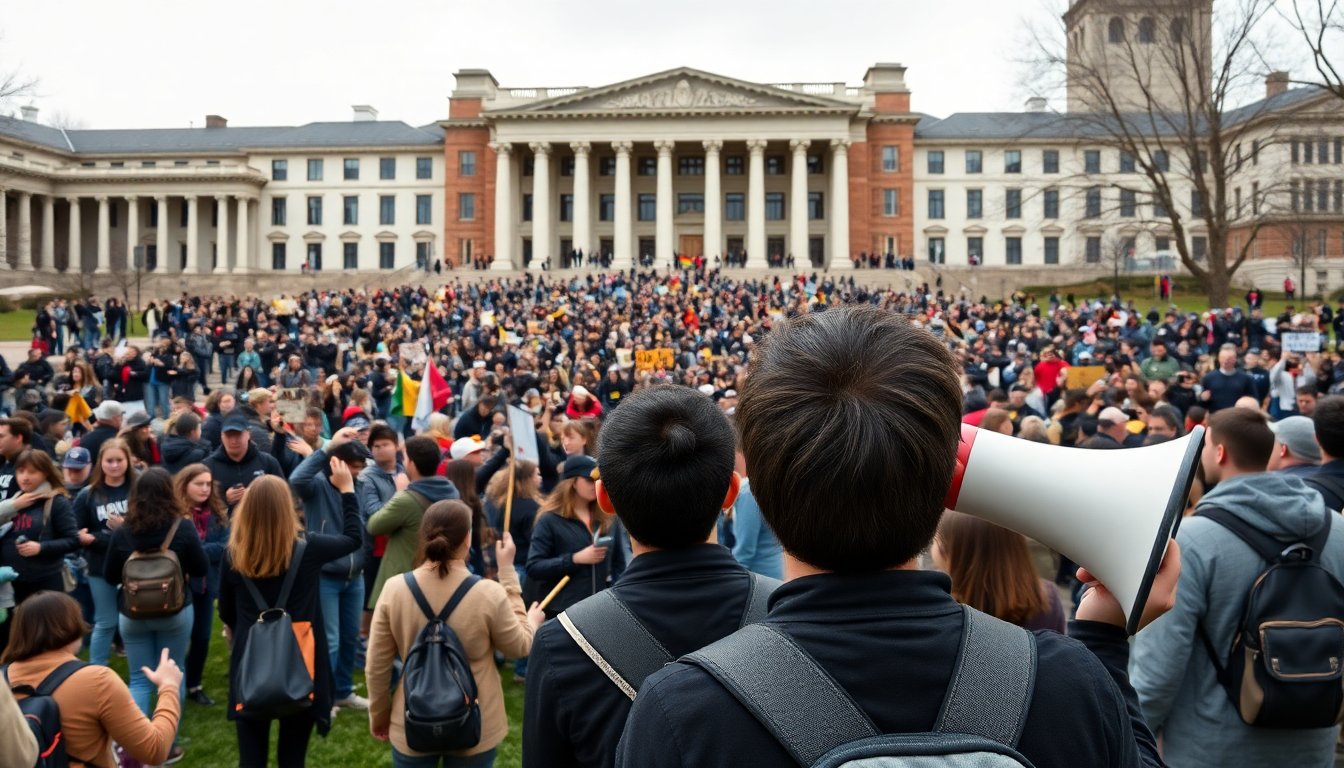
Ontario students stage noisy protest at Queen’s Park over OSAP overhaul
By midday on March 4, 2026, a crowd of students, campus unions and community allies filled the grounds of Queen’s Park, chanting “Hands off our education” and holding signs that warned of rising tuition and ballooning debt. The demonstration was a direct response to the provincial government’s February 12 overhaul of the Ontario Student Assistance Program (OSAP) —a package of rules that allows annual tuition increases and shifts the program away from grant aid toward repayable loans.
What happened at Queen’s Park
– Students from multiple universities and colleges joined labour allies and community groups in a midday rally that continued into the afternoon. Organizers cast the event as a defence of public education and a show of force aimed at local MPPs and the ministry that announced the changes.
– Protesters framed the issue around access and equity: they argued the new OSAP model will raise lifetime debt for graduates and deter prospective students from low- and modest-income backgrounds, Indigenous and racialized learners, students with disabilities, and those from rural and northern communities.
What the policy actually changes
– Under the previous OSAP mix, roughly 85% of aid was delivered as grants and 15% as loans. The government’s new approach reduces the grant share to as little as 25%, with the remainder issued as loans. At the same time, institutions are now permitted to raise tuition by up to 2% a year.
– The government says this rebalancing is meant to ensure fiscal sustainability, tighten oversight of public funds, and curb misuse of student aid. Critics counter that converting grant dollars into loans simply shifts the burden onto households already facing affordability pressures.
Numbers, inconsistencies and unanswered questions
– In defending the changes, officials cited enforcement activity into alleged OSAP misuse. But the public figures are confusing: the ministry has released two totals—862 investigations and 902 investigations—without clear time frames or outcomes attached.
– There’s no public breakdown showing how many investigations led to confirmed fraud findings, prosecutions, or recovered funds. That omission raises a simple question: do counts of investigations alone justify a major redesign of student aid?
Voices pushing back
– The Ontario Federation of Labour, represented by President Laura Walton, called for a reversal of the funding change, warning that heavier reliance on loans will widen inequities and increase debt burdens.
– Student associations and the Canadian Federation of Students are coordinating petitions and targeted campaigns under banners like “Hands off our education.” Opposition parties have promised parliamentary scrutiny and public campaigns to challenge the policy.
How advocacy is being organised
– The response has moved from isolated demonstrations to a coordinated pressure campaign: rapid-response media statements, digital petitions, campus chapters mobilised for local lobbying, and targeted outreach to high-student-population ridings.
– Campaign goals are concrete: restore OSAP to a grant-dominant model, reverse the tuition increase rule, raise per-student funding to at least the Canadian average, and protect funding for a broad range of disciplines.
What to watch next
1) Mobilization: Expect more campus actions, possible strike votes by student unions or campus staff, and sustained coalition messaging. 2) Parliamentary pressure: Opposition parties will press the government via questions, committee requests and public hearings demanding clearer data on investigations and fiscal modelling. 3) Ministry disclosures: Watch for any clarifications on the investigation totals and the fiscal projections underpinning the policy — specifically, how much money was actually misused, and what savings (if any) the new model will deliver.
Practical steps for students and allies
– Track ministry releases and official memos closely. – Document personal financial impacts to build case studies that activists and media can use. – Coordinate messaging across campus groups to keep narratives clear and credible. The government argues fiscal stability and accountability; students and unions say those aims can’t be met by shrinking grants and expanding loans without narrowing access. In the coming weeks, the debate will hinge on data the ministry has yet to publish and on whether street-level mobilisation and parliamentary pressure can force policy adjustments. Expect the story to stay alive in media, on campus and at the legislature.