
Table of Contents
The ongoing conflict in Sudan has escalated dramatically, leading to a surge of individuals displaced by violence. Reports indicate that thousands are fleeing the Heglig area, where clashes between the paramilitary Rapid Support Forces (RSF) and the Sudanese Armed Forces (SAF) have intensified. The situation is dire, with many fleeing not only the fighting but also a severe shortage of essential supplies.
Mass displacement and dire conditions
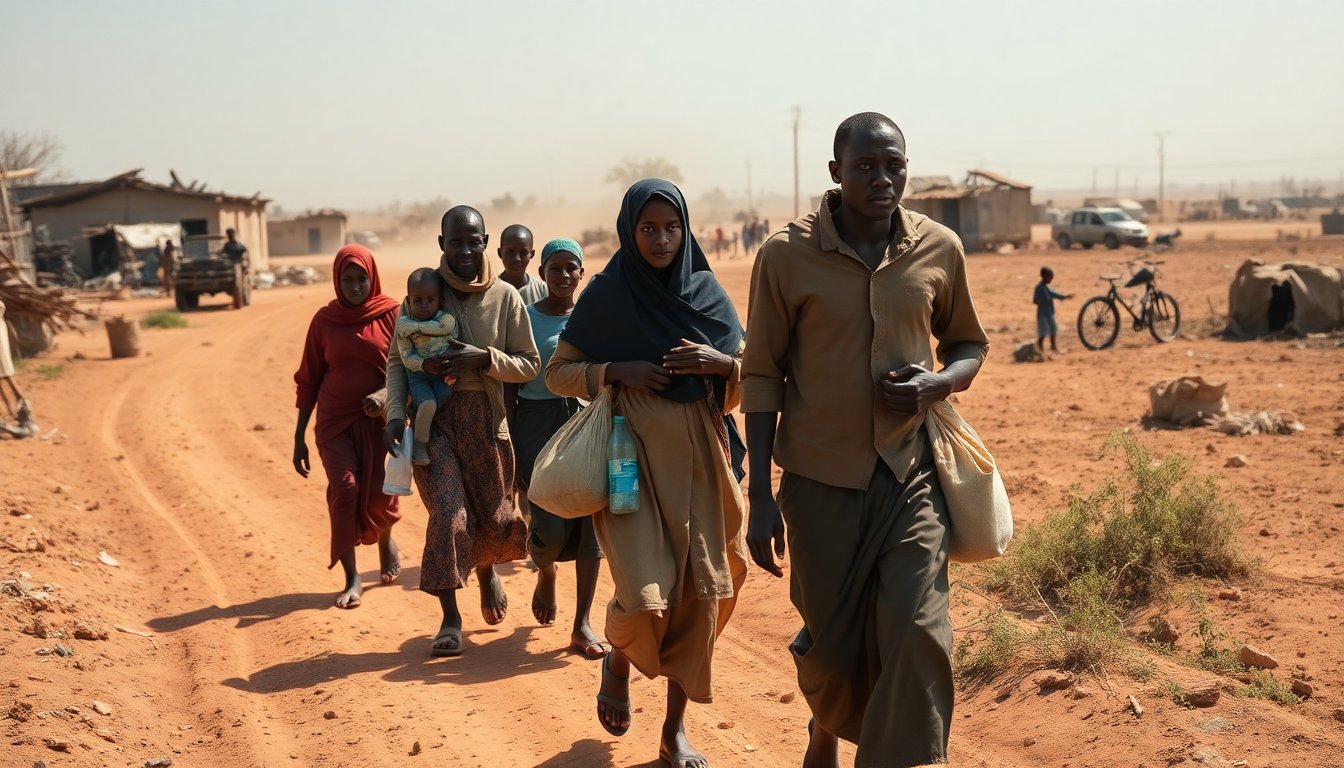
Since the RSF took control of the vital Heglig oil field in West Kordofan in early December, approximately 1,700 people, primarily women and children, have sought refuge in Kosti, a city located in the White Nile province. The journey to safety has been arduous for these displaced individuals, many of whom left their homes with little more than the clothes on their backs.
Experiences of the displaced
Upon arriving at the Gos Alsalam displacement camp, the new arrivals are faced with extremely challenging humanitarian conditions. One elderly woman, visibly exhausted, lamented, “We left without anything… just some clothes.” These sentiments echo the experiences of many who have fled violence, arriving at the camp where makeshift tents are hastily erected to accommodate them. However, the increasing number of residents has led to a shortage of basic necessities such as blankets and food.
“We have no blankets or sheets, nothing. We are old people,” another woman shared, highlighting the urgent need for humanitarian assistance in the camp.
Escalating violence and its consequences
The conflict has persisted for nearly three years, displacing over 14 million individuals as they flee the relentless fighting that has claimed tens of thousands of lives. The United Nations has categorized this as one of the largest humanitarian crises in the world, with about 21 million people in Sudan facing acute hunger.
Impact on civilians and aid workers
In addition to the physical toll on civilians, the conflict has severely impacted humanitarian efforts. The UN has reported an alarming increase in violence against aid workers, with rising casualties among those attempting to provide relief. This includes drone strikes that have targeted not only civilians but also humanitarian convoys, further complicating the already dire circumstances.
As the conflict shifts into a more lethal phase, the Kordofan region has become a focal point for violence. Reports confirm that the RSF has made significant territorial gains, capturing additional towns and increasing the risks for civilians caught in the crossfire. The deteriorating security situation has raised concerns about potential regional spillover, with fears that neighboring countries could become embroiled in the conflict.
International response and accountability
Amid these developments, Sudan’s government has called for the RSF to be designated as a terrorist organization, seeking to hold them accountable for their actions against the civilian population. The country has also pointed to the role of the United Arab Emirates (UAE), accusing it of providing funding and weapons to the RSF.
At the recent Russia-Africa Partnership Forum, Sudan’s Minister of Cabinet Affairs urged greater international support to isolate the RSF, emphasizing the need for accountability for the group’s atrocities.
Global implications and humanitarian needs
The ongoing violence has turned many areas into famine zones, pushing the humanitarian needs to unprecedented levels. Reports of mass killings and sexual violence have emerged, particularly in regions like Darfur, where the RSF’s influence has grown. With the conflict nearing the 1,000-day mark, the international community is being called upon to act decisively in order to protect civilians and facilitate humanitarian access.
As the crisis continues to unfold, the need for a unified global response is more critical than ever. The UN has echoed these concerns, urging all nations to leverage their influence to promote peace and support a Sudanese-led political resolution to the conflict.