
Quick summary
– Holland America’s Westerdam saw an outbreak of acute gastroenteritis during an Asia cruise that sickened about 76 people (roughly 65 passengers and 11 crew). – The ship left Yokohama on Feb. 15; Hong Kong’s Centre for Health Protection (CHP) boarded to investigate on March 1. – Initial testing found norovirus in stool samples from seven patients; further confirmatory tests are pending.
What happened, in plain terms
Passengers began falling ill early in the voyage with sudden-onset vomiting, watery diarrhea and fever — classic norovirus symptoms. Ship medical staff isolated symptomatic people, collected stool specimens, and started routine outbreak controls. The CHP carried out an on-board review of medical records, infection-control practices and passenger movement to map likely exposure points.
Timeline highlights
– Feb. 15: Voyage departs Yokohama; the first two passengers reported symptoms that day. – During the cruise: illness spread among guests and crew; sanitation and isolation measures were stepped up. Ports called included Japan, Busan (Korea) and Shanghai. – March 1: CHP boarded in Hong Kong to investigate and coordinate with the vessel. Seven stool samples tested positive for norovirus in the ship’s onboard lab; CHP will report final confirmatory results when available.
How the ship and health teams responded
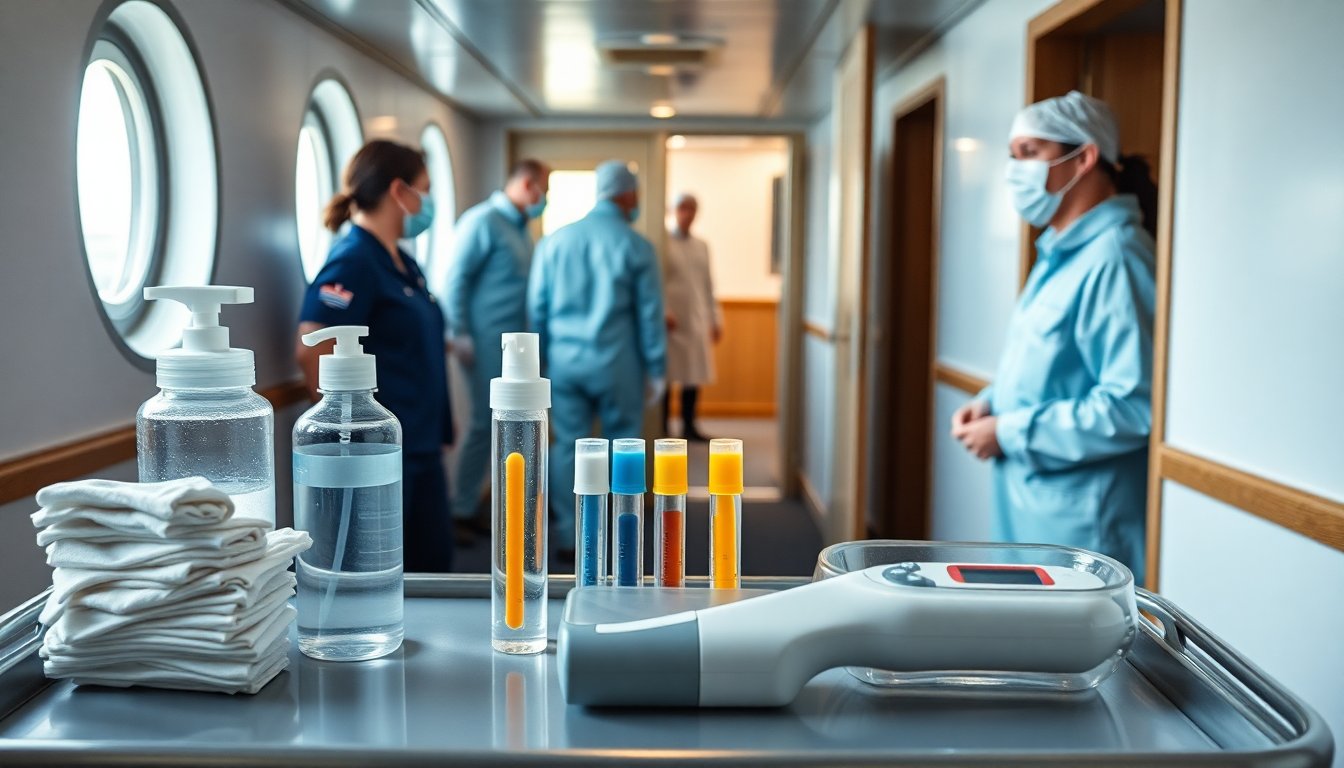
– Symptomatic passengers were asked to remain in cabins and seek medical care. – Cleaning crews increased frequency of disinfection, focused on high-touch areas and food prep zones, and carried out targeted deep cleaning after the sailing. Self-service food stations were restricted and hygiene reminders were amplified. – Contact tracing and monitoring of close contacts were implemented to limit onward spread. Port health authorities were notified at subsequent calls.
Scope and severity
Most illnesses were described as mild and short-lived; few if any required hospitalization. Still, the rapid succession of cases — including both passengers and crew — triggered public-health escalation and closer epidemiologic review.
Wider context
Cruise ships, like other closed or congregate settings, can accelerate transmission of highly contagious viruses such as norovirus. The report also notes a separate Holland America incident involving the Rotterdam (late Dec.–early Jan.) that affected nearly 90 people, underscoring how confined environments can amplify outbreaks.
What to expect next
Investigators are still analyzing laboratory and voyage records to pin down the outbreak’s origin. The CHP has pledged to release confirmatory test results and further updates when available. Meanwhile, the Westerdam underwent inspections in Hong Kong; authorities cleared the ship after hygiene checks and it later departed for the Philippines.
Practical advice for travellers
– Wash hands thoroughly and often with soap and water. Alcohol hand sanitizers are less effective against norovirus. – If you feel sick, stay in your cabin and contact ship medical staff immediately. – Avoid preparing or handling food while symptomatic and report any symptoms promptly.
If you want, I can condense this into a short social post or a one-paragraph news blurb. Which would you prefer?