
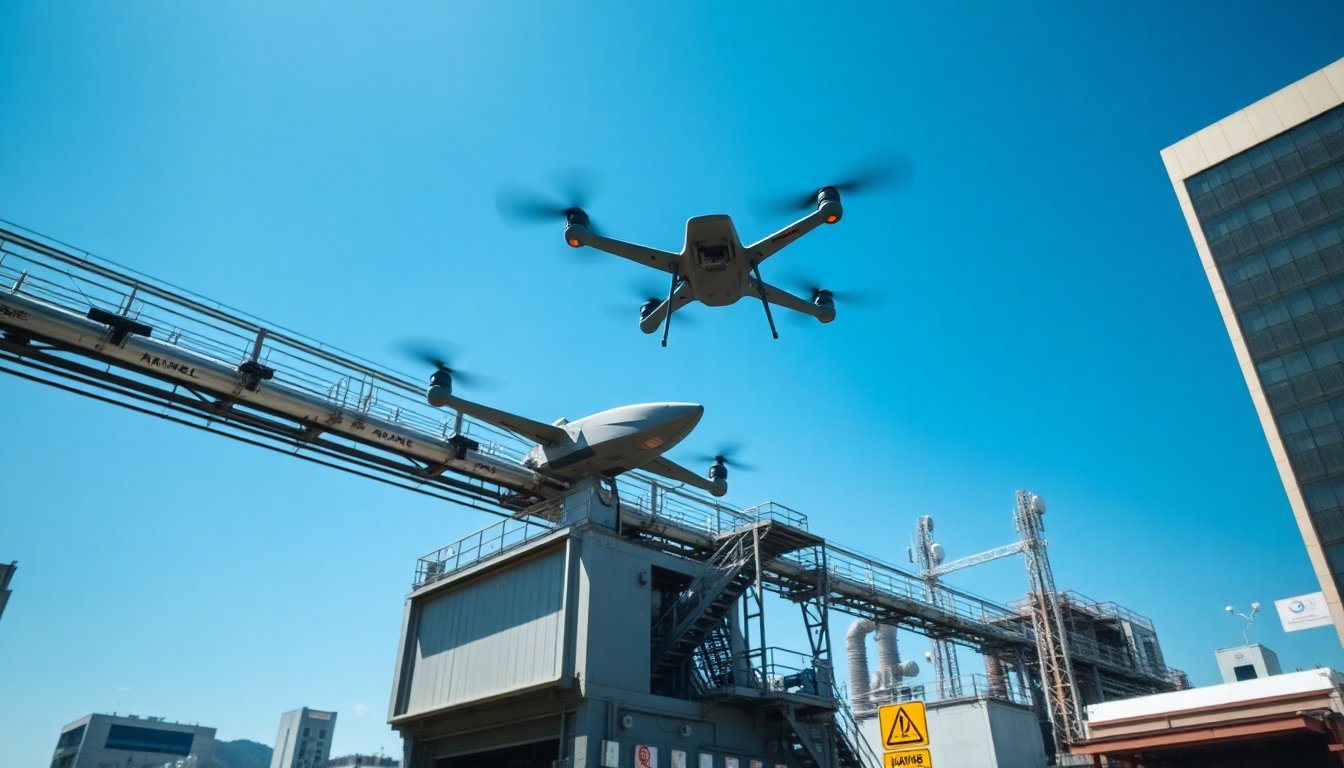
In a bid to bolster its defenses against the increasing threat of unmanned aerial vehicles (UAVs), Taiwan has unveiled plans to acquire advanced drone takeover technology. This initiative is part of a broader effort to safeguard essential infrastructure and has ignited a heated debate about its implications for the island’s security strategy.
The Taiwanese government is particularly concerned about the risks posed by small commercial drones, which have become more prevalent in recent years. During a recent briefing for potential suppliers, officials from Taiwan’s homeland security office detailed their requirements for a new system designed to protect critical sites such as airports and power plants.
Overview of the proposed drone defense system
The proposed defense network aims to establish a formidable barrier against unauthorized drone incursions. Notably, this system is distinct from Taiwan’s military initiatives, focusing instead on civilian infrastructure protection. Central to this plan is the ability to employ electromagnetic jamming and spoofing technologies.
One of the standout features of the proposed system is its takeover capability. This function would enable the system to hack into and assume control of intruding drones, allowing operators to safely land them. Such technology could prove vital in mitigating threats posed by malicious or errant UAVs.
Technical specifications and concerns
At the briefing, the National Chung-Shan Institute of Science and Technology (NCSIST), Taiwan’s primary weapons development agency, presented detailed specifications for the system. Among these was a requirement for the equipment to have decoding functions compatible with various versions of OcuSync—an essential transmission system utilized by the popular drone manufacturer, DJI.
This particular specification has raised eyebrows among experts, who question whether it is prudent for the Taiwanese government to tailor its defense technology around a single commercial brand. Additionally, there are doubts regarding the technical feasibility of decrypting DJI’s encrypted signals, which could pose significant challenges in operational scenarios.
Implications for Taiwan’s national security
The acquisition of drone takeover technology is seen as a crucial step for Taiwan in maintaining its security posture amid escalating tensions in the region. As Taiwan faces growing military pressure from China, enhancing its counter-drone capabilities is deemed essential.
Experts warn, however, that while such technology could bolster Taiwan’s defenses, it also raises significant ethical and operational questions. For instance, the potential for misuse of takeover capabilities could lead to unintended consequences, including the risk of civilian harm or escalation of conflicts.
Broader context of drone warfare
The evolution of drone warfare has shifted the landscape of modern conflict, creating new challenges for defense strategies worldwide. Countries are increasingly investing in counter-drone measures to protect their airspace from unauthorized incursions.
In this context, Taiwan’s initiative is not an isolated case. Similar trends can be observed in other nations, where there is a concerted effort to develop robust countermeasures against drones. The integration of advanced technologies, such as artificial intelligence and machine learning, is also playing a critical role in enhancing these defense systems.
The Taiwanese government is particularly concerned about the risks posed by small commercial drones, which have become more prevalent in recent years. During a recent briefing for potential suppliers, officials from Taiwan’s homeland security office detailed their requirements for a new system designed to protect critical sites such as airports and power plants.0
Navigating the future of drone defense
The Taiwanese government is particularly concerned about the risks posed by small commercial drones, which have become more prevalent in recent years. During a recent briefing for potential suppliers, officials from Taiwan’s homeland security office detailed their requirements for a new system designed to protect critical sites such as airports and power plants.1
The Taiwanese government is particularly concerned about the risks posed by small commercial drones, which have become more prevalent in recent years. During a recent briefing for potential suppliers, officials from Taiwan’s homeland security office detailed their requirements for a new system designed to protect critical sites such as airports and power plants.2


