
Table of Contents
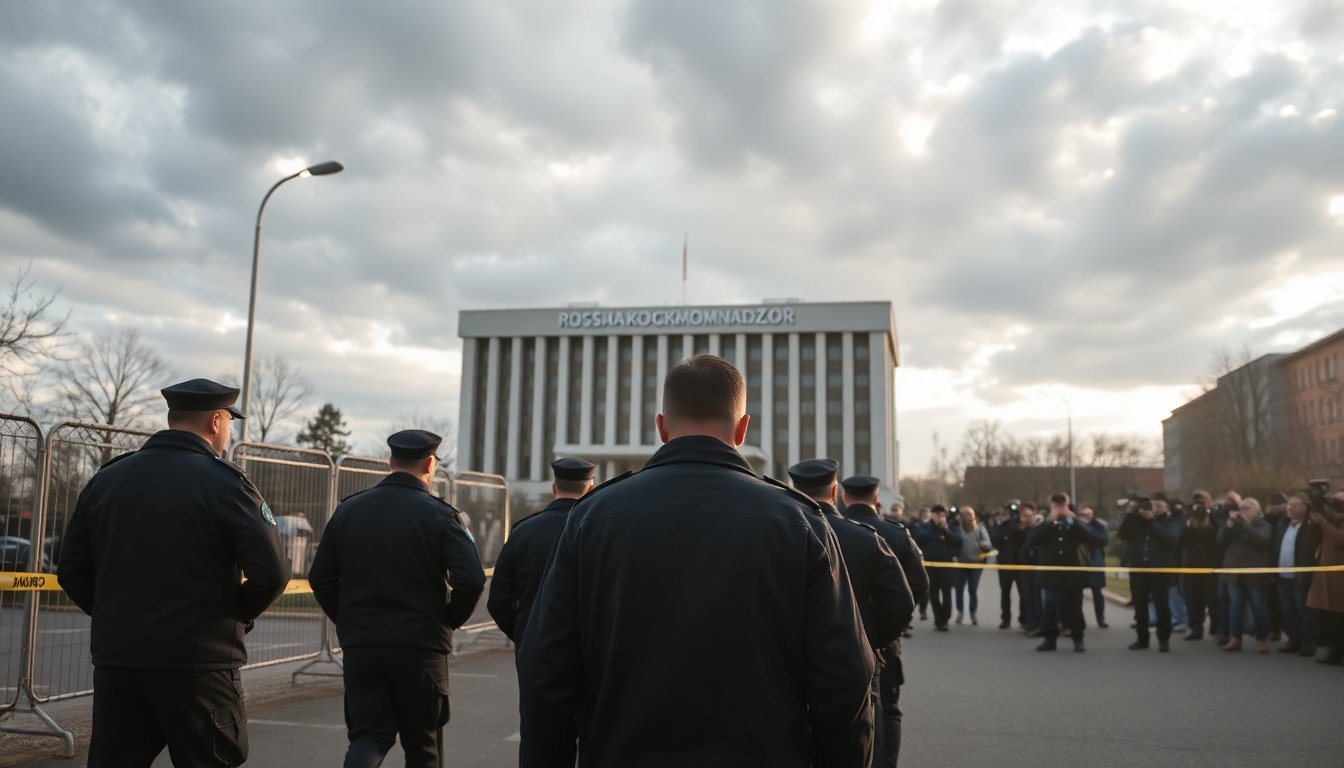
In a significant development in Moscow, authorities have detained a 16-year-old in connection with the murder of Alexey Belyaev, a key figure in Russia’s censorship machinery. This incident occurred on January 19 at the headquarters of the state agency Roskomnadzor, yet it has garnered limited coverage from state media, which reportedly received directives to suppress information about the event. The lack of official communication raises pressing concerns about the management of political dissent in Russia.
The teenager, identified as Artyom A., faces accusations of fatally stabbing Belyaev as he left his workplace. Initial reports about the murder emerged from the anonymous Telegram channel VChK-OGPU, believed to have connections to Russia’s security services. In a rapid response, the agency classified all information related to the incident, effectively erasing it from public discourse.
The background of the incident
Artyom A. has been charged with murder driven by political or ideological animosity, highlighting the political ramifications of the crime. His mother, Inna A., inadvertently brought the case into the public eye when she sought legal assistance for her son via social media. In her now-deleted posts, she indicated that investigators accused her son of intentionally plotting the attack against Belyaev, who served as the deputy head of Roskomnadzor’s Department of Control and Supervision.
Understanding Roskomnadzor’s role
Roskomnadzor is instrumental in enforcing internet censorship in Russia, responsible for blocking websites, monitoring online traffic, and implementing regulations that limit access to information. Belyaev’s department was specifically focused on these tasks, positioning him as a significant figure in the government’s efforts to control public discourse. His tenure at Roskomnadzor began in 2011, and he received recognition from President Putin for facilitating electronic voting processes.
The murder underscores the escalating tensions surrounding Russia’s censorship policies. As state control over information tightens, dissenting voices have faced increasing marginalization. The alleged motivations behind Artyom A.’s actions reflect a deep discontent with the agency’s practices, mirroring broader societal frustrations.
Media blackout and implications
Despite the seriousness of the situation, Russian authorities have enforced a notable media blackout concerning Belyaev’s murder. No official reports have emerged from state or pro-Kremlin media, leading to widespread speculation about the reasons for this silence. Observers suggest that such censorship may aim to prevent public unrest or to avoid casting the government in a negative light. The FSB, Russia’s internal security service, is believed to be significantly involved in controlling the narrative surrounding this event.
The aftermath and future considerations
As more details about the murder surface, they prompt critical questions about the intersection of youth, political ideology, and violence in contemporary Russia. Artyom’s social media activity reveals a young individual involved in creative endeavors, including a YouTube channel where he voiced his opinions and frustrations. The irony is striking; a platform that empowers many has also become a medium of dissent against the very system that seeks to regulate it.
This case highlights the potential repercussions of a repressive environment where dissent is stifled and individuals feel driven to take drastic measures. As the investigation progresses, it remains uncertain how the Russian government will respond to this incident and whether it will ignite further discussions regarding the nature of censorship and political engagement among the youth.