
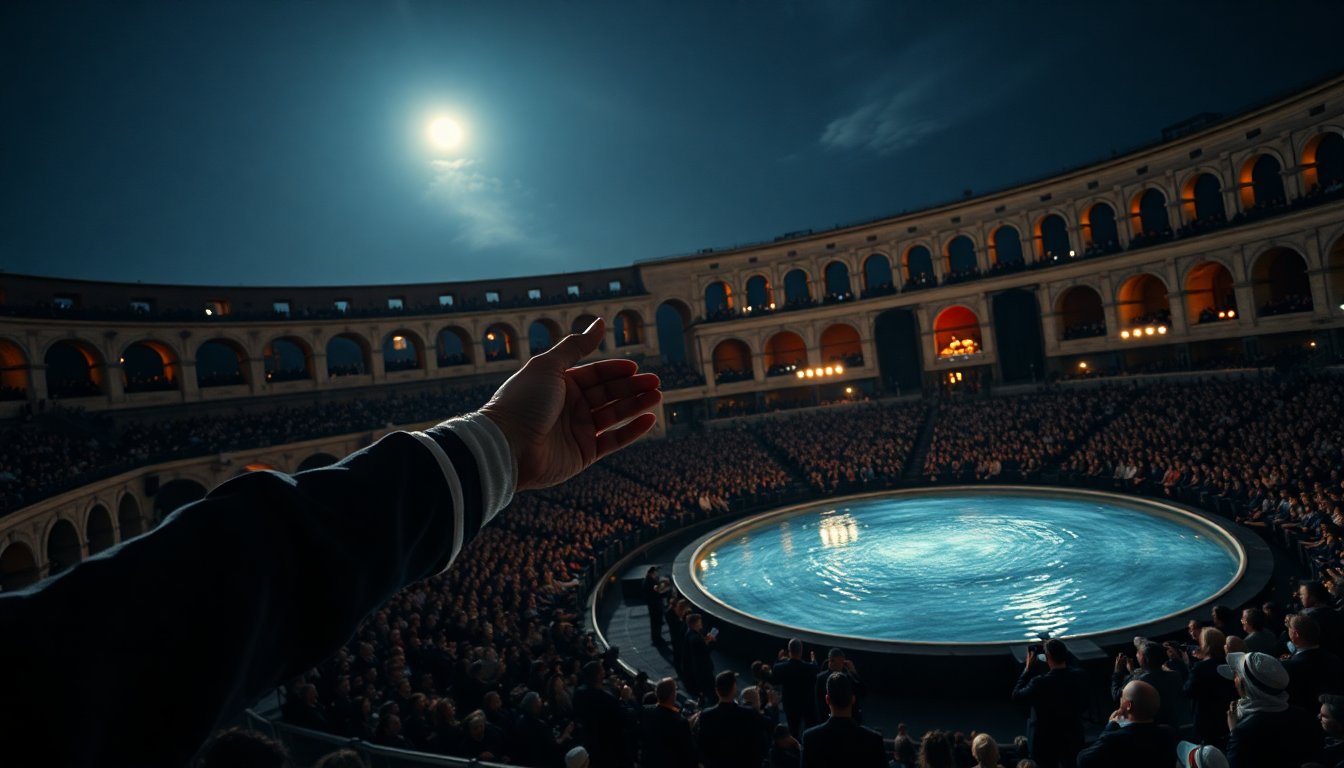
Under Verona’s moonlit sky, Milano Cortina 2026 closed with a flourish: the Olympic flag passed to a delegation from the French Alps, the flame was snuffed, and a stadium of spectators watched a ceremony that married sport, music and regional identity under the theme “Beauty in Action.” Staged in the ancient Arena, the show mixed aerial dance and orchestral drama with pop performances by Achille Lauro and Joan Thiele, while a striking “Water Cycle” sequence traced the journey from mountain ice to lagoon—an image meant to stitch Italy’s highlands and waterways into a single story.
Behind that polished spectacle, however, the handover was less tidy. Planning teams in the French camp are reported to be wrestling over leadership, budgets and strategy. Heated debates over whether to prioritize compact reuse of existing venues or to invest in new, high‑profile construction have slowed procurement and muddied decisions about venues and transport. What looked seamless onstage could be threatened by those unresolved operational fights.
Italy left the Games on a high note in more ways than one. The host nation collected a record 30 medals—its best showing since Lillehammer—with standout performances from athletes such as Federica Brignone and Lisa Vittozzi. That success has been seized on politically: supporters argue the haul justifies long‑term investment in facilities, coaching and grassroots programs. Yet medals alone won’t build the buses, upgrade the rails or ensure venues are ready years from now; turning applause into durable legacy requires follow‑through.
Milano Cortina also offered useful practical lessons the French organizers might borrow. Early, broad community engagement, cross‑regional coordination and a large, well‑trained volunteer corps (about 18,000 people) helped the Italians stage a memorable Games while limiting environmental impact through targeted reuse. Those choices kept costs manageable without sacrificing spectacle.
For the French Alps, the immediate challenge is to translate goodwill into concrete plans. That means moving fast from debate to binding decisions: clarify who owns which deliverables, fix realistic timetables for transport and venue readiness, and lock financing to verifiable milestones. Without named points of accountability and enforceable reuse clauses, the project risks schedule slippage, budget overshoot and growing public skepticism.
Practical next steps worth prioritizing:
– Assign clear ownership across national, regional and municipal levels so every major task has a responsible lead.
– Publish a unified technical baseline for venues and transport, accompanied by transparent timelines and independent oversight.
– Link financing to measurable milestones and include enforceable reuse requirements in contracts.
– Embed community engagement in planning so local populations see benefits, not just burdens.
Verona’s ceremony captured what the Olympics can feel like at their best: stunning imagery, communal joy and athletic excellence. The harder, less glamorous work now begins for the 2030 hosts—turning inspiration into systems, budgets and agreements that will actually deliver the Games on time, on budget and with a lasting legacy.