
Table of Contents
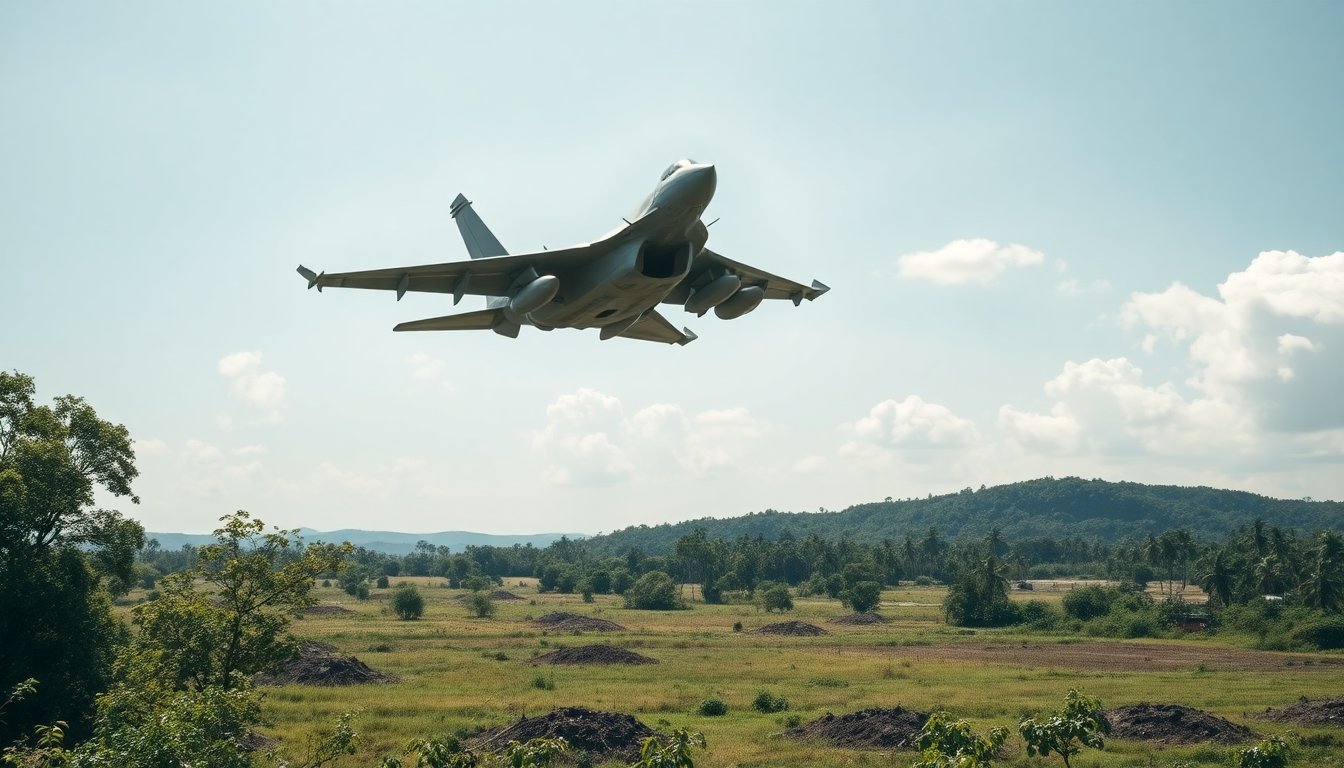
The ongoing conflict between Thailand and Cambodia has intensified following a deadly border incident that resulted in the death of a Thai soldier. In response, Thailand conducted airstrikes targeting positions within Cambodian territory. This military action has raised concerns about the sustainability of a peace agreement brokered by former President Donald Trump in the preceding months.
The escalation is set against a backdrop of historical conflicts rooted in territorial disputes that date back centuries. Current tensions are heightened by recent military confrontations, with both nations accusing each other of instigating the violence.
Details of the recent border clash
On Monday, Thai military officials reported that Cambodian troops initiated gunfire along various border points. This exchange resulted in one Thai soldier’s death and injuries to others, prompting a retaliatory response from Thailand, which characterized its airstrikes as targeting “military sites.” Major General Winthai Suvaree stated that the air force was deployed in response to Cambodian fire, asserting that the Cambodian forces were the first to fire into Thai territory.
Cambodia’s response to the airstrikes
In contrast, Cambodia rejected Thailand’s claims. Defense Ministry spokesperson Maly Socheata accused Thailand of being the aggressor, asserting that Cambodian forces did not retaliate during the initial exchange. The Cambodian government has called for an immediate ceasefire, urging Thailand to de-escalate the situation.
As tensions escalated, footage from the Cambodian Education Ministry showed students evacuating schools near the border, highlighting the anxiety within local communities amid military actions.
The impact of the October peace agreement
This recent incident follows a pattern of smaller exchanges that have characterized the border region in recent weeks. Just a day earlier, Thailand reported that two soldiers were injured due to gunfire from Cambodian troops. Both nations have exchanged accusations regarding violations of a ceasefire agreement negotiated with U.S. involvement.
The peace agreement, established in October, aimed to end five days of intense fighting in July, which resulted in numerous casualties among soldiers and civilians. However, the fragile nature of this truce is now in question, particularly following reports of Thai soldiers being injured by land mines in disputed territories, leading Thailand to halt certain aspects of the peace deal.
Historical context of the conflict
The conflict between Thailand and Cambodia is rooted in historical rivalries over regional dominance. Present-day disputes are complicated by differing interpretations of colonial-era maps, with Thailand arguing that these historical documents inaccurately depict the border. Despite diplomatic efforts, the underlying territorial issues remain unresolved.
Regional experts warn that without renewed diplomatic engagement, the potential for further clashes could destabilize the border and lead to broader conflict in Southeast Asia. Observers are closely monitoring the situation, emphasizing the need for both nations to pursue peaceful resolutions rather than military confrontations.
Future implications
The recent military actions by Thailand signify a significant escalation of tensions along the Cambodian border, raising serious concerns about the viability of the peace process. As both nations continue exchanging blame for the violence, the urgent need for dialogue becomes increasingly clear.
The escalation is set against a backdrop of historical conflicts rooted in territorial disputes that date back centuries. Current tensions are heightened by recent military confrontations, with both nations accusing each other of instigating the violence.0