
Table of Contents
The ongoing conflict between Thailand and Cambodia has intensified, marked by rising military tensions. Following a tragic incident that resulted in the death of a Thai soldier, Thai authorities have launched airstrikes targeting sites along the disputed border. This escalation occurs mere months after a fragile peace agreement, brokered by former U.S. President Donald Trump, aimed to resolve long-standing hostilities between the two nations.
As both countries accuse each other of responsibility for the recent violence, the future of the peace deal, intended to stabilize relations and foster cooperation, is now in jeopardy.
Details of the conflict escalation
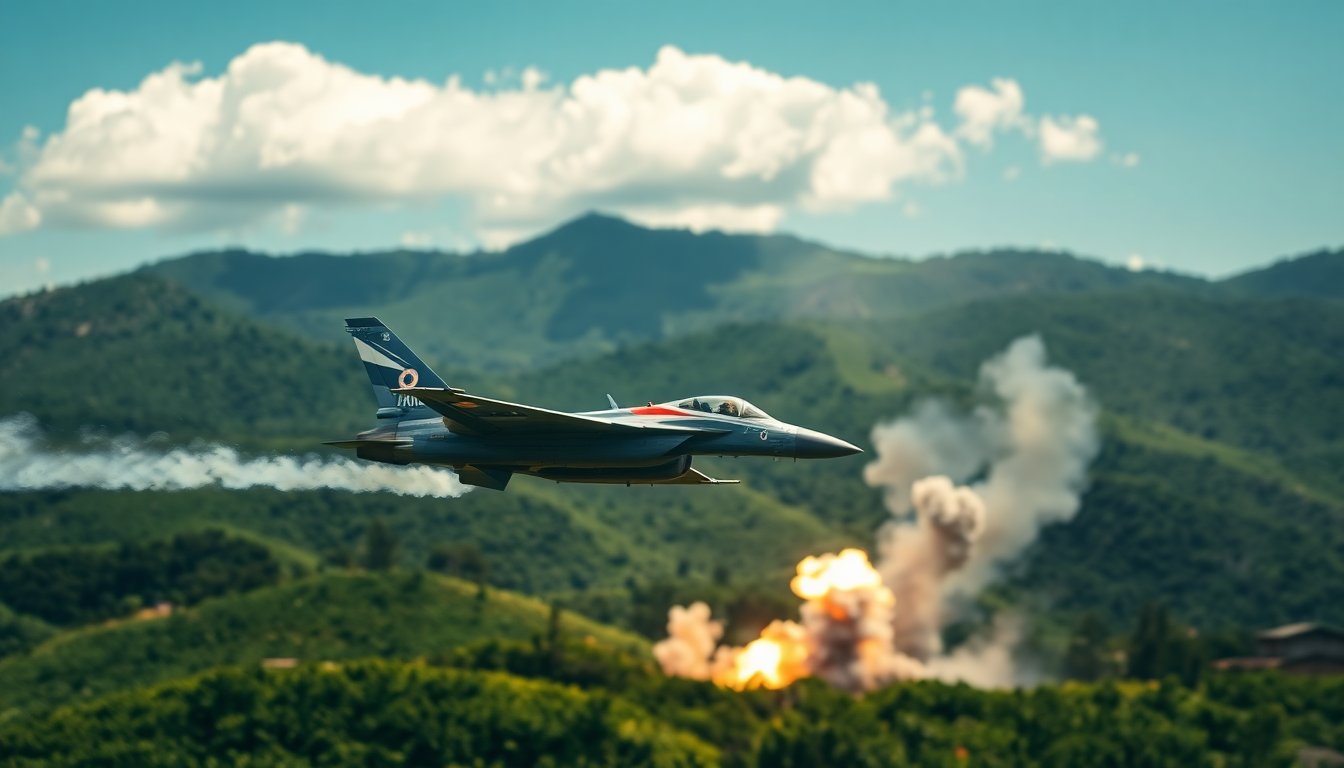
On a recent Monday evening, Thai military forces executed airstrikes in response to claims that Cambodian troops had fired upon Thai territory, resulting in casualties. Reports confirm that one Thai soldier was killed, and several others were injured. In light of these developments, Thai authorities began evacuating civilians from nearby areas to ensure their safety. Major General Winthai Suvaree stated that Cambodian forces initiated the violence, prompting their military’s countermeasures against what they described as “military targets.”
Contradicting accounts
Conversely, Cambodia has firmly rejected these allegations. Maly Socheata, a spokesperson for the Cambodian Defense Ministry, asserted that Thai forces were the aggressors, instigating the conflict without provocation. She called for an immediate ceasefire and emphasized the necessity for dialogue over military action. This conflicting narrative underscores the complexities of the ongoing tensions and the difficulties in establishing a clear account of events.
Historical context of the conflict
The roots of the conflict between Thailand and Cambodia are deeply embedded in their historical backgrounds. This rivalry can be traced back to ancient kingdoms, where territorial battles were common. In contemporary times, disputes primarily center on colonial-era border demarcations established during French colonial rule. Thailand has long contested the validity of these maps, arguing that they do not accurately reflect current geographical realities.
This recent conflict is not an isolated incident; it follows a series of military engagements that have strained relations between the two nations. In July, clashes resulted in numerous casualties among both military personnel and civilians, prompting international diplomatic intervention to broker a ceasefire in October. This agreement was celebrated as a step towards peace, yet its fragility has become evident as both sides continue to accuse each other of violating its terms.
Impact on local communities
The implications of this renewed violence extend beyond military personnel, impacting local communities along the border. As tensions escalate, families in affected areas are compelled to evacuate their homes, creating a humanitarian crisis. Footage shared by Cambodian authorities depicted parents hastily retrieving their children from schools, illustrating the immediate fear gripping those living near the conflict.
The fallout from military actions can also have enduring effects on the region’s socio-economic conditions. Displaced individuals often encounter challenges in accessing basic necessities, including food, clean water, and medical care, further exacerbating their vulnerability.
Looking ahead: The need for diplomatic engagement
As Thailand and Cambodia confront the consequences of this latest military escalation, observers emphasize the urgent need for renewed diplomatic efforts. The current situation not only threatens regional stability but also risks drawing both nations into a broader conflict if left unaddressed. Experts caution that without a commitment to dialogue and cooperation, the cycle of violence may persist, undermining any progress made towards lasting peace.
The recent airstrikes by Thailand against Cambodia highlight the volatility of a region still grappling with historical grievances. The fragile truce established through international mediation remains precarious as both nations face the challenges of mistrust and historical animosities. The international community must remain vigilant and encourage both sides to prioritize diplomacy over military actions to prevent further escalation.