
Table of Contents
Cambodia’s Ministry of Defence has expressed serious concerns regarding the Thai military’s failure to comply with a ceasefire agreement proposed by United States President Donald Trump. Shortly after Trump’s announcement of a halt to hostilities between Thailand and Cambodia, reports surfaced indicating that Thai F-16 fighter jets were actively bombing Cambodian territory.
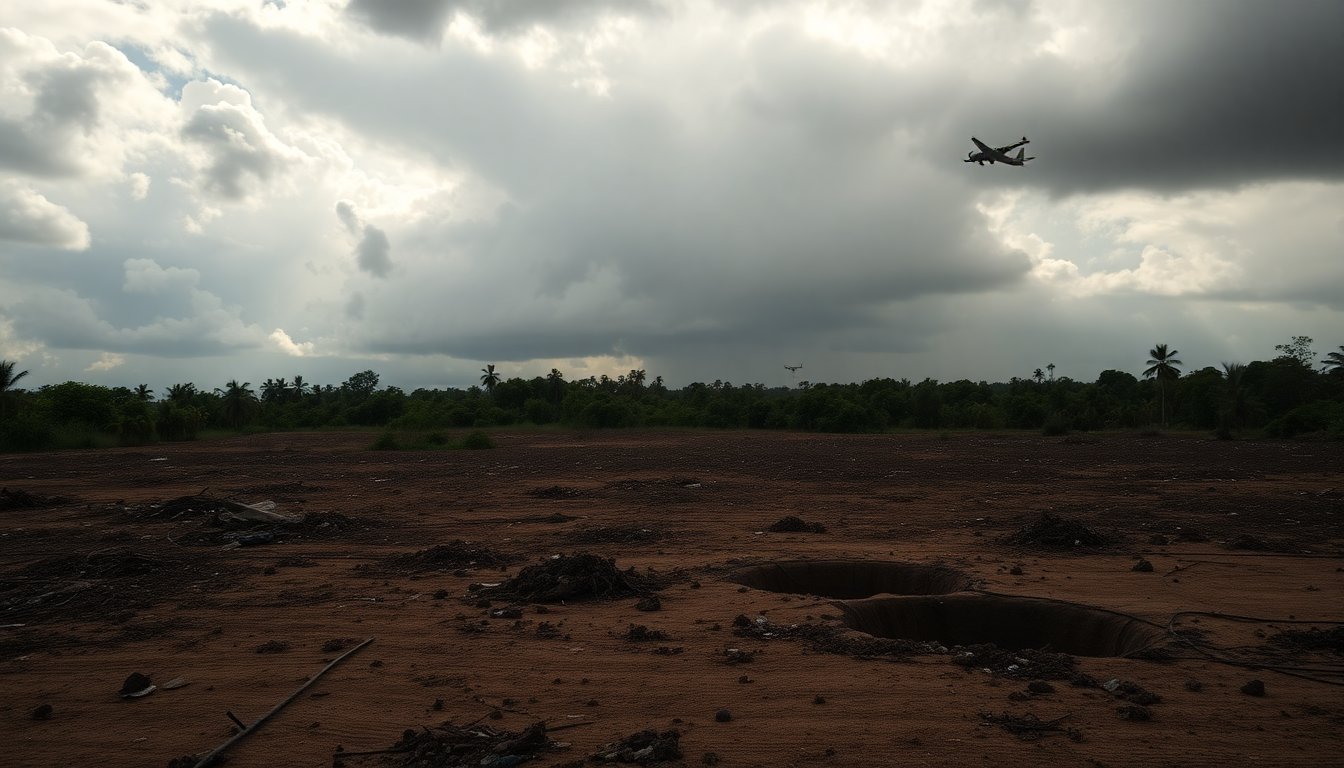
On December 13, the Cambodian Defence Ministry announced via social media that seven bombs were dropped by Thai aircraft on various targets, including hotels and bridges. This escalation follows six days of conflict between the two nations, resulting in an increasing number of casualties.
Recent developments in the conflict
The ongoing violence has caused significant loss of life and widespread displacement. The clashes have led to at least 20 casualties among soldiers and civilians, with approximately 200 individuals injured on both sides. Additionally, around 600,000 people have been displaced along the disputed 800-kilometer border.
This resurgence of conflict stems from a long-standing territorial dispute over ancient temples, which has historically fueled animosity between the two Southeast Asian nations. The latest escalation was triggered by an incident in which Cambodian troops allegedly fired on a Thai engineering team, leading to a series of retaliatory actions.
Trump’s intervention and its implications
On December 12, Trump utilized his Truth Social platform to announce that both Prime Minister Anutin Charnvirakul of Thailand and Prime Minister Hun Manet of Cambodia had agreed to cease all hostilities. He emphasized the importance of returning to a previous Peace Accord that he had facilitated with Malaysian Prime Minister Anwar Ibrahim.
However, skepticism surrounds the effectiveness of this agreement, as neither Thailand nor Cambodia has independently confirmed it. In a previous statement, Charnvirakul suggested that the responsibility for ending the violence lay with Cambodia, further complicating the situation. This indicates a potential rift in diplomatic communication between the two nations.
The historical context of the conflict
The current crisis is not an isolated incident but represents the latest chapter in a long history of territorial disputes rooted in colonial-era agreements. The conflict has been exacerbated by the 1962 International Court of Justice ruling, which granted Cambodia sovereignty over the Preah Vihear temple, a contentious issue that continues to evoke national pride and resentment in Thailand.
The historical context demonstrates that both nations are facing internal political pressures that influence their positions on the border dispute. Nationalist sentiments often intensify, particularly during periods of political instability, leading to heightened tensions and military confrontations.
Regional responses and future prospects
As the situation develops, international observers are closely monitoring the conflict. The Association of Southeast Asian Nations (ASEAN) has attempted to mediate, yet the effectiveness of these efforts remains uncertain, as Thailand has historically resisted external involvement in its domestic affairs.
Despite Trump’s earlier successes in brokering a ceasefire, the current conditions suggest that the fragile peace established in July is deteriorating. Renewed hostilities could have severe consequences, not only for the affected civilian populations but also for regional stability.
On December 13, the Cambodian Defence Ministry announced via social media that seven bombs were dropped by Thai aircraft on various targets, including hotels and bridges. This escalation follows six days of conflict between the two nations, resulting in an increasing number of casualties.0