
Table of Contents
Thailand faces electoral uncertainty amid security tightening and Cambodia dispute
The political landscape in Thailand has become a complex mix of electoral uncertainty, tightened internal security measures and a diplomatic dispute with Cambodia. Following the national poll called by the caretaker government led by Prime Minister Anutin Charnvirakul on February 8, officials and parties continue to navigate procedural and political consequences.
The Interior Ministry has issued broad directives to tighten firearm licensing and temporarily suspend public carry permissions. Phnom Penh’s leader has publicly accused Thai forces of occupying Cambodian ground despite an existing ceasefire pact. These developments are shaping the short-term outlook for government formation and regional stability.
The election result has left no clear, immediate path to a stable coalition. Parties and electoral authorities are engaged in legal reviews and negotiations over seat allocations and procedural challenges. The pace and outcome of those talks will determine when a new government can be formed.
Security measures respond to both domestic concerns and the diplomatic incident. Officials cited risks to public order when announcing the firearm restrictions. Cambodian accusations add pressure on Bangkok to manage the border situation while complying with international ceasefire commitments.
Analysts say the combination of electoral ambiguity and cross-border tensions increases uncertainty for investors and regional partners. The next steps will hinge on legal rulings, coalition talks and any verification of the territorial claims raised by Phnom Penh.
The barcode error on ballots, the interior decree of February 19 and Cambodia’s request to resume technical border work after the December ceasefire intersect to widen uncertainty for Thai governance. Legal challenges could delay or annul results. Coalition negotiations risk sudden shifts. Increased scrutiny of firearm owners aims to curb violence but may inflame political tensions.
Electoral complications: barcode error and coalition questions
The barcode mistake on ballots has prompted calls for annulment. A legal ruling on that claim would directly affect who can form a government. Coalition talks are fragile. Parties negotiating alliances must now weigh the risk that seats or entire results could be overturned.
Procedural litigation typically moves through fast-track election courts. Judges will consider the scale of the error and whether it altered voters’ intent. If annulment occurs, expect delays to government formation and possible repeat voting in affected districts.
From a political-management perspective, the error is a governance failure. I’ve seen too many startups fail to ignore how small operational mistakes ripple into strategic collapse. The same dynamic applies to elections: process errors erode trust and change bargaining power at the negotiating table.
Parties with slim margins gain leverage if courts signal widespread irregularities. Conversely, established blocs risk losing momentum if they cannot persuade voters their wins are legitimate. That dynamic will shape turnout, campaign messaging and post-election defections.
Legal outcomes are not the only variable. The February 19 decree increasing gun-owner scrutiny could shift public attention toward security. If enforcement is visible and effective, it may reduce street violence and calm negotiations. If enforcement is selective or heavy-handed, it could deepen polarization and complicate coalition-building.
Finally, resumption of technical border work after the December ceasefire adds a diplomatic layer. Verification of territorial claims and renewed joint operations will consume administrative bandwidth. Any renewed tensions at the border would further distract leaders from domestic negotiations and could harden nationalist rhetoric inside parliament.
The next steps hinge on court timetables, how parties recalibrate alliances and whether border verification proceeds without incident. Expect a period of tactical maneuvering by political actors while institutions assess procedural and security risks.
Expect a period of tactical maneuvering by political actors while institutions assess procedural and security risks. Election authorities must decide whether the ballot bar code flaw is a procedural irregularity or a material error that could invalidate select results. The choice will shape who governs and how quickly a new cabinet can be formed.
Legal stakes and political ramifications
The immediate legal question concerns the threshold for annulment under existing electoral law. Judges will weigh the extent of mismatches between ballot records and tabulation logs. That assessment will determine whether disputes proceed as isolated paperwork corrections or escalate into annulment petitions before the courts.
Political parties are already shifting tactics. Negotiations to form a coalition under caretaker leader Anutin have intensified. Parties are balancing the risk of prolonged uncertainty against the prospect of joining a government that could claim a brief mandate.
Security officials have flagged logistical vulnerabilities exposed by the error. Officials say those vulnerabilities could affect public confidence in future votes unless addressed through tighter procedures and independent audits. Anyone who has overseen complex operations knows that small technical oversights can cascade into systemic problems.
International observers and neighboring states monitoring the border dispute will watch legal outcomes closely. The ruling on ballot validity could influence diplomatic interactions and requests for resumed technical work along the frontier.
Legal teams for major parties are preparing contingency filings while coalition talks continue. Expect parallel tracks of courtroom challenges and backroom alliance-building to run in tandem as institutions move to restore procedural certainty.
Expect courtroom challenges and backroom alliance-building to continue in parallel as institutions seek procedural certainty. If authorities judge the barcode flaw serious enough to void parts or all of the vote, the consequences would extend across Thailand’s political system. A voided election would require new voting arrangements or legal remedies and further delay the formation of a stable administration. For parties trying to form coalitions, such a setback would complicate negotiations, slow policy implementation and prolong caretaker governance. Even without an annulment, sustained disputes over ballot integrity could erode public confidence and deepen political uncertainty.
Domestic security: nationwide clampdown on firearm licences
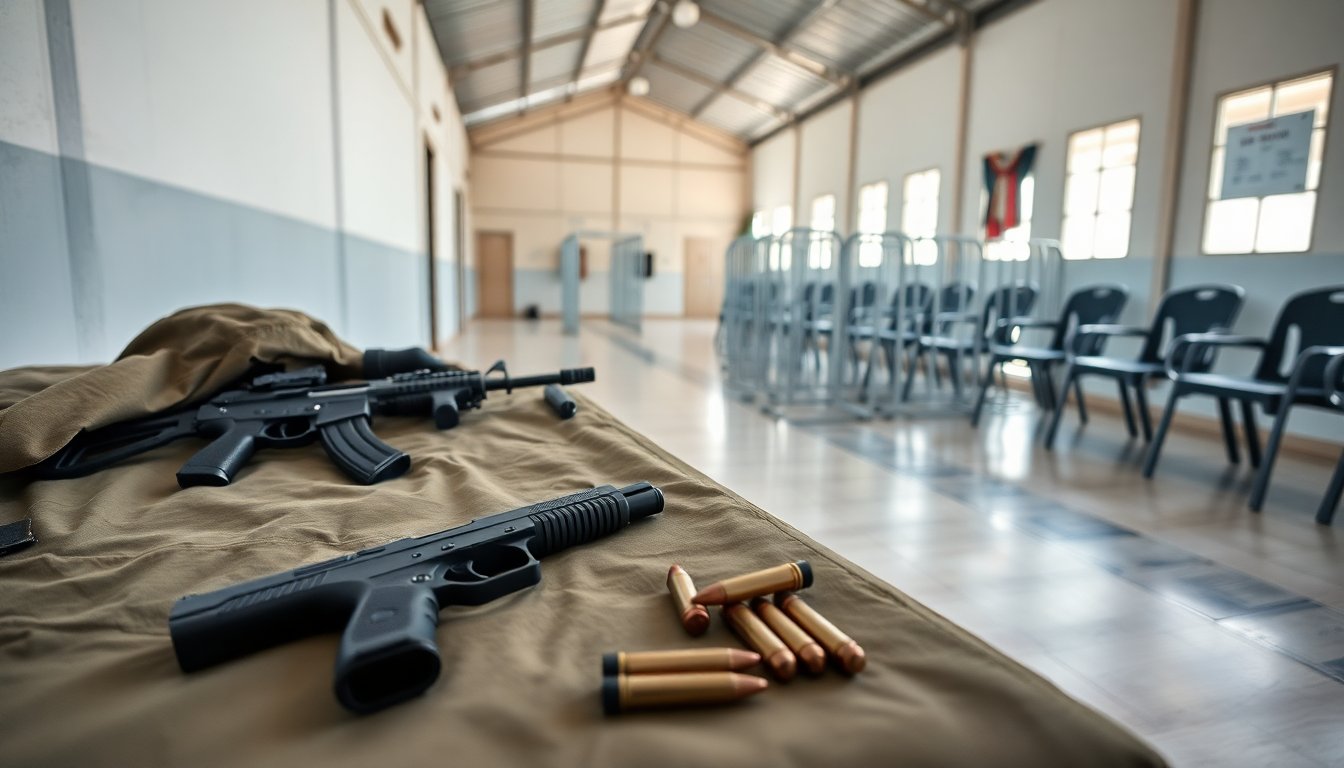
On February 19 the Interior Minister and caretaker Prime Minister, Anutin Charnvirakul, ordered a comprehensive review and stricter enforcement of firearm licensing across Thailand. The Department of Provincial Administration was tasked with intensifying background checks for Por.3 purchase permits and increasing oversight of existing licensees under Por.4. Authorities were directed to monitor license holders through local networks, including subdistrict and village officials, and to take administrative or criminal action if behaviour threatens public order.
Suspension of public carry and penalties
The order instructs provincial officials to suspend public carrying of firearms where local intelligence indicates a heightened risk to safety. Officials must evaluate both reported incidents and complaints lodged by communities before authorising temporary suspensions.
Administrative penalties may include licence suspension or revocation under existing regulatory frameworks. The directive also calls for criminal referrals when investigations uncover false information in applications or evidence of weapons used to intimidate or commit offences.
Implementation will rely on coordination between the Department of Provincial Administration and local administrative organisations. The ministry emphasised the need for timely information-sharing with police units and municipal authorities to ensure consistent enforcement across provinces.
Officials are expected to prioritise cases that present immediate public-safety risks, such as evidence of threats, recent violent incidents involving licensed firearms, or links to organised crime. The ministry also signalled a review of application procedures to reduce the risk of fraudulent or incomplete background checks.
Observers cautioned that enforcement could produce uneven results if local capacity and record-keeping vary. Anyone who has managed decentralised operations knows that implementation quality often depends on local training, clear protocols and reliable data flows.
Regional friction: Cambodia’s claims and calls for technical border work
The government has reaffirmed a temporary suspension of public-carry permits that has been in place since December 20, . Officials are barred from issuing new authorizations under the directive. The measure aims to reduce violent incidents in public spaces by limiting firearms circulation.
Under the existing legal framework, carrying a firearm in a public area without a reasonable cause is an offence. Convictions can carry up to five years in prison, fines up to 10,000 baht, or both, under cited criminal and firearms statutes. Licensed owners are instructed to keep weapons at home except in urgent circumstances, reflecting a preventive enforcement approach.
The order follows a broader directive to strengthen licensing checks and enforcement at provincial and local levels. Implementation quality will depend on local training, clear protocols and reliable data flows. I’ve seen too many operations falter when those elements are missing.
Authorities said the temporary ban is part of coordinated steps to lower public risk while technical reviews of licensing processes continue. The suspension does not change the underlying statutes, but it halts new permit issuance pending a legal and operational review.
Cambodian prime minister says Thai troops remain on Cambodian soil
Cambodia’s prime minister, Hun Manet, told international media that Thai troops remain on Cambodian soil in several areas. He said the presence continues despite an earlier peace initiative.
Hun Manet urged Thailand to permit the Joint Boundary Commission to begin demarcation work. He argued that formal line-drawing would verify precise borders and allow civilians to return safely to their homes.
The prime minister framed the request as a technical, treaty-based solution, not a rhetorical escalation. He described demarcation as a legal, procedural step to reduce tensions on the ground.
The statement follows the temporary suspension of new public-carry permits, which halted new issuances pending a legal and operational review. The suspension does not alter the underlying statutes.
I’ve seen too many diplomatic initiatives falter when facts on the ground are ignored. Clear, verifiable demarcation is one of the few mechanisms that can turn agreements into durable stability.
Outlook and interplay between domestic and regional pressures
Clear, verifiable demarcation is one of the few mechanisms that can turn agreements into durable stability. The diplomatic exchange follows heavy clashes last year that displaced hundreds of thousands and disrupted cross-border trade. A ceasefire was reported on December 27, while a previous, high-profile agreement brokered by former US president Donald Trump ultimately faltered.
Thailand has defended its troop posture as consistent with de-escalation measures. Bangkok denied allegations of deliberate occupation and said existing deployments were being maintained while talks continue. Cambodian prime minister Hun Manet has linked the resumption of demarcation directly to the conclusion of Thailand’s February 8 election, urging progress now that voting is complete.
Anyone who has launched a product knows that unclear boundaries create repeated friction. I’ve seen too many startups fail to secure growth because stakeholders could not agree on basic metrics. The diplomatic equivalent is predictable: without mapped lines and enforceable mechanisms, trust erodes and incidents recur.
Regional actors now face dual pressures. Domestic politics in both capitals shape bargaining space. At the same time, neighboring states and international mediators weigh stability risks for cross-border trade and refugee flows. Growth data tells a different story: economic interdependence raises the cost of prolonged instability for all parties.
Practical progress will require transparent verification, calibrated force posture, and a timetable for technical demarcation. Anyone watching the region should expect negotiations to hinge on those concrete deliverables rather than public statements alone.
Risks and tests for the incoming government
Anyone watching the region should expect negotiations to hinge on concrete deliverables rather than public statements alone. The coming weeks will concentrate three linked challenges on the next administration: the barcode controversy, new firearms directives and the technical border process.
How the barcode dispute is resolved will influence the pace of coalition formation. A protracted dispute could delay cabinet agreements and legislative priorities. Rapid settlement would shorten the window of political uncertainty.
The implementation of firearms directives will shape public confidence in safety. Clear enforcement plans and visible administrative capacity matter more than rhetoric. Firearms directives that lack logistical backing risk eroding trust.
Management of the technical border process will determine whether the fragile calm endures. Routine technical steps, if handled efficiently, can prevent escalation. Poor coordination could convert administrative frictions into diplomatic strain.
These issues will test political leadership, administrative competence and diplomatic agility at once. I’ve seen too many organisations and governments misjudge how quickly operational details become political crises. Growth data tells a different story: outcomes follow delivery, not promises.
Expect negotiation timelines and security operations to provide the clearest signals of direction. Observers should track cabinet appointments, issuance schedules for gun directives and progress on technical border procedures as the primary indicators of stability.