
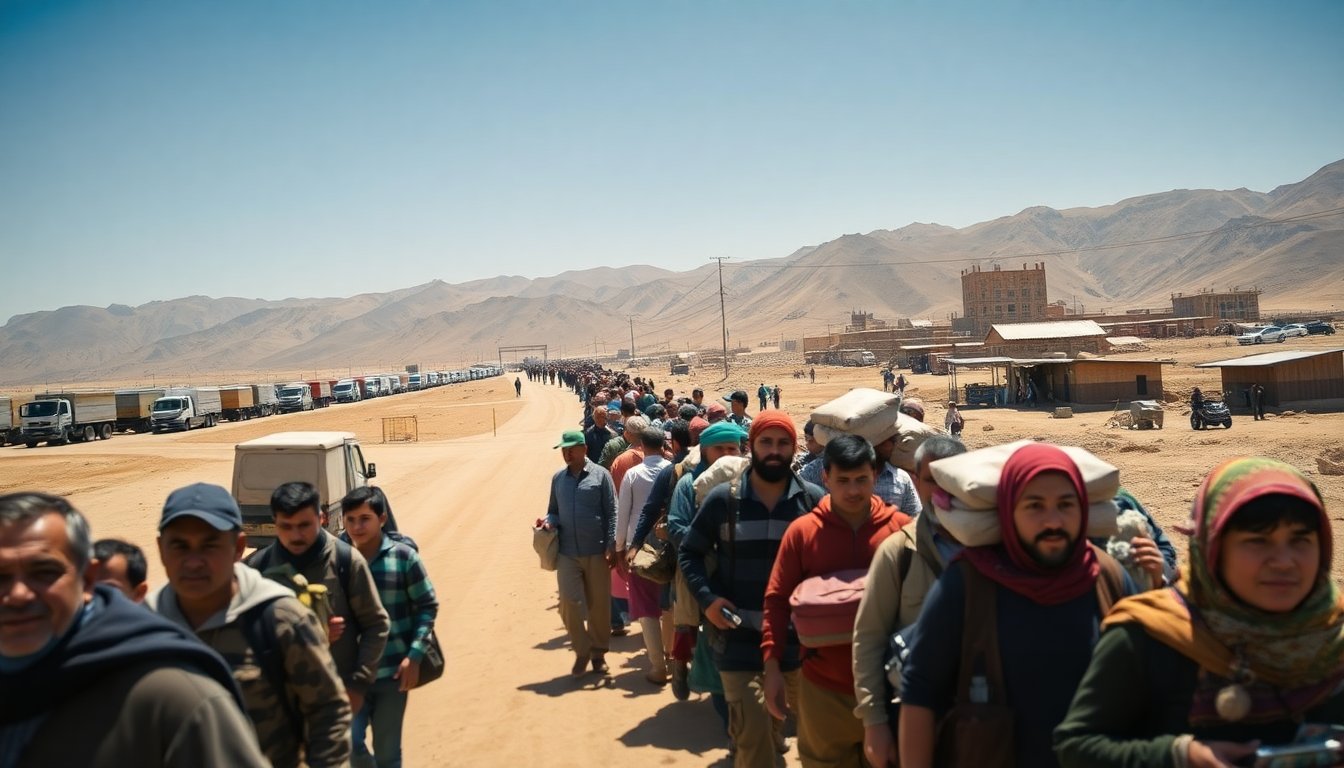
As the situation in Afghanistan evolves, the country is experiencing an unprecedented wave of returnees. After years spent in Iran and Pakistan, over four million Afghans have begun their journey home, with approximately 1.5 million returning in just 2025. This sudden influx is placing immense pressure on Afghanistan’s already fragile economy, which faces high unemployment and limited resources.
The Islam Qala border serves as the primary entry point for many of these returnees. Amidst the sweltering heat, families wait for assistance in the harsh landscape that marks their first sight of home after years of exile. The reality of their return starkly contrasts with memories of their former lives, and the challenges ahead are daunting.
Economic repercussions of mass repatriation
The return of such a large population is not just a humanitarian issue; it presents a significant economic challenge. The International Organization for Migration (IOM) has reported that nearly 350,000 Afghans were displaced within the first four months of 2025, further complicating the country’s socio-economic landscape. This situation is worsened by deteriorating conditions driven by climate change and economic instability.
Workforce gaps in Iran
During their time abroad, many Afghans played crucial roles in the economies of Iran and Pakistan, significantly contributing to sectors such as construction, agriculture, and manufacturing. Their sudden departure has created noticeable gaps in these markets, while back in Afghanistan, the returnees face an uncertain future. Maryam, a widow with two children, exemplifies this plight. After living in Iran for six years, she finds herself without a job, home, or support system. The burden of her son Sadeq’s quest for work, rather than education, underscores the sacrifices families are making amidst an overwhelming economic landscape.
Unemployment and future prospects
The World Bank has projected that Afghanistan’s economic climate will remain precarious, with expectations that by 2030, an additional 1.7 million young people will enter an already saturated job market. Without significant investment in skills development, entrepreneurship, and job creation, the risk of renewed migration looms large. Many returnees, like Maryam, may find themselves compelled to seek opportunities outside Afghanistan once again.
In response to this growing crisis, the IOM has initiated various programs aimed at empowering returnees and vulnerable communities. Since 2024, the organization has provided skills training to nearly 3,000 individuals, including returnees and internally displaced persons. Additionally, support extended to over 2,600 businesses, 22% of which are female-owned, has generated nearly 12,000 jobs, with a notable portion created for women.
Need for greater support and investment
While these initiatives represent a positive step towards stability, they are merely a fraction of what is required to address the urgent needs of the returning population. Enhanced funding for these programs is essential to alleviate the pressures of repeat migration and to assist returnees in rebuilding their lives with dignity. The situation demands not just immediate relief but also long-term strategies to foster economic resilience.
In conclusion, the return of millions of Afghans from Iran and Pakistan marks a pivotal moment for the country. As these families navigate the challenges ahead, the need for robust economic support and sustainable development becomes increasingly clear. Without such interventions, the cycle of displacement may continue, leaving countless Afghans in search of stability and hope.


