
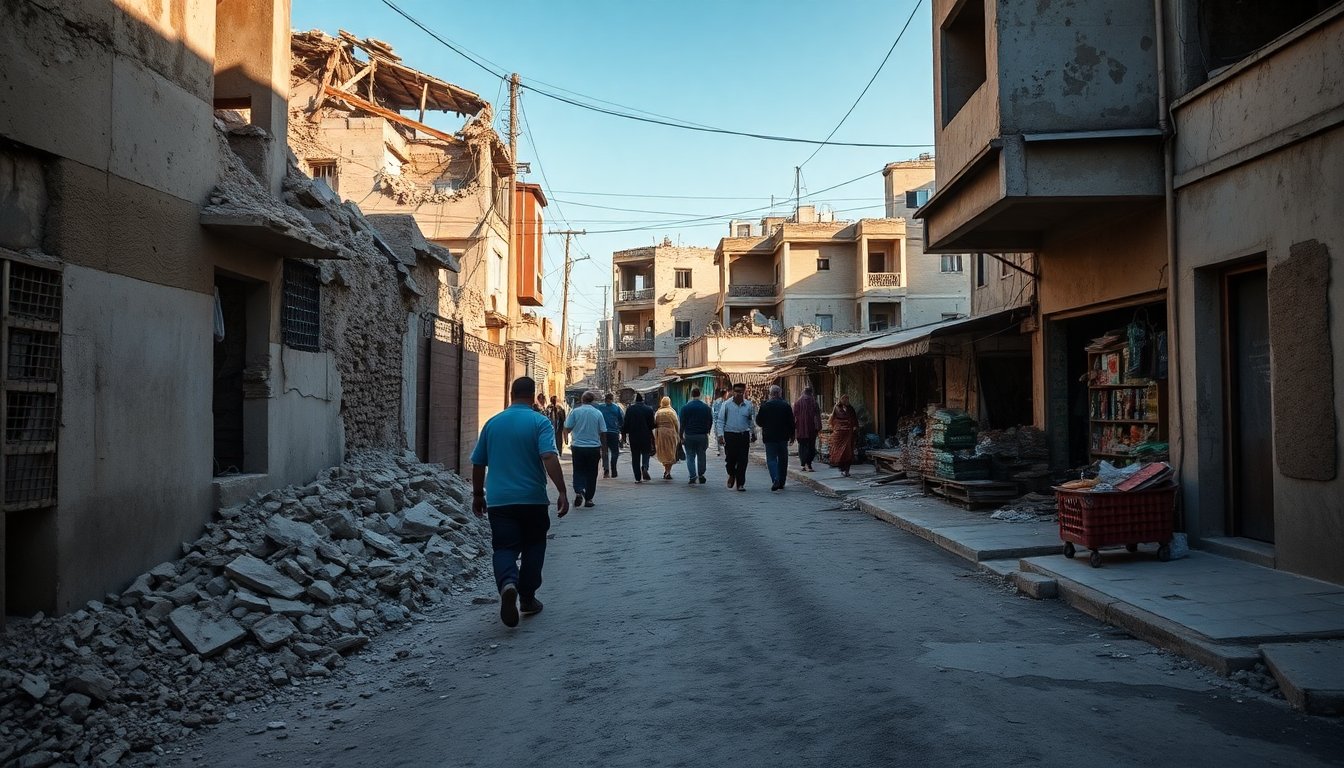
The situation in Gaza has reached a critical juncture, with extensive damage to infrastructure over the past year. What once functioned under pressure has now collapsed entirely, leaving essential services such as electricity, water, and healthcare in disarray. Daily life for individuals and families has become a struggle for survival, starkly contrasting with the fleeting moments of normalcy they once experienced.
For many, daily life now revolves around the unpredictable availability of electricity, often relying on generators when fuel permits. Long queues for basic necessities, such as clean water and bread, have become commonplace. Hospitals operate under dire conditions, frequently relying on the dim light of mobile phones to perform critical procedures.
Impact on daily life and essential services
The loss of power is perhaps the most visible sign of the ongoing crisis. The power plant in Gaza has sustained severe damage, leading to a staggering 80 percent reduction in electricity transmission. Families are learning to adapt to this new reality, with some mothers charging their phones whenever a neighbor’s generator operates. Consequently, children are forced to complete their homework in candlelight, while food spoils due to the lack of refrigeration.
Water scarcity and health issues
The situation regarding water access has deteriorated sharply. Bombardments have damaged essential facilities, including wells and desalination plants. Without electricity or fuel, the extraction and distribution of clean water have become nearly impossible. Reports indicate that families often wait in long lines for water trucks, only to receive water that is contaminated and unsuitable for consumption. This has led to an increase in health issues, with children suffering from infections and skin conditions.
Healthcare system in crisis
Healthcare facilities, once capable of managing the population’s needs, are now severely strained. Many hospitals have been damaged or rendered inoperative, and those that remain open face critical shortages of medications, equipment, and trained personnel. The grim reality of overcrowded intensive care units, where patients share beds, is now common. Medical staff frequently confront harrowing dilemmas, deciding who receives care and who must wait, reflecting the dire circumstances under which they operate.
Infrastructure collapse and its repercussions
The destruction has not only impacted healthcare and electricity but has also ravaged roadways and public facilities, creating an internal fracture within Gaza. Streets littered with rubble and flooded with sewage impede emergency services and hinder aid deliveries. With waste collection largely halted, the risk of disease outbreaks has surged, further complicating the already dire health situation.
The relentless nature of the bombardment has a cumulative effect, intentionally designed to disrupt daily life. The interconnected web of essential services means that the failure of one system accelerates the collapse of another. Without power, clean water cannot be pumped; without fuel, hospitals cannot function; and without functional roads, aid cannot reach those in need.
As the year comes to a close, the reality is bleak: Gaza’s infrastructure is no longer capable of supporting even the basics of normal life. Discussions about rebuilding must extend beyond mere construction; they must encompass the restoration of dignity through reliable services such as clean water, functioning hospitals, and consistent electricity.
Until these systems are restored, the people of Gaza will continue to endure the ramifications of a conflict that has shattered the very foundations of their daily existence. The challenge now lies not only in rebuilding what has been lost but also in ensuring that the people can live with dignity and hope for a better future.


