
Table of Contents
Murmansk faces power outages amid severe weather
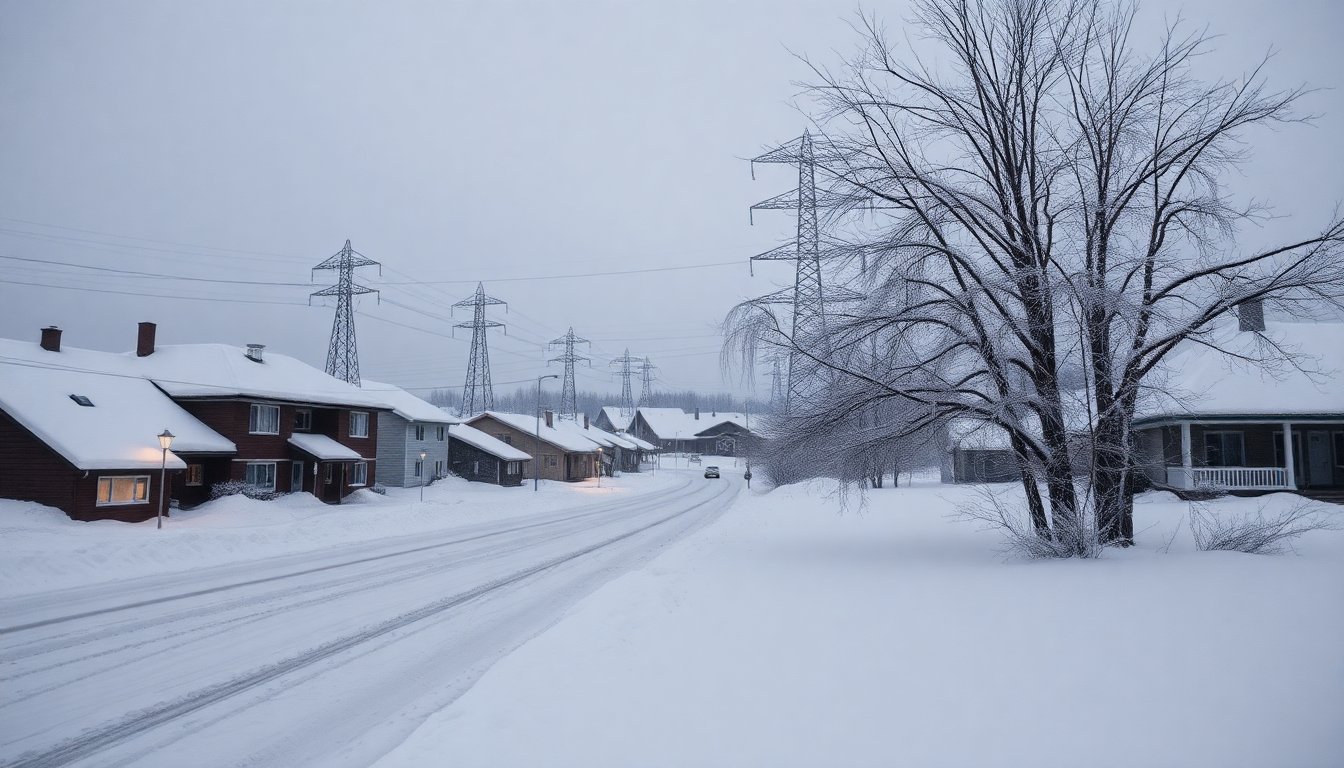
Since January 23, residents of Murmansk and its nearby city, Severomorsk, have been dealing with significant power outages. This crisis has arisen due to the collapse of essential infrastructure following a series of harsh weather events. Severe icing, blizzards, and strong winds led to the failure of transmission towers operated by the power company Rosseti.
As temperatures dropped to a frigid 14°F (-10°C) during the day and further to 1°F (-17°C) at night, many homes have become cold and lacking hot water. The regional government estimates that around 73,000 residents remain without electricity. In response, officials have declared a state of emergency to tackle the ongoing crisis.
Understanding the causes of the outages
The recent power failures in Murmansk are linked to the collapse of five transmission towers, a situation worsened by severe weather conditions. According to Rosseti, the company reported significant damage caused by a mix of wet snow, strong winds, and ice buildup. The fallen towers, some in use since the 1960s, were overdue for inspection; they should have been evaluated every five years, given their recommended service life of 40 years.
The Federal Investigative Committee of Russia has launched an inquiry to determine if proper maintenance protocols were adhered to. Investigators are examining potential negligence by Rosseti, questioning whether the company responded adequately to the emergencies that arose.
Emergency response and restoration efforts
Following the recent power outages, authorities faced considerable challenges in restoring electricity. The first day of disruption led to the implementation of rolling blackouts across various neighborhoods in Murmansk. By January 25, the situation had escalated sufficiently to warrant a regional emergency declaration.
Governor Andrey Chibis stated that teams from Rosseti were working diligently to address the issues. However, adverse weather and difficult terrain complicated the restoration efforts. By January 26, the company announced the installation of temporary wooden towers to replace those that had collapsed. These towers were transported using all-terrain vehicles and assembled on-site, sometimes necessitating helicopters for installation.
Community impact and responses
As power outages continued, local business owners and government officials mobilized to support affected residents. Community centers were set up in various neighborhoods, providing essential services such as phone charging, access to boiling water, and food heating facilities. Long lines quickly formed as people sought relief from the cold.
To address transportation challenges, authorities waived bus fares throughout Murmansk and Severomorsk. Some educational institutions suspended operations or shifted to online learning to adapt to the ongoing crisis. Despite claims by Governor Chibis that heating and water were restored to all public buildings by January 26, many local residents disputed this, stating that numerous homes, particularly in Severomorsk, remained without power.
Challenges faced by residents
Residents have expressed their frustrations on social media and in community discussions, indicating that power restoration efforts have been inadequate. One local shared her experience, explaining that her family resorted to cooking on a gas camping stove while some neighbors lacked heating and water. She criticized the absence of a clear power restoration schedule, stating, “They only say one exists, but no one has seen it.” The severe weather conditions forced her to leave her home with her child to find shelter with relatives or at a hotel.
Additionally, there have been reports of disruptions to mobile internet services, particularly impacting access to the Telegram messaging app. It remains uncertain whether these issues are directly related to the power outages or are a result of actions taken by authorities.
The broader implications and media coverage
Deputy Governor Olga Vovk confirmed that approximately 73,000 residents are still experiencing power disruptions, although she emphasized that these outages are not continuous. Efforts are underway to switch affected homes to available power sources. Meanwhile, critical infrastructure, including the main base of Russia’s Northern Fleet, relies on autonomous energy supplies due to the ongoing power failures.
Despite the scale of the outages, national media coverage has been notably sparse. An independent news outlet reported that major television networks provided limited information, with a brief segment aired only once, highlighting the region’s struggles.
This crisis underscores the vulnerabilities faced by communities in extreme weather conditions and raises important questions about infrastructure maintenance and emergency preparedness in Russia’s Arctic regions.